
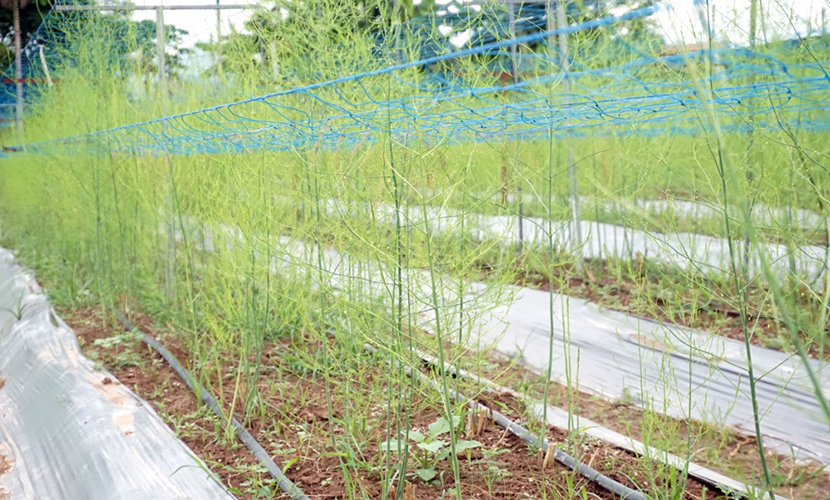
With its high nutritional value, Hanoi has piloted organic asparagus cultivation in Son Cong Commune. Initial results show that the model has delivered positive economic returns. As a result, it has helped local residents increase their income and improve their living standards.
Mr. Vu Van Manh is a local farmer from Vinh Thuong Hamlet. In 2020, he studied cultivation techniques and began growing asparagus on his family’s farmland. This was the first asparagus farming model in the commune. After more than two years, the model has proven to be a new and effective direction, bringing high economic returns.
Sharing how he came to grow this new crop, Mr. Manh said: “For a long time, I have had a passion for agriculture. Therefore, I visited several production models both inside and outside the city. A friend of mine who is an agricultural engineer, advised me that sandy loam soil is very suitable for asparagus. In 2020, I decided to introduce Vietnamese green asparagus to my farm.”
Organic asparagus cultivation
Looking around his garden, the entire nearly 7,000-square-meter area is neatly and scientifically planned. The organic asparagus cultivation has an automatic irrigation system. At first, while learning and practicing at the same time, Mr. Manh planted 7,000 asparagus plants.
As he cultivated them, he continuously gained experience and technical knowledge from agricultural officers. He also consulted books and newspapers. After one year, the asparagus produced good yields. Therefore, it generated a stable source of income for his family.
Based on these results, Mr. Manh proposed expanding the production area. He received support and favorable conditions from the local authorities and the Son Cong Commune Farmers’ Association. He took out a bank loan to invest in organic asparagus farming. His family now cultivates 20,000 plants.
As he guided us around the garden, Mr. Manh explained that asparagus is well suitable to sandy loam soil. However, excessive rainfall can make the plants more susceptible to disease. Typically, the crop thrives in temperatures ranging from 20 to 33 degrees Celsius.
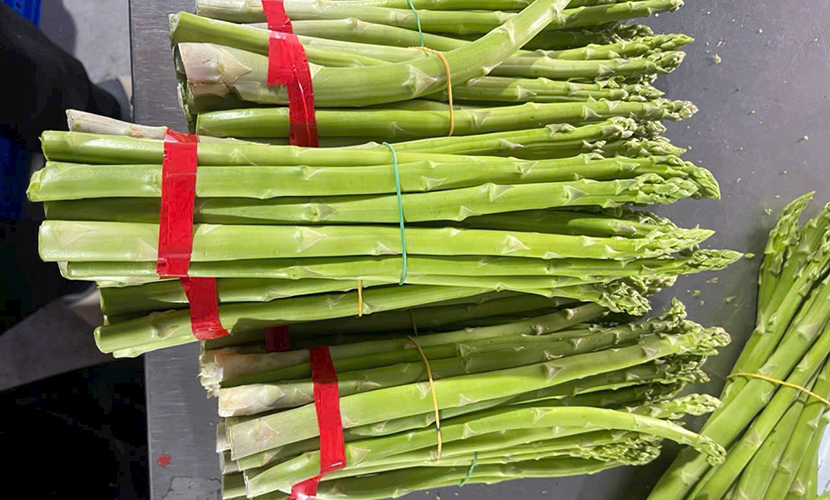
Vietnamese asparagus: L1 grade
“In the beginning, I spent considerable effort learning about cultivation and care techniques to minimize pests and diseases. Vietnam’s sparagus requires meticulous care, especially when grown organically. Also, this method demands strict technical standards. I should treat the soil before planting. In addition, I should apply fertilizers properly to limit pests and diseases,” he shared.
Thanks to his diligence in researching and learning cultivation techniques, his organic asparragus cultivation model has initially delivered fairly high economic returns. The harvested product consists of fresh asparagus spears emerging from the organic soil layer.
In the first year, yields averaged about 5 kilograms per sao. With 7,000 plants grown on seven sao of land, Mr. Manh harvested 30–40 kilograms of asparagus per day. He sold the produce at 70,000–80,000 VND per kilogram at the farm gate.
When asked about the market for this crop, Mr. Manh said that demand is currently stable. His asparagus is purchased by a food company and then distributed to supermarkets and retail systems across the city. At present, he is working on building a brand for his asparagus products. He is also participating in the city’s “One Commune, One Product” program.
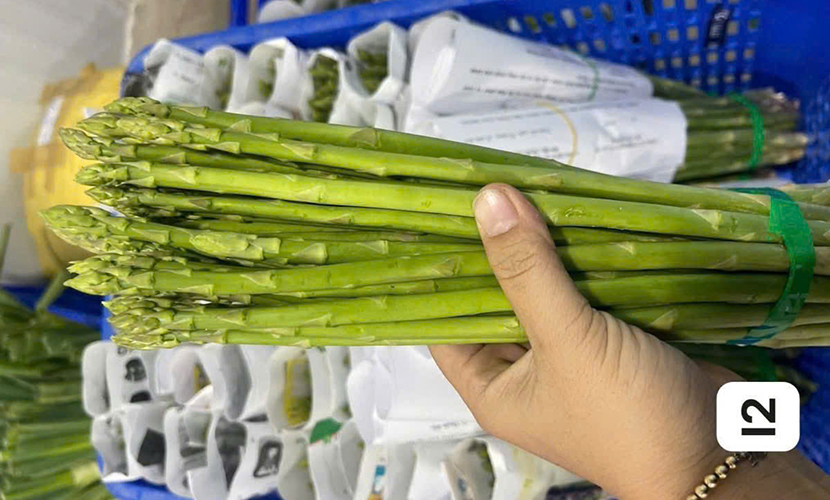
Vietnamese asparagus: L2 grade
Encouraged by the success of asparagus cultivation, Mr. Manh has advised and guided several local farmers to boldly adopt asparagus production. As a result, this has helped increase incomes, boost local economic development, and gradually change traditional farming practices in the commune.
In 2021, Ms. Vu Thi Nhung (also from Vinh Thuong Hamlet) shifted her farming model and piloted 2,000 square meters of asparagus. Thanks to her solid grasp of cultivation techniques and understanding of the plant’s characteristics, her crop has developed well. After six months, her organic asparagus cultivation began producing harvestable spears. These large shoots have been well received by the market.
Sharing her experience in growing Vietnam’s asparagus, Ms. Nhung said: “Asparagus brings higher economic returns compared to other short-term crops. In the first year, I harvested three tons. From planting to the first harvest takes about six to seven months. One advantage is that you plant once but can harvest for many years. With proper care, the crop can be harvested continuously for up to five years. Typically, harvesting lasts about six months each year.
To ensure quality, we use organic fertilizers and biological pesticides for organic asparagus cultivation. During growth, the plants gradually increase the number of stalks per clump and spread their canopy widely. Therefore, staking and tying processes are necessary to prevent lodging. To produce sweet, tender spears with high yields, I regularly irrigate and maintain adequate soil moisture.”
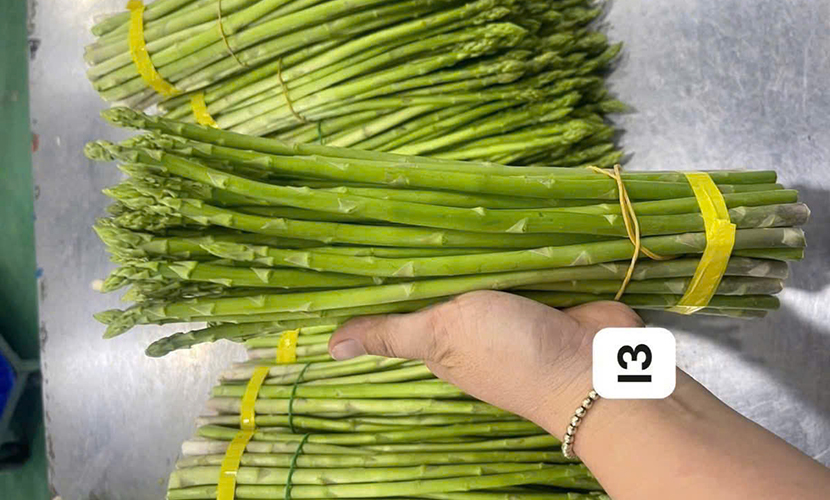
Vietnamese asparagus: L3 grade
The asparagus farming model has been highly appreciated by the leadership of Son Cong Commune. In the coming time, to ensure this new crop continues to deliver economic benefits, local farmers hope to receive support from specialized agencies in trade promotion and brand promotion. Eventually, they aim to build a trademark and obtain product origin certification.
Assessing the economic effectiveness of the asparagus model, Mr. Vu Duc Hiep, Chairman of the Son Cong Commune Farmers’ Association, said:
“From Mr. Manh’s model, several households in the hamlet have now introduced Vietnamese asparaguses into cultivation. The total growing area in the commune currently exceeds two hectares. To facilitate production, the Agricultural Cooperative and the Commune Farmers’ Association have advised and encouraged residents to boldly adopt asparagus cultivation. This aims to improve economic efficiency and promote local economic development.
However, investment in infrastructure for green asparagus farming is quite substantial. Therefore, growers hope to access support from the state budget. In particular, asparagus is susceptible to disease. Without proper technical care, expected yields will not be achieved. Consequently, with this new crop, farmers hope to receive training and additional technical guidance on cultivation and care from relevant authorities.”
Vietnamese source: https://nongthon.vn/nong-nghiep/thu-trai-ngot-tu-trong-mang-tay-huu-co.html