
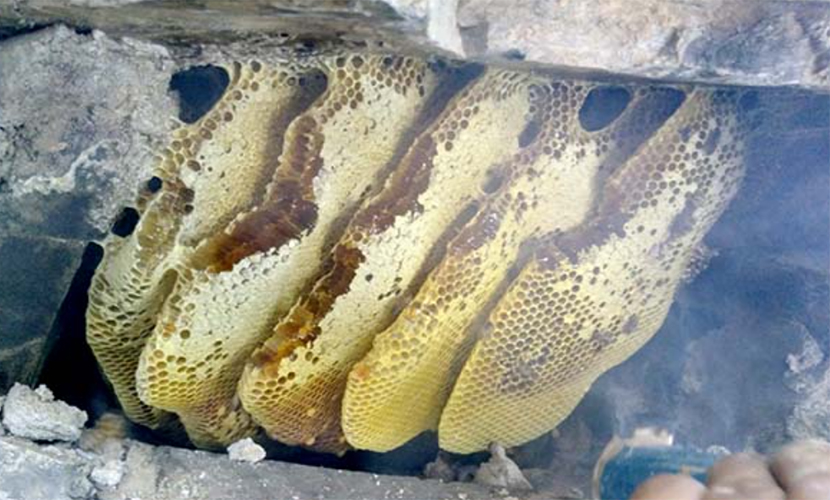
Taking advantage of its natural forests, Chiềng Lao Commune has developed Vietnamese honey production through the cooperative model. This approach has helped expand the local beekeeping industry. The initiative has created high-value natural honey while helping increase local incomes and build a distinctive regional brand.
Chiềng Lao Commune has favorable conditions for Vietnamese honey production thanks to its vast natural forests and abundant wildflowers. Capitalizing on these advantages, Chiềng Lao Agricultural Cooperative has partnered with local households to develop mountain honey beekeeping linked to product marketing. This has created a new livelihood based on sustainable forest resources.
As the forests of Chiềng Lao burst into bloom each year, members of the cooperative begin the honey harvest season. The organization was established in September 2021 with seven members specializing in mountain honey production. Unlike conventional beekeeping in wooden hives, cooperative members select quiet mountainsides rich in flowering plants.
They then create cavities in rocky crevices to attract wild bees to establish their nests. Once the colonies are settled, the bees forage freely for nectar from natural forest flowers. Beekeepers mainly protect the nesting sites, monitor the colonies, and harvest the honey at the appropriate time.
Vietnamese honey production
After joining the cooperative, many local households have adopted improved beekeeping practices. They place greater emphasis on techniques for attracting and protecting bee colonies. They also focus on selecting the right harvesting time and properly storing honey to ensure consistent quality. As market access has gradually become more stable, Vietnamese honey production has evolved into an important source of income for many Hmong families.
According to experienced beekeepers, the honey harvest usually takes place between March and April, when forest flowers are in full bloom. Honey is collected only after the honeycombs have fully matured. This ensures both high-quality honey and the long-term sustainability of the bee colonies for future harvests.
The family of Mùa A Nhịa, from Huổi Xu Village, currently manages around 200 wild bee colonies nesting in rock crevices throughout the forest. Nhịa said that his family initially kept only a few colonies for household consumption. However, as demand for natural honey increased, they began identifying additional suitable rock cavities to attract more wild bees.
In 2025, the family harvested approximately 300–400 kilograms of honey, equivalent to 250–330 liters. This generated around VND 60 million in income. This year, they expect to harvest nearly 300 kilograms of honey.
Encouraged by its proven effectiveness, mountain honey beekeeping is expanding across many Hmong villages in Chiềng Lao Commune. The commune now has more than 105 households raising around 2,000 bee colonies, producing approximately 12 tonnes of honey annually. Chiềng Lao Agricultural Cooperative purchases part of the harvest for processing, packaging, and marketing.
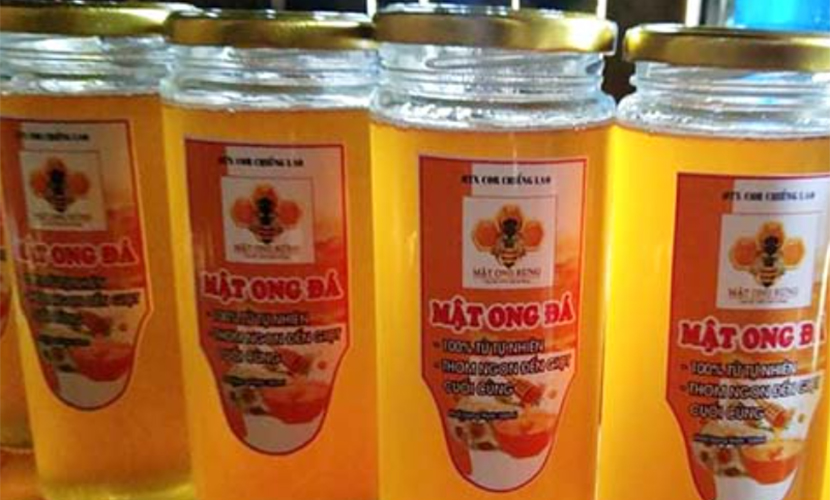
Vietnamese bee honey
Honey sells for VND 200,000–250,000 per liter. Income from Vietnamese honey production has helped improve local livelihoods. It has also raised awareness of forest conservation, protected natural floral resources, and created sustainable livelihoods for beekeeping households.
Vũ Minh Thái is the Chairman of the Chiềng Lao Commune People’s Committee. From his point, the commune will continue working with relevant agencies to help the cooperative refine its production process and invest in processing, preservation, and packaging technologies.
It also plans to develop suitable technical solutions to improve honey quality and extend the shelf life of pure honey. At the same time, local authorities will step up promotional activities, strengthen customer outreach, and expand market access. They will also gradually build the Chiềng Lao Mountain Honey brand.
Mountain honey beekeeping is emerging as a promising economic activity well suited to Chiềng Lao’s natural conditions. By organizing production through the cooperative model, local residents are transitioning toward commercial-scale production. They are increasing the value of forest honey and improving incomes for ethnic minority communities. At the same time, they are making sustainable use of forest resources while promoting long-term rural development.
Vietnamese source: https://thuonghieusanpham.vn/khai-thac-loi-the-rung-de-phat-trien-nghe-nuoi-ong
If you are interested in Vietnamese bee honey exports, please contact us:
Company: Agrideco Vietnam Co., Ltd.
Address: No 02, Alley 325 Kim Nguu, Vinh Tuy Ward, Hanoi, Vietnam
Tel/Kakao Talk/Whatsapp: +84 989 649 804
Website: https://agridecovietnam.com
Email: agridecovietnam@gmail.com