
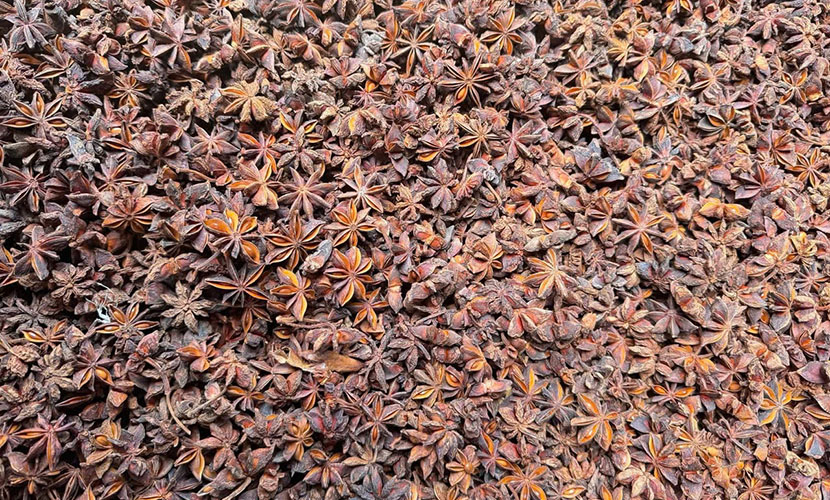
Vietnamese star anise exports in the first four months of 2026 recorded declines in both volume and export value. This reflected an early-year market adjustment and fluctuating demand in the country’s traditional key export markets.
According to data from the Vietnam Pepper and Spice Association (VPSA), Vietnam exported 1,370 tons of star anise in April. Accordingly, it generated more than USD 5.4 million in export revenue. Compared with April 2025, export volume declined by 43.8%. However, compared with the previous month, export volume increased by 13.8%, while export value rose by 15.9%.
Cumulatively, in the first four months of 2026, Vietnam exported more than 4,300 tons of star anise worth over USD 17.2 million. This represented a decline of 26% in volume and 21% in value compared with the same period last year. The average export price of Vietnamese star anise in April reached USD 3,941 per ton.
Vietnamese star anise exports
Vietnamese star anise exports have been available in a wide range of markets. Specifically, they include China, India, Malaysia, Indonesia, the United Kingdom, the United States, France, Japan, and Germany. In addition to direct exports to foreign partners, the product has also been available through international e-commerce platforms such as Alibaba and Amazon.
Star anise is one of Vietnam’s high-value agricultural products and is highly popular for both domestically and internationally. Thanks to its distinctive aroma and diverse applications in the food, pharmaceutical, and cosmetics industries, Vietnamese star anise has established a strong presence and reputation in global markets.
In recent years, Vietnamese star anise exports have achieved significant growth. The country is currently the world’s second-largest producer of star anise, after China. It has an estimated annual output of 22,000 tons from approximately 55,000 hectares of cultivation.
Vietnam’s spice exporters have increasingly focused on enhancing product quality. To achieve this, they have adopted modern production processes and ensured compliance with international food safety standards.
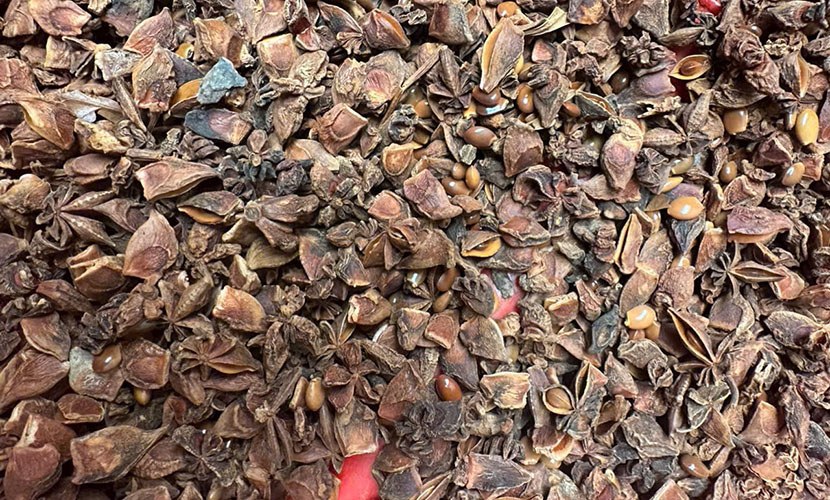
Broken star anise from Vietnam
In addition, increased investment in research and development of value-added star anise products has helped boost export earnings. Products such as star anise essential oil, star anise extracts, and star anise-based cosmetics are gaining popularity. They are also experiencing strong demand in international markets.
Organic star anise production not only enhances product value but also ensures consumer safety and meets the requirements of processing industries and export markets. After harvest, fresh star anise undergoes drying or dehydration. Subsequently, it is processed into essential oils and other value-added products, which generate high economic returns.
These products are important raw materials in various sectors. They include pharmaceuticals, flavorings and fragrances, food and beverage production, and handicrafts. As a result, they benefit from broad market demand.
Vietnamese source: https://doanhnghieptiepthi.vn/xuat-khau-hoa-hoi-sut-giam-ca-luong-va-kim-ngach-trong-4-thang-dau-nam-161260528214132462.htm