
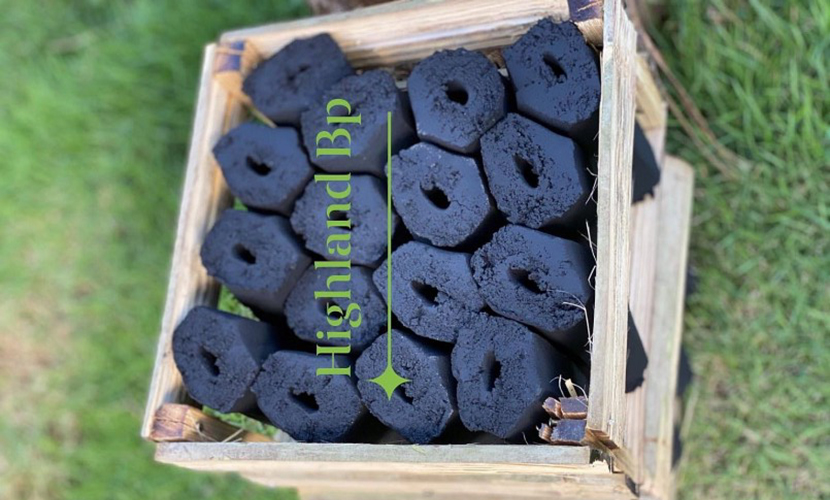
Ms. Nguyen Thi Cam Hang had been a director of a bank branch. After recognizing the export potential of coconut shell charcoal, she decided to establish her own company. She would like enhance the value of Vietnamese agricultural products and create employment opportunities for local people. As a result, she embarked on a new entrepreneurial journey in the industry.
She spent 16 years working for a commercial bank, where she was a branch director in Ho Chi Minh City. After leaving this position, she returned to her hometown in Thuan Loi Commune, Dong Phu District. There, she began collecting and purchasing coconut shells, processing them into charcoal briquettes, and exporting them to international markets.
However, her entrepreneurial journey was far from easy. She entered the coconut shell charcoal industry in 2015 with investment capital from a foreign partner. Using this funding, she established her first production facility in Binh Duong Province. By the end of 2019, however, she found herself starting over from scratch. This was because several verbal agreements were not honored as originally promised.
Coconut shell charcoal from Vietnam
Rather than being discouraged by these setbacks, Ms. Hang treated them as valuable learning experiences. When she decided to establish her second factory, she viewed the more than two years spent working with her former partner as an apprenticeship period. During that time, she gained valuable experience and industry knowledge for coconut shell charcoal. Although the partnership ultimately collapsed, it provided her with the knowledge and experience needed to continue pursuing her dream of creating tangible benefits for local communities, particularly for people in her hometown.
When the partnership collapsed, Ms. Hang should sell her house. She invested in building a factory on an 11,000-square-meter site in her home province of Binh Phuoc. The coconut shell charcoal facility currently operates a single production line with a capacity of approximately 10–12 tons per day. Even when running at full capacity, it takes about five days to produce enough charcoal to fill one export container. Despite strong demand from international markets, production remains limited by current capacity.
Just two months after commencing operations, her company shipped its first container of coconut shell charcoal in April 2020. Since then, the company has exported not only to many other countries. The factory’s production capacity has now increased to 200 tons of finished products per month. To maintain this output, it requires around 800 tons of coconut shell. This is a by-product that would otherwise be wasteful in agricultural production.
She acknowledges that her business may not appear glamorous and that her company is far from being a billion-dollar enterprise. Her daily work quietly focuses on collecting coconut shells and processing them into charcoal. The finished products are then supplied to international markets.
In the domestic market, her coconut shell charcoal products are also supplied to customers such as the Barbecue Garden restaurant chain and the My Le Ecotourism Area in Binh Phuoc Province. According to Ms. Hang, domestic demand for charcoal remains substantial. However, coconut shell charcoal has yet to gain widespread popularity. This is despite the fact that it offers higher heat output than traditional wood charcoal, burns more completely, and provides greater safety.
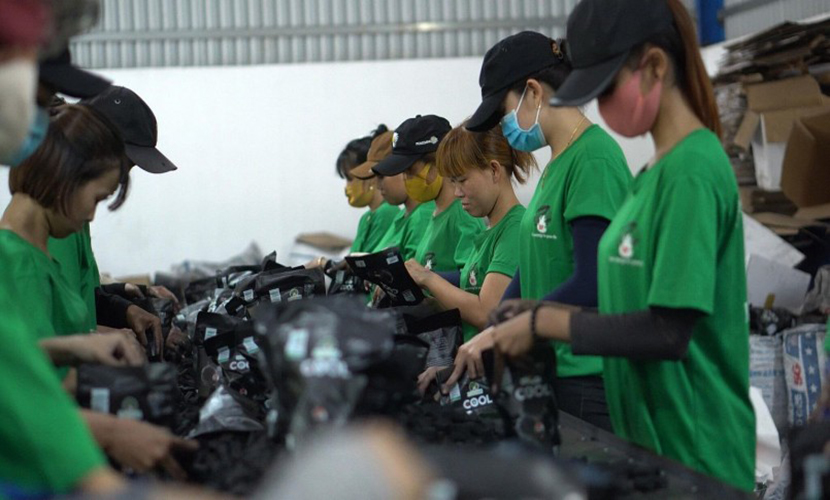
Coconut shell charcoal factory
The raw materials come from residents of Vietnam’s Mekong Delta region, who carbonize coconut shells. The company then grinds the charcoal into a fine powder and mixes it with water before molding it into different product forms, depending on market requirements.
When asked why she did not locate the factory closer to the raw material source, Ms. Hang explained that doing so would reduce transportation costs and delivery time. However, it would offer fewer advantages in terms of labor availability, packaging services, and customer development, as she focused on exports. More importantly, establishing the factory in Binh Phuoc allows her to create employment opportunities for people in her hometown.
At present, in addition to customers in the Middle East, the company’s partners in Germany, Australia, Belgium, and Türkiye have been steadily increasing their order volumes. These early achievements have strengthened Ms. Nguyen Thi Cam Hang’s confidence in her decision to build a business around coconut shell charcoal.
Through her venture, she is not only promoting the value of Vietnam’s agricultural products and agricultural by-products on the global market, but also creating meaningful employment opportunities for local residents. In addition, she is contributing to the socio-economic development of her community.
If you are interested in Vietnamese coconut shell charcoal, please contact us:
Company: Agrideco Vietnam Co., Ltd.
Address: No 02, Alley 325 Kim Nguu, Vinh Tuy Ward, Hanoi, Vietnam
Tel/Kakao Talk/Whatsapp: +84 989 649 804
Website: https://agridecovietnam.com
Email: agridecovietnam@gmail.com