
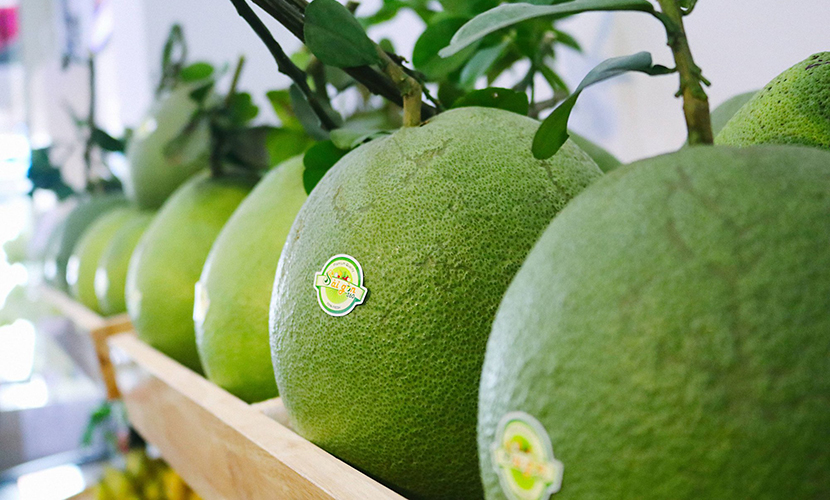
Within a short period, Vietnamese grapefruit exports have secured market access to two of the world’s most demanding destinations—Australia and China. This milestone is a major opportunity for the industry to accelerate its export growth. In today’s increasingly integrated markets, product quality and certified growing area codes have become essential for accessing the world’s most demanding export destinations. They are the most powerful “passport” to international markets.
On April 13, 2026, in Vinh Long Province, Vietnam’s first shipment of green-skinned pomelos was officially exported to Australia. The shipment followed more than two years of technical negotiations and successful compliance with Australia’s stringent phytosanitary requirements. Pomelo has thus become the sixth Vietnamese fresh fruit granted access to the Australian market.
Just days later, Vietnam signed a phytosanitary protocol with China. The agreement paved the way for the official export of fresh pomelos and lemons to a market of more than 1.5 billion consumers. This agreement increased the number of Vietnamese fruit and vegetable products officially permitted to enter China to 16.
According to the Vietnam Fruit and Vegetables Association, if the industry fully capitalizes on these new opportunities, Vietnamese grapefruit exports could reach around USD 300 million in 2026. This would represent a sharp increase from USD 72.5 million recorded in 2025.
Vietnam currently has more than 100,000 hectares of pomelo orchards, producing nearly one million tonnes annually. During the first two months of 2026, Vietnamese pomelo exports totaled USD 14 million. This represented an increase of 30% compared with the same period last year.
Dang Phuc Nguyen is the General Secretary of the Vietnam Fruit and Vegetables Association. He said, “Vietnam’s fruit and vegetable exports are maintaining strong growth momentum. As a result, they could reach between USD 9.5 billion and USD 10 billion in 2026.”
He added that if market requirements are met successfully, Vietnamese grapefruit exports alone could generate around USD 300 million this year. This would represent a significant breakthrough compared with previous years.
Vietnamese grapefruit exports
Vietnam’s pomelo industry is now facing challenges similar to those that previously affected the durian sector. In recent years, cultivation areas have expanded rapidly, creating increasing pressure on the industry. Increasing production has placed downward pressure on domestic prices, making export market development an urgent priority.
At the same time, Vietnamese grapefruit exports have several competitive advantages. They can be harvested year-round, and their distinctive characteristics set Vietnamese varieties apart from those grown in China. These strengths provide a solid foundation for building sustainable export markets if supported by appropriate development strategies.
Representatives of the Department of Crop Production and Plant Protection emphasized the importance of raising farmers’ awareness. They also stressed the need to strengthen quality control and ensure full product traceability. These measures are necessary to prevent the industry from repeating the mistakes made in the durian sector.
Based on current industry conditions, experts recommend three key priorities for Vietnamese grapefruit exports. These include strengthening oversight of growing area codes and packing facilities to ensure transparency and effective inspection. They also include diversifying export destinations to reduce dependence on a single market. In addition, they call for promoting deep processing to increase product value and improve competitiveness.
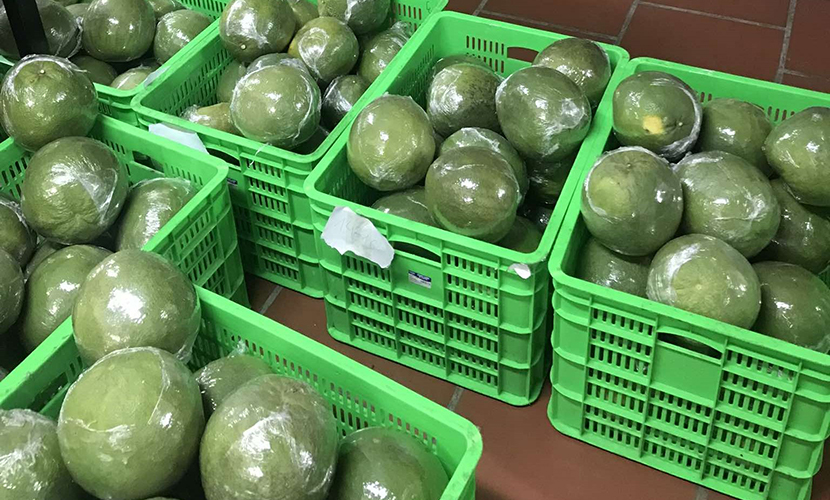
Green-skinned grapefruit from Vietnam
Former Minister of Agriculture and Rural Development Le Minh Hoan stressed, “Vietnam needs a comprehensive strategy to expand fruit and vegetable exports. At the same time, it must position its agricultural sector around transparency, responsibility, and sustainability.”
Experience has shown that excessive reliance on a single export market can create significant risks. When import requirements changed, weaknesses in quality control and traceability left the durian industry vulnerable. These lessons are directly relevant to the pomelo industry as it enters the early stages of international market expansion.
The global pomelo market is likely to exceed USD 4 billion by 2033, while Vietnam’s current export value remains relatively modest. This indicates substantial room for future growth.
At the production level, farmers have increasingly shifted their focus from pursuing higher prices to improving product quality and complying with production standards. Farmer groups and cooperatives are gradually adopting modern cultivation techniques to enhance product quality and better satisfy the requirements of international buyers.
The simultaneous opening of the Australian and Chinese markets represents a major opportunity for Vietnamese grapefruit exports. However, transforming pomelos into a sustainable billion-dollar export sector will require a long-term development strategy. Rather than pursuing short-term market opportunities, the industry must focus on sustainable development.
The experience of the durian industry demonstrates that gaining market access is only the beginning. Long-term success ultimately depends on the ability to consistently maintain market access and meet increasingly demanding quality standards. It also requires building a resilient and sustainable export industry.
Vietnamese source: https://baochinhphu.vn/buoi-viet-nam-truoc-cua-ty-do-tranh-vap-bai-hoc-sau-rieng-102260423104537031.htm
If you are interested in Vietnamese grapefruits, please do not hesitate to contact us:
Company: Agrideco Vietnam Co., Ltd.
Address: No 02, Alley 325 Kim Nguu, Vinh Tuy Ward, Hanoi, Vietnam
Tel/Kakao Talk/Whatsapp: +84 989 649 804
Website: https://agridecovietnam.com
Email: agridecovietnam@gmail.com