

Vietnam’s coffee industry is facing mounting pressure from falling prices and intensifying competition. This is prompting Vietnamese coffee exporters to accelerate their shift toward sustainable production and enhanced traceability.
According to the Ministry of Agriculture and Environment, Vietnam exported an estimated 150,000 tonnes of coffee in June 2026. The export revenue reached USD 552.6 million.
In the first half of 2026, Vietnam’s coffee exports reached approximately 1.1 million tonnes, earning USD 4.78 billion. Export volume increased by 9.7% compared with the same period in 2025, while export value declined by 14.4%. The average export price fell to around USD 4,435 per tonne, down 22% year on year. This reflected a correction in the global coffee market following the period of exceptionally high prices.
Germany, Italy, and the United States remained the three largest markets for Vietnamese coffee. They accounted for 14.1%, 7.9%, and 6.9% of total exports, respectively. However, export value declined across all three markets, with Germany recording the sharpest drop of 21.7%. In contrast, China emerged as a bright spot, with export turnover surging by 70.7%.
Vietnam’s coffee industry
Mr. Thai Nhu Hiep is the Chairman and General Director of a Vietnamese coffee export company. He said the company had secured export contracts for the entire year early on. As a result, demand was not a major concern. The biggest challenge for Vietnam’s coffee industry, he noted, has been rising logistics costs, particularly ocean freight rates. Geopolitical uncertainties affecting global trade have also created significant challenges.
“Fluctuations in transportation costs have squeezed profit margins even though export volumes and orders remain stable. Nevertheless, we expect our 2026 revenue to be broadly in line with last year. Export volume is likely to increase by around 20%. This is the result of long-term preparation over many years, not just the past few years,” Hiep said.
Domestically, coffee prices have rebounded to around VND 89,000–90,000 per kilogram after several consecutive declines. This has encouraged many farmers to sell and lock in profits. However, remaining inventories are limited, and trading activity has remained cautious.
Meanwhile, the global market continues to face downward pressure as Brazil is likely to harvest a bumper crop. Robusta futures on the London exchange and Arabica futures in New York both declined in June. This pushed Vietnam’s average export prices below last year’s levels.
According to the Vietnam Coffee-Cocoa Association (Vicofa), global coffee production is likely to reach around 180 million bags in the 2025–2026 crop year. This represents an increase of nearly 8 million bags from the previous season. With supply expanding faster than demand, downward pressure on coffee prices is likely to persist in the coming months.

Robusta coffee from Vietnam
Vicofa also believes that achieving Vietnam’s 2026 coffee export target will be challenging, given the sharp decline in export prices. Export volumes are also typically lower in the second half of the year than in the first. In addition to market pressures, the El Niño weather pattern could bring prolonged heat and drought to many coffee-growing regions in Asia. This could affect yields in the 2026–2027 crop season.
According to Hiep, companies that are only now beginning to invest in meeting these new requirements face substantial financial and operational costs. Businesses that prepared in advance, by contrast, have gained a significant competitive advantage. He also stressed that the transition requires more than awareness campaigns.
It needs practical guidance tailored to individual provinces and businesses. Coffee-growing regions such as Gia Lai and Dak Lak have distinct characteristics. Therefore, they require customized solutions to help exporters comply with different market requirements.
“Businesses cannot make this transition alone. Achieving sustainable development requires everyone to be in the same boat, sharing responsibilities and adapting together to the evolving demands of global markets,” Hiep emphasized.
As importing countries tighten regulations on carbon emissions, deforestation, and traceability, many experts believe regenerative agriculture will become a crucial pathway. It will help enhance the competitiveness of Vietnam’s coffee industry. Transitioning to regenerative agriculture would help the coffee sector comply with the European Union’s Deforestation Regulation (EUDR). It would also enable producers to participate in carbon credit markets. In addition, this would create an additional source of income.
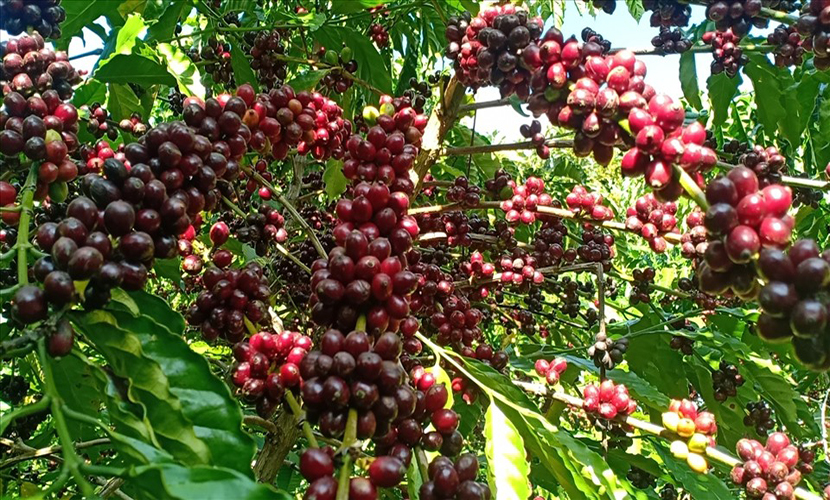
Vietnamese coffee trees
Mr. Nguyen Van Thiet is the Manager of the Rainforest Alliance Office in Vietnam. He said the industry is at a critical turning point as international markets impose increasingly stringent sustainability requirements. In his view, a regenerative coffee farm should not only produce high-quality coffee. It should also restore ecosystems, conserve biodiversity, and foster a more harmonious relationship between people and nature.
As global competition intensifies and opportunities to expand production become increasingly limited, industry experts believe Vietnam’s competitive advantage will no longer lie in higher output. Instead, it will depend on superior quality, compliance with green standards, and the development of sustainable value chains. This approach is expected to strengthen the long-term position of Vietnamese coffee in international markets while generating greater added value for both exporters and coffee growers.
For more information about Vietnamese coffee exports, please contact us:
Company: Agrideco Vietnam Co., Ltd.
Address: No 02, Alley 325 Kim Nguu, Vinh Tuy Ward, Hanoi, Vietnam
Tel/Kakao Talk/Whatsapp: +84 989 649 804
Website: https://agridecovietnam.com
Email: agridecovietnam@gmail.com