
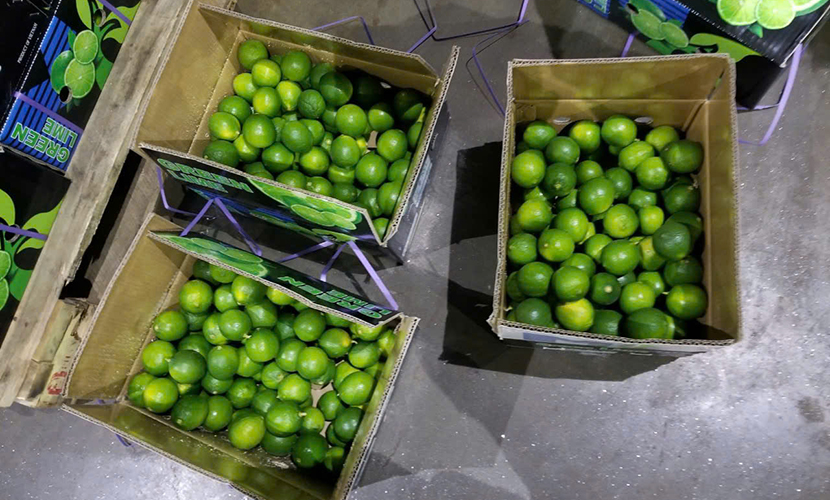
The seedless lime cultivation model in Mỹ Hiệp Commune is steadily establishing its position on Vietnam’s agricultural export map. By standardizing production in accordance with Globalgap standards, Vietnamese seedless lime exports are increasing their economic value. They are also advancing toward sustainable development while meeting the increasingly stringent requirements of international markets.
Mỹ Hiệp Commune is as one of Đồng Tháp Province’s key seedless lime production areas. It cultivates a variety known for its many outstanding characteristics. The crop was first introduced on a trial basis in 2007. Since then, it has gradually developed into a specialized growing region thanks to its mild acidity, delicate aroma, high juice content, and seedless fruit.
Combined with its short production cycle, seedless lime cultivation has become the primary source of income for many local households. However, during its early stages of development, the industry faced significant challenges in farming practices and market stability. This was largely due to the lack of strong production and marketing linkages.
Mr. Phạm Bá Khiểm is a farmer in Mỹ Hiệp Commune. He recalled that many growers previously cultivated Vietnamese seedless limes on a small scale, selling to traditional markets. This marketing model left prices highly unstable. During periods of oversupply, farmers even had to rely on government-supported “rescue” campaigns to clear excess produce.
Vietnamese seedless lime exports
The absence of coordinated production and consumption networks left growers vulnerable to fluctuations in the domestic market. Addressing these challenges became a priority for local authorities. They sought to protect farmers’ livelihoods and enhance the value of Cao Lãnh’s signature agricultural product.
Beyond price volatility, inconsistent product quality also posed a major obstacle as Vietnamese seedless lime exports entered demanding markets. In practice, cooperatives encountered considerable difficulties because cultivation, crop management, and harvesting practices varied among member households.
Controlling pesticide residues and meeting the stringent traceability requirements of international buyers required an entirely new production mindset. Without moving away from fragmented farming practices, the region’s agricultural products would struggle to overcome technical trade barriers. They would also find it difficult to integrate more deeply into global supply chains.
Mr. Nguyễn Thái Bình is the Chairman of Mỹ Hiệp Commune. Commenting on these challenges, he said that fragmented production and weak linkages remain the key bottlenecks that must be addressed. Local authorities have recognized the importance of planning specialized growing areas. They have also standardized production practices to meet the requirements for official export markets.
Although increasingly stringent quality standards present significant challenges, they have also become a driving force for improving the management of raw material areas. The commune’s top priority is therefore to protect the Cao Lãnh lime brand by helping farmers adopt safe and standardized production practices.
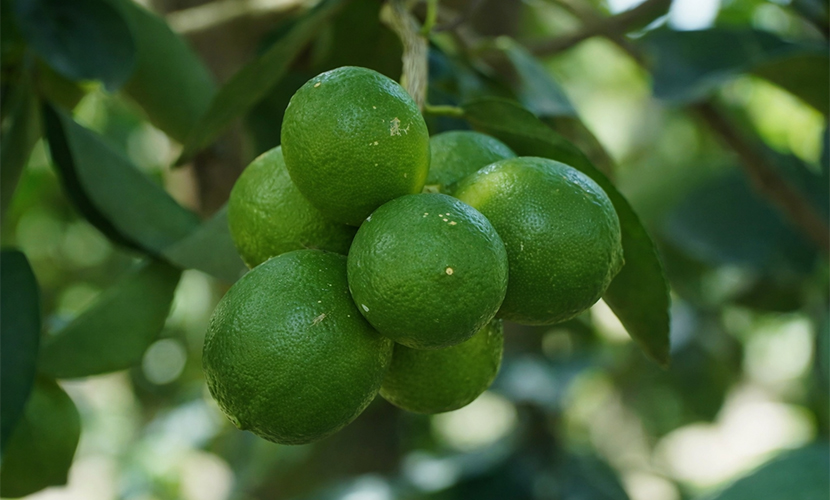
Globalgap green lime from Vietnam
Against this backdrop, shifting from a production-oriented mindset to an agricultural business approach has become essential for Mỹ Hiệp. The commune’s seedless lime cultivation area now exceeds 60 hectares. Therefore, maintaining consistent product quality of Vietnamese seedless lime exports is critical to preserving its reputation in international markets.
However, local cooperatives still face limitations in terms of capital and technical expertise. They therefore require long-term and systematic support from relevant authorities. Only by addressing these management and production challenges can seedless limes truly become a key export commodity. This will provide stable and sustainable income for local farming communities.
To overcome international trade barriers, Mỹ Long Agricultural Services Cooperative has established a concentrated raw material area that complies with GlobalGAP standards. Instead of following fragmented farming practices, cooperative members should strictly adhere to standardized production procedures. These procedures cover every stage, from crop management to harvesting.
This transition has ensured consistent product quality while meeting buyers’ requirements for fruit size, appearance, and food safety. Thanks to its long-term commitment to clean production, the cooperative has maintained stable exports of seedless limes to the Netherlands for the past six years. In 2024, Vietnamese seedless lime exports reached approximately 130 tonnes.
Mr. Lê Văn Nam is a member of the cooperative’s Board of Directors. He said that combining exports with deep processing has increased the value of seedless limes by three to four times compared with traditional sales. The cooperative currently has contract farming arrangements with more than 30 households across 30 hectares. It plans to expand this area to 100 hectares in the coming years.
At the same time, it has developed a range of value-added products. These include lemon soap and honey lemon juice, both of which have received 4-star OCOP (One Commune One Product) certification. Its closed-loop production model not only optimizes costs but also produces safe, high-quality products while contributing to environmental sustainability.
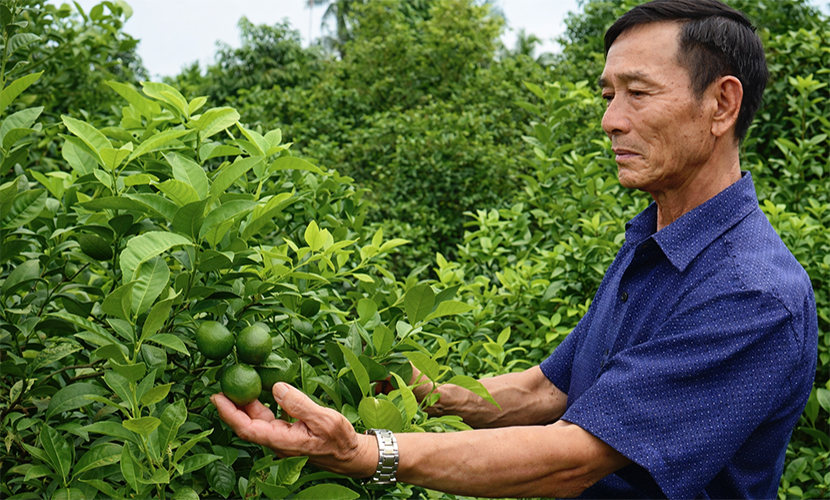
Vietnamese seedless lime farm
Farmers’ confidence in the cooperative model has continued to grow as economic benefits become increasingly evident. Mr. Phạm Văn Niềm is a cooperative member in Mỹ Hiệp Commune. He said that conventional seedless limes currently sell for VND 7,000–12,000 per kilogram. Meanwhile, organically grown limes fetch VND 17,000–20,000 per kilogram.
At these price levels, growers can earn stable profits, encouraging more farmers to adopt Globalgap production standards. Membership in the cooperative also provides producers with the legal framework and technical support they need. This support helps them establish long-term marketing partnerships with Vietnamese seedless businesses. This reduces market risks and ensures more stable outlets for their products.
The model’s outstanding economic performance is also reflected in the success of exemplary local farmers. Mr. Võ Văn Nghiệp, from Mỹ Long 3 Hamlet, said his family cultivates 1.2 hectares of Globalgap-certified seedless limes, harvesting more than 50 tonnes each year.
Around 80% of the harvest consists of Grade 1 fruit. Vietnam’s green lime exporters purchase it for shipment to the Netherlands at prices several thousand Vietnamese đồng per kilogram higher than the domestic market. The remaining output is distributed by the cooperative to the domestic market or used as raw material for processing. This systematic grading approach minimizes waste while maximizing farmers’ profits.
The locality’s ecological agriculture strategy has also received strong support from the leadership of Đồng Tháp Province. Ms. Nguyễn Hải Trâm is the Standing Deputy Secretary of the Đồng Tháp Provincial Party Committee. She praised the cooperative’s innovative efforts in adopting smart agriculture and utilizing lime peels and processing residues to produce organic fertilizer. Also, she emphasized that the model aligns well with the province’s sustainable development strategy.
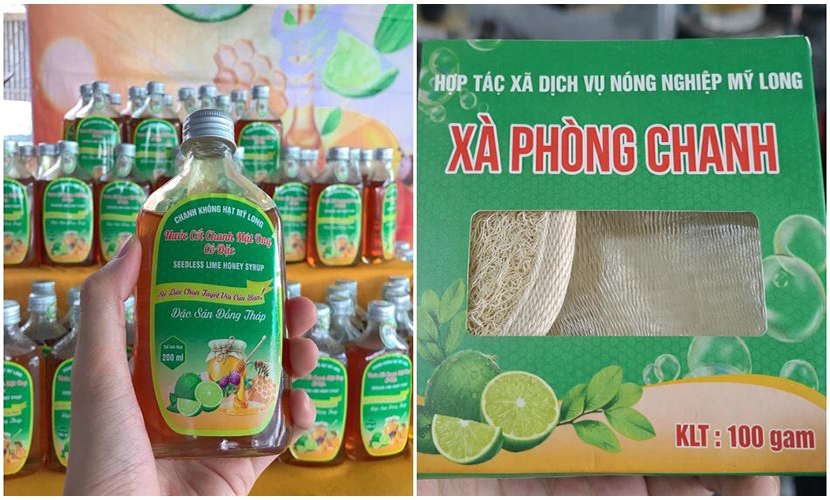
Value-added products from green lime
She also called on relevant departments to continue providing financial and technical support. Representatives of the Đồng Tháp Provincial People’s Committee also affirmed that the province would strengthen trade promotion activities to expand the Globalgap production model to other localities.
The development of the Cao Lãnh seedless lime brand demonstrates a well-defined strategy that successfully combines safe production with modern management practices. With strong government support and the collective commitment of cooperative members, the expansion of internationally certified growing areas is likely to accelerate in the coming years.
Success in the Dutch market has created an important foundation for Vietnamese seedless lime exports to reach more international destinations. The transformation of seedless limes from a small-scale crop into a branded export commodity highlights the power of cooperation, innovation, and sustainable agricultural development in Đồng Tháp, the land renowned as the “Pink Lotus Land.”
For more information about Vietnamese seedless lime exports, please contact us:
Company: Agrideco Vietnam Co., Ltd.
Address: No 02, Alley 325 Kim Nguu, Vinh Tuy Ward, Hanoi, Vietnam
Tel/Kakao Talk/Whatsapp: +84 989 649 804
Website: https://agridecovietnam.com
Email: agridecovietnam@gmail.com