
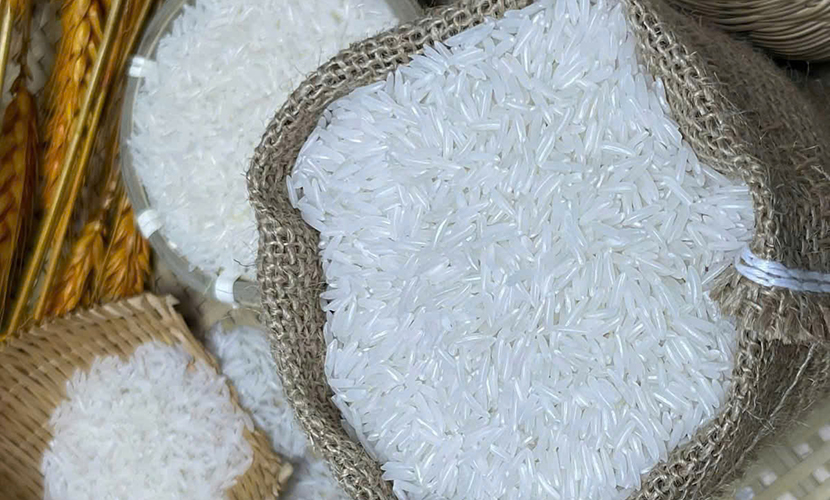
Forecasts point to declining global rice production and shrinking stockpiles. Therefore, expectations for a recovery in prices of Vietnam’s rice exports during the second half of 2026 are strengthening.
Global rice supplies are expected to decrease in the coming months. As a result, many experts see an opportunity for Vietnam’s rice industry to achieve higher export prices. However, capitalizing on this opportunity will require Vietnamese rice businesses to reduce their dependence on a small number of major markets. In addition, they will need to strengthen their capacity to manage and regulate supply.
According to a forecast, global rice production in the 2026–2027 marketing year is likely to reach approximately 537.8 million tons. This represents a decline of 5 million tons from the previous season. Meanwhile, global consumption demand is likely to continue increasing. Consequently, global rice inventories are likely to fall by 3.6 million tons to approximately 192.7 million tons. These developments are likely to provide support for a recovery in rice prices in the period ahead.
In May 2026, Vietnam exported approximately 1.1 million tons of rice, generating export revenue of USD 511.7 million. In the first five months of the year, rice exports totaled 4.5 million tons, valued at USD 2.09 billion. Despite the strong increase in export volume, export earnings declined by 3.6% compared with the same period in 2025. This was because the average export price fell to USD 467.6 per ton, down 9.6%.
Vietnam’s rice exports
The Philippines remained the largest rice export market for Vietnam’s rice exports, accounting for 46.9% of total exports. Meanwhile, China ranked second with a 17.8% share. However, both markets maintain strict import management mechanisms. As a result, Vietnamese rice exporters are often placed in a reactive position.
Specifically, China regulates rice imports through quotas and a list of approved exporters. At present, only around 40 Vietnamese companies that allow to export rice to China. However, more than 150 companies nationwide hold rice export licenses. Meanwhile, the Philippines manages imports through licensing requirements and policies that regulate import volumes at different periods.
According to the Vietnam Food Association (VFA), reports occasionally emerge suggesting that the Philippines may reduce rice imports. Whenever this happens, many domestic exporters tend to accelerate sales. They do so in order to maintain market share and reduce inventories. As a result, large volumes of rice are released onto the market within a short period. This puts downward pressure on prices, with farmers bearing the greatest impact.
Ms. Phan Mai Huong is co-founder of SSResource Media Pte. Ltd. in Singapore. She also noted that the Philippine rice market is highly sensitive to government policy decisions. She pointed out that the Philippines announced in April that it would import only about 150,000 tons of rice per month. However, actual imports reached between 500,000 and 600,000 tons per month.
Meanwhile, Vietnam’s exportable rice supply is no longer as abundant as it was at the beginning of the year, as the Winter-Spring crop has already ended. Many exporters have nearly exhausted their inventories in fulfilling contracts signed earlier. As a result, Philippine importers have been able to purchase large volumes of Vietnam’s rice exports at prices significantly lower than those recorded last year.
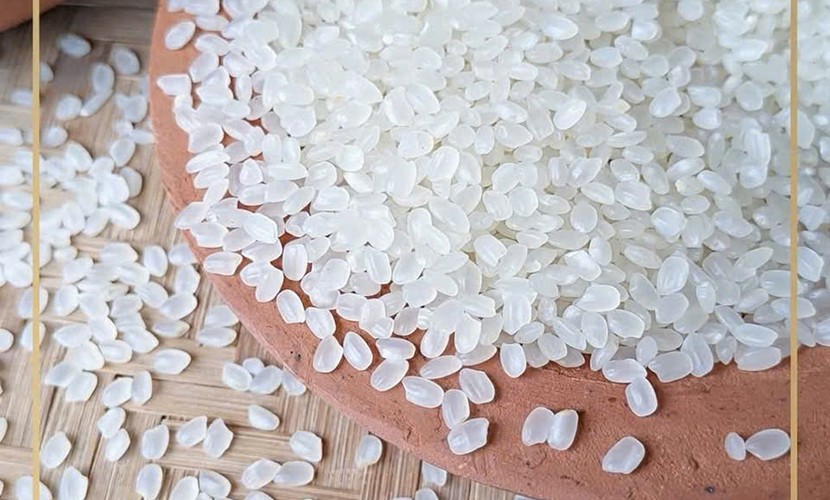
Japonica rice from Vietnam
The director of a rice-exporting company in Tay Ninh Province confirmed that despite record export volumes, neither farmers nor many exporters have fully benefited. A number of companies signed export contracts when rice prices were low. However, they later faced sharply rising paddy prices when procuring raw materials, leading to financial losses. In some cases, exporters reportedly lost nearly VND 2,000 per kilogram of exported rice.
Meanwhile, intermediaries have benefited the most from the gap between the prices paid to farmers and the prices charged to exporters. This highlights a major paradox within Vietnam’s rice industry. While export volumes have surged, the benefits have not been distributed evenly across the value chain.
According to the U.S. Department of Agriculture (USDA), global rice production in the 2026–2027 marketing year is likely to reach only 537.8 million tons. This figure is approximately 5 million tons lower than the previous season. At the same time, rising consumption demand is likely to reduce global rice inventories to around 192.7 million tons.
The USDA has not specified the exact reasons behind the projected decline in global rice production. However, according to industry experts, many rice-producing countries are adjusting output following a prolonged period of low prices. This has reduced incentives for farmers to expand cultivation.
Meanwhile, Ms. Phan Mai Huong believes that the risk of a strong El Niño event emerging in the latter part of the year could lead to water shortages in many major rice-growing regions. As rice cultivation depends heavily on irrigation, prolonged drought conditions could significantly reduce yields.
Notably, while the end of the year is not a peak production period for Vietnam, it is a crucial growing season for many rice-exporting countries in the region. Should production decline in these countries, global rice supplies could be substantially affectable.
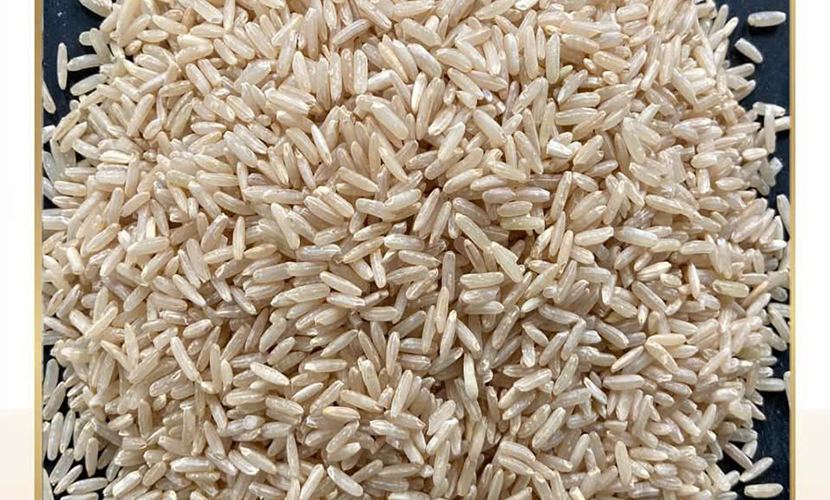
Jasmine brown rice from Vietnam
In addition, production costs—particularly for fertilizers and logistics—remain elevated. As a result, many farmers are considering reducing the number of cropping cycles each year. This is because profitability has become less attractive than before.
“Forecasts of lower production, coupled with concerns about adverse weather conditions, are encouraging many market participants to hold back supplies in anticipation of better prices. This is likely to support a recovery in rice prices during the final months of the year,” Ms. Huong said.
Mr. Nguyen Van Thanh is the Director of Phuoc Thanh IV Production and Trading Co., Ltd. in Vinh Long Province. He noted that current information regarding the Philippine market remains mixed.
“There are reports suggesting that the Philippines may reduce rice imports in June and July. However, there are also forecasts that El Niño could cut the country’s rice production by as much as 700,000 tons. Therefore, Vietnamese rice export businesses need to exercise caution when interpreting the various signals coming from the market,” Mr. Thanh said.
According to Mr. Thanh, rising production costs are prompting many localities to gradually shift from three rice crops per year to two. This trend could reduce supply in the coming years, contributing to a tighter global rice market. As importing countries become more aware of potential global supply shortages, they are likely to increase purchases proactively to ensure food security. This could help sustain higher rice prices.
Although Vietnam’s rice exports reached a record high during the first five months of the year, Mr. Thanh forecasts that total rice exports for 2026 will amount to only around 7.5–8 million tons. This is because the strong performance recorded earlier in the year was largely driven by abundant supplies from the Winter-Spring crop. Meanwhile, rice availability in the remaining months could decline considerably.
Vietnamese source: https://nld.com.vn/thoi-co-nang-gia-tri-gao-viet-196260610195454016.htm
If you are interested in Vietnamese rice exports, please contact us:
Company: Agrideco Vietnam Co., Ltd.
Address: No 02, Alley 325 Kim Nguu, Vinh Tuy Ward, Hanoi, Vietnam
Tel/Kakao Talk/Whatsapp: +84 989 649 804
Website: https://agridecovietnam.com
Email: agridecovietnam@gmail.com