

Multiple export markets are simultaneously tightening SPS (Sanitary and Phytosanitary) regulations, placing increasing pressure on Vietnam’s agro-export products. As a result, Vietnamese export businesses should compell to raise production standards, strengthen quality control, and improve traceability systems in order to maintain their export market share.
According to the Vietnam SPS Office under the Ministry of Agriculture and Environment, WTO members issued 43 SPS (Sanitary and Phytosanitary) notifications between June 1 and June 15, 2026. These included 18 draft measures for public consultation and 25 official measures that have already entered into force.
Although most of these new regulations are not targeted specifically at Vietnam’s agro-export products, they largely concern pesticide residues and quarantine requirements. They also include food additives, traceability, and food safety standards. These are issues that directly affect the export competitiveness of Vietnamese agricultural products.
Vietnam’s agro-export products
The United States remained the market issuing the largest number of notifications, with six measures related to the establishment, amendment, or exemption of maximum residue limits (MRLs) for pesticides. Notably, U.S. authorities sought comments on regulations concerning the active ingredient inpyrfluxam across multiple crop groups.
They also proposed an MRL of 15 ppm for mancozeb residues in longan and reviewed several other pesticide substances. These changes require Vietnamese exporters to reassess their entire production process. Failure to comply with even a single requirement could result in shipment rejection or increased testing costs.
Greater pressure is coming from the European Union, which maintains one of the world’s most stringent SPS systems. Under Regulation (EU) 2026/1206, several Vietnamese agri-products remain subject to enhanced border controls. Fresh and frozen durian continue to face inspection rates of 20%, while dragon fruit is subject to a rate of 30%.
Meanwhile, okra and non-sweet peppers of the Capsicum genus are subject to inspection rates of up to 50%. These products must also be accompanied by mandatory sampling and analysis certificates prior to importation. These measures indicate that Vietnam’s agro-export products remain under close scrutiny due to concerns over pesticide residues.
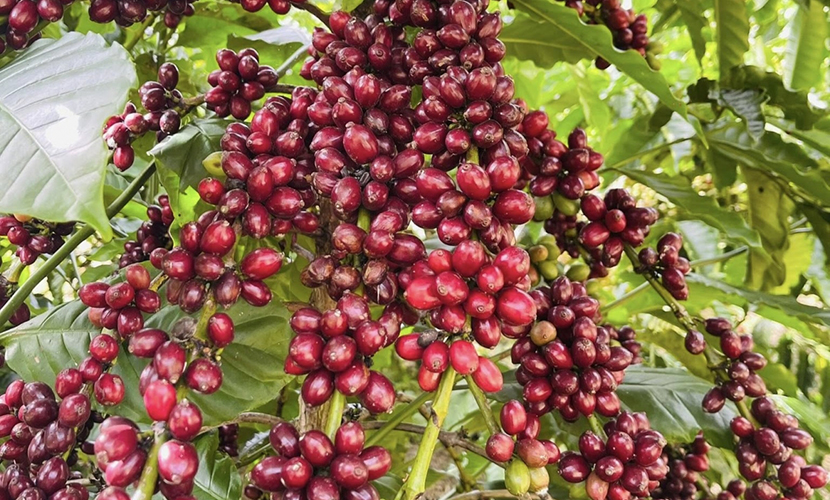
Vietnamese coffee exports
In addition to the United States and the European Union, Japan, South Korea, and Colombia have also introduced new SPS requirements. Japan has strengthened controls on invasive species and animal-disease prevention. It has also imposed stricter pre-import notification procedures on Vietnam’s agro-export products.
South Korea has added quarantine requirements for seeds, pollen, honey, and various related products. Meanwhile, Colombia is considering restrictions on several antimicrobial substances used in veterinary medicines.
These developments demonstrate that SPS measures are no longer temporary trade barriers but have become mandatory standards of international competitiveness. For Vietnam, adaptation must go beyond merely complying with import regulations. It requires the development of safe production areas, stricter control of agricultural inputs, stronger traceability systems, and continuous monitoring of SPS notifications.
By meeting international standards more effectively, Vietnam’s agro-export products can reduce the risk of warnings and import restrictions. They can also strengthen their reputation, expand access to global markets, and capture greater value within international supply chains.
Vietnamese source: https://thuehaiquan.tapchikinhtetaichinh.vn/hang-loat-thi-truong-siet-rao-can-sps-voi-nong-san-viet-nam-159954.html
If you are interested in Vietnamese agricultural products, please contact us:
Company: Agrideco Vietnam Co., Ltd.
Address: No 02, Alley 325 Kim Nguu, Vinh Tuy Ward, Hanoi, Vietnam
Tel/Kakao Talk/Whatsapp: +84 989 649 804
Website: https://agridecovietnam.com
Email: agridecovietnam@gmail.com