

Indonesia has a population of more than 280 million people and rising consumer demand. In addition, Indonesia is home to one of the world’s largest Halal food markets. Therefore, it would be a highly promising destination for Vietnamese food enterprises.
Mr. Pham The Cuong is the Commercial Counsellor at the Vietnam Trade Office in Indonesia. He noted that Indonesia’s food and beverage (F&B) industry is projected to reach USD 360.5 billion by 2026. This opens up significant market space for Vietnamese agricultural and processed food products.
In particular, he highlighted that Indonesia’s halal food market is likely to reach USD 155.3 billion. This would account for 11.1% of the global Halal food market. Accordingly, Halal certification is not only a mandatory requirement but also an advantage for companies to enter this market.
“In terms of consumer trends, Indonesians are increasingly favoring convenient, health-oriented products with compact packaging suitable for modern urban lifestyles. In addition, the rapid growth of online shopping is reshaping how consumers access products. This is especially visible through social media platforms such as Facebook, TikTok, and Instagram, particularly among younger generations,” Cuong added.
Vietnamese food enterprises
To effectively tap into this market, the Vietnam Trade Office recommends that Vietnamese food enterprises actively cooperate with local distributors who are familiar with regulatory procedures. At the same time, they should adapt to trends in sustainable packaging, aesthetic design, and transparent product information. This is necessary to build long-term consumer trust.
Mr. Le Anh Hoang is the Deputy Director of ITPC. He stated that Indonesia is emerging as one of the most promising markets for Vietnamese food products. Indonesia has a population of over 280 million people, a large consumer base, and a rapidly growing middle class. As a result, demand is increasing for processed, convenient, health-oriented, and natural-origin food products.
According to Hoang, bilateral trade momentum is further capable of the elevation of Vietnam–Indonesia relations to a Comprehensive Strategic Partnership in March 2025. It is also capable of both countries’ participation in key regional trade agreements such as ATIGA and RCEP.
To realize these opportunities, ITPC plans to organize a Vietnamese business delegation to SIAL Interfood 2026. This initiative follows the success achieved in 2025, when they supported more than 330 business-to-business connections. This is a major international food and beverage exhibition that will schedule for November 4–6, 2026 in Jakarta, Indonesia.
Despite strong opportunities, experts also warn that Vietnamese food enterprises must pay close attention to regulatory and technical requirements when exporting to Indonesia.
Mr. Danny Hidajat is the Director of We Link Co., Ltd. He noted that Indonesia is a large consumer market with stable GDP growth of around 4.8%–5.2% per year. Notably, with 87% of the population being Muslim, Halal certification and product registration from Indonesia’s Food and Drug Authority (BPOM) are mandatory prerequisites for commercializing any food product.
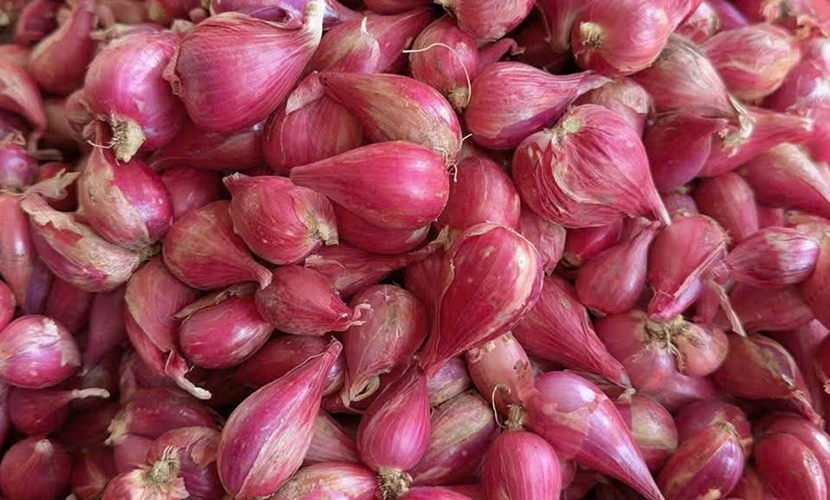
Vietnamese shallot exports
Assessing the competitiveness of Vietnamese export goods, Hidajat described them as a “smart mid-range choice.” They compete with more stable quality than low-cost Chinese products. At the same time, they offer more reasonable prices and greater flexibility than premium Japanese or European brands.
To reduce market-entry risks, he recommended that Vietnamese export companies work through local distributors in the first year. This allows them to test the market before expanding operations.
Mr. Rachmat Widyanto, S.TP., M.Si., is the Head of Halal Assessment Management and Lead Halal Auditor. He stated that Halal certification applications are surging. In the first four months of 2026 alone, 3,146 new applications were submitted. This accounts for 42.5% of the total applications recorded in the previous year (7,398).
He emphasized the key deadline of October 17, 2026. On this date, Halal certification requirements will be fully enforced for new product groups. They include cosmetics, traditional medicines, chemicals, imported goods, and small-scale food and beverage establishments. Non-compliant products may face administrative penalties and mandatory labeling as “Non-Halal.”
However, he also pointed out challenges for Vietnamese food enterprises. More than 75% of cosmetic raw materials are imported into Indonesia. Meanwhile, domestic companies face difficulties obtaining certification documents from international suppliers. Although the Halal Product Assurance Agency (BPJPH) maintains that the 2026 timeline will finish, experts remain concerned about its feasibility.
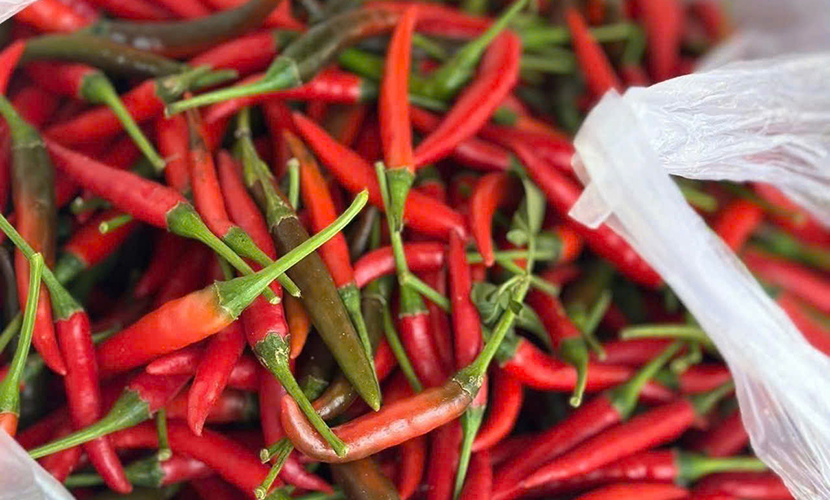
Vietnamese chili peppers
Ms. Le Tran Nhat Phuong is the Deputy CEO of Bee Logistics. She noted that for a strictly regulated market such as Indonesia, HS codes, SNI standards, and halal certification are closely monitored. Therefore, choosing the right transportation routes and managing total logistics costs are more important than simply seeking the lowest freight rates.
According to Phuong, current maritime routes efficiently connect Ho Chi Minh City and Hai Phong with major Indonesian ports including Jakarta, Surabaya, Semarang, and Batam. For air freight, direct flights operate daily from Tan Son Nhat, Noi Bai, and Da Nang airports to Jakarta. Transit times are just 3–5 hours.
However, he also warned that documentation errors can delay customs clearance by 7–14 days. This leads to additional storage costs at destination warehouses of around USD 0.17 per kg per day after the first 24 hours.
Indonesia is opening significant opportunities for Vietnamese food enterprises thanks to its large market size, rising consumer demand, and strong growth potential in the Halal sector. However, companies must proactively meet mandatory standards to turn this potential into real business outcomes. They also need to adapt to evolving consumer trends and develop appropriate market entry strategies.
Vietnamese source: https://thuehaiquan.tapchikinhtetaichinh.vn/doanh-nghiep-thuc-pham-viet-nam-don-co-hoi-lon-tu-thi-truong-indonesia-159928.html
If you are interested in Vietnamese food exports, please contact us:
Company: Agrideco Vietnam Co., Ltd.
Address: No 02, Alley 325 Kim Nguu, Vinh Tuy Ward, Hanoi, Vietnam
Tel/Kakao Talk/Whatsapp: +84 989 649 804
Website: https://agridecovietnam.com
Email: agridecovietnam@gmail.com