
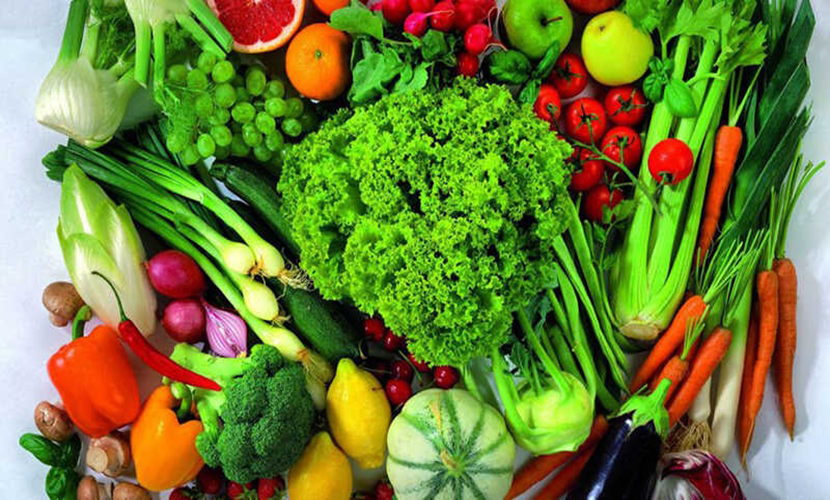
Preliminary results show that in June, Vietnamese fresh produce exports reached USD 777 million. This showed a decrease of 3.8% compared with the same period last year. This marks the first slowdown in export growth this year.
According to the Customs Department, Vietnam’s fruit and vegetable exports in June reached USD 777 million. This represented a 3.8% decline year-on-year. However, thanks to strong growth in the first five months, total exports in the first half of the year still exceeded USD 3.5 billion. This figure went up 14% compared with the first six months of 2025.
Vietnamese fresh produce exports had grown steadily for five consecutive months before suddenly slowing down. According to Dang Phuc Nguyen, Secretary General of the Vietnam Fruit and Vegetable Association, the slowdown was mainly due to two factors.
First, there was a disruption in supply. The Mekong Delta durian season was coming to an end. Meanwhile, the Eastern region had just begun its new harvest, leading to a temporary decline in output. In addition, the issue of cadmium heavy metal residues has not yet been fully resolved. As a result, this has also affected export activities.
Vietnamese fresh produce exports
The second key factor is that since June 1, China’s General Administration of Customs (GACC) has officially implemented a new import policy under Decree 280, replacing Order 248. The new regulation tightens control over foreign food production facilities exporting to the 1.4-billion-population market. However, several Vietnamese fresh produce enterprises did not fully prepare for these new requirements. As a result, temporary disruptions occurred for Vietnamese fresh produce exports.
Several Vietnam’s fresh exporters said the industry is still adjusting to the new regulations. They expect exports to recover and accelerate in the final months of the year. In particular, the Eastern region is currently in peak durian season, followed by the Central Highlands. Durian from the Central Highlands is expected to remain a major growth driver for Vietnam’s fruit and vegetable sector. This is due to its large output and strong competitive positioning in a relatively uncontested market.
China remains Vietnam’s largest fruit and vegetable export market. In the first five months of the year, exports to China reached nearly USD 1.5 billion, up 28% year-on-year.

Vietnamese durian exports
At the Vietnam–China Fruit and Agricultural Trade Forum, Chinese Ambassador to Vietnam Ha Wei noted that with a market share of over 22%, Vietnam is currently China’s second-largest fruit supplier.
He emphasized that Chinese consumers are no longer focus solely on price but increasingly demand higher quality and food safety. Inspection and quarantine are standard requirements in international trade.
China is also strengthening inspection systems at border gates to shorten customs clearance time. Over time, if the number of violations decreases, inspection rates will gradually decrease, allowing clear activities more quickly.
Vietnamese source: https://thanhnien.vn/xuat-khau-rau-qua-bat-ngo-giam-toc-vi-sao-185260625114030991.htm
If you are interested in Vietnamese fresh products, please contact us:
Company: Agrideco Vietnam Co., Ltd.
Address: No 02, Alley 325 Kim Nguu, Vinh Tuy Ward, Hanoi, Vietnam
Tel/Kakao Talk/Whatsapp: +84 989 649 804
Website: https://agridecovietnam.com
Email: agridecovietnam@gmail.com