
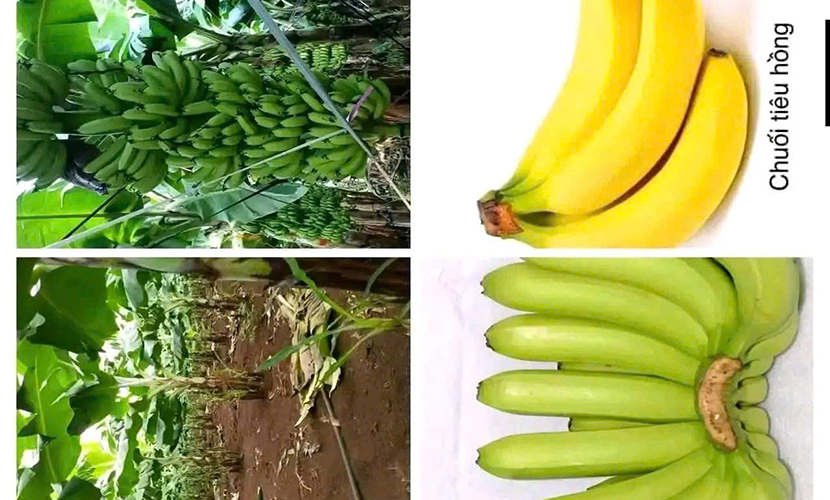
From January 2026, Vietnamese exported bananas showed strong improvement. Notably, both export volume and prices increased significantly compared to the same period last year.
Accordingly, from early 2026, the export price of tissue-cultured bananas increased sharply. At times, it exceeded VND 20,000 per kilogram. This surge was the result of higher demand in both export markets and the domestic market ahead of the 2026 Lunar New Year holiday.
Bananas are currently one of Vietnam’s key fruit crops and among the country’s most important fruit export items. By 2025, Vietnam’s total banana cultivation area had reached 163,500 hectares, with an overall production of approximately 2.75 million tons. In 2024, banana exports were valued at USD 378 million, ranking fourth among Vietnam’s major fruit export products.
Vietnamese exported bananas
Entering 2026, Vietnamese exported bananas have shown favorable conditions as prices remain high. Farmers are expecting a year of both good yields and strong prices.
Farmer Pham Van Quy is a banana grower in Thanh Son Commune. He noted that this year’s harvest has been less favorable than usual. Also, input costs have also increased significantly. Fertilizer prices rose by 30–40% compared to last year, along with higher costs for other agricultural materials. In addition, prolonged cold weather has delayed banana growth and harvesting by 15–30 days. This has further increased production costs.
However, export banana prices have remained high since the beginning of the year. Although prices have slightly decreased from their January peak, farm-gate prices of around VND 14,000 per kilogram still ensure good profits for growers. Based on market information, farmers remain confident that export demand will continue growing.
Mr. Ly Minh Hung is the Director of Thanh Binh Cooperative in Bau Ham Commune. He said that 2026 still holds strong potential for fresh banana exports as well as deeper processing products derived from bananas. With the advantage of developing standardized export-oriented production zones, the cooperative has been expanding its presence in demanding, high-value markets. It is focusing on both fresh bananas and processed products from fruit and banana stems.
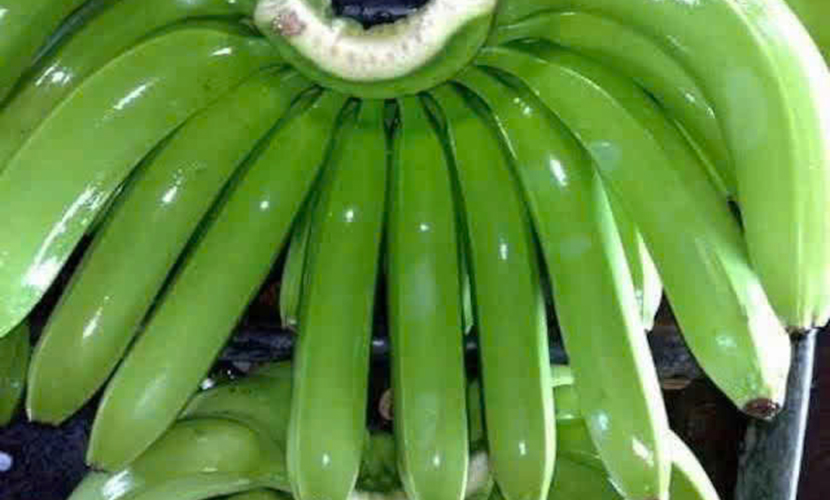
Vietnamese bananas for export
Ms. Le Thi Anh Tuyet is the Deputy Director of the Department of Agriculture and Environment of Dong Nai. She stated that Dong Nai is the country’s “banana capital” for export production. Vietnamese exported bananas are one of the province’s key crops. Local authorities are promoting the development of concentrated production zones.
To further promote and boost Vietnamese banana exports, the Department of Agriculture and Environment is proposing to the provincial People’s Committee a plan to organize a banana export ceremony in the first quarter of 2026.
According to the Project on the Development of Fruit Trees to 2030, Vietnam’s total banana cultivation area is likely to reach 165,000–175,000 hectares. Accordingly, production output is likely to reach 2.6–3 million tons. The export potential for Vietnamese bananas is forecast to continue expanding, creating room for farmers to further increase cultivation areas.
Vietnamese exported bananas are one of the key fruit crops with strong export advantages in Dong Nai. By the end of 2025, the province’s total banana cultivation area had reached nearly 20,300 hectares. Production exceeded 676,500 tons, an increase of nearly 7% compared to the same period last year. This growth contributes not only to expanded planting areas but also to farmers’ experience in cultivation. It is also the result of the application of modern techniques and technology in production.
Thanks to strong export performance, Vietnam’s bananas have become one of the highest-value fruit crops in the region. In recent years, banana cultivation areas have continued to expand across many localities.
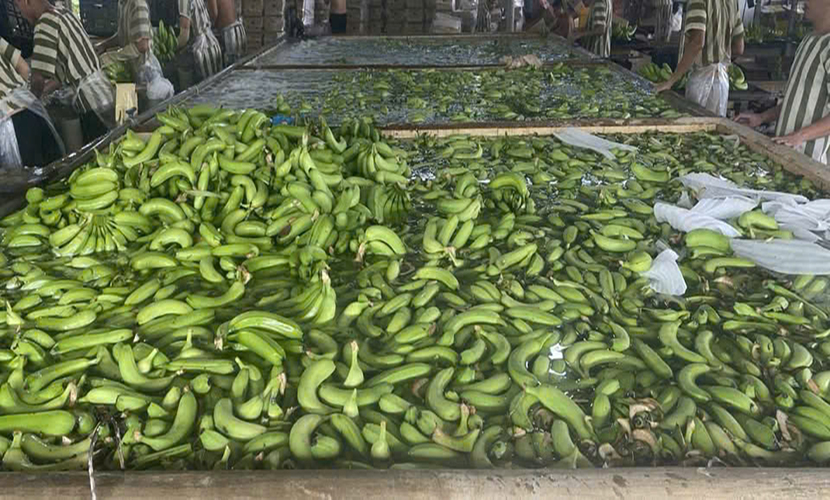
Vietnamese banana factory
Mr. Quy also noted that even traditionally “easy” markets such as China are now imposing increasingly strict requirements on fresh banana imports. These quality requirement changes are regularly updated by Chinese buyers and other import partners.
“The key issue is that farmers must strictly follow standardized production procedures to ensure product quality for buyers. The export potential for Vietnamese banana enterprises remains very large. Farms with large-scale, high-standard production will not lack buyers and can even choose partners proactively,” he said.
“In 2025, I cultivated about 110 hectares of Vietnamese exported bananas for multiple markets. I am now planning to acquire more land to expand production by several dozen hectares. This is to seize opportunities in this high-potential market,” he added.
Mr. Le Huy Quang is the Deputy Head of the Economic Division of Bau Ham Commune. He stated the locality is currently the province’s largest banana-growing “capital” with an area of 5,400 hectares. As bananas are identified as a key crop, local authorities are focusing on investing in infrastructure for concentrated banana production zones.
At the same time, they are creating favorable conditions to attract enterprises and cooperatives to invest. This is forming large-scale production fields for export-oriented banana cultivation.
Vietnamese source: https://baodongnai.com.vn/kinh-te/202602/khoi-dong-vu-xuat-khau-chuoi-nhieu-thuan-loi-a8c2532/
If you are interested in Vietnamese banana exports, please contact us:
Company: Agrideco Vietnam Co., Ltd.
Address: No 02, Alley 325 Kim Nguu, Vinh Tuy Ward, Hanoi, Vietnam
Tel/Kakao Talk/Whatsapp: +84 989 649 804
Website: https://agridecovietnam.com
Email: agridecovietnam@gmail.com