

In the context of continuously fluctuating global trade, Vietnamese agro-exports are facing increasingly strict requirements from import markets. Shifting production mindsets and building a synchronized management system are key factors for achieving sustainable competitiveness.
Vietnam’s agricultural businesses are facing major challenges as import markets are no longer focused solely on price or basic sensory quality. Global consumption trends are shifting strongly toward products with high transparency. These products must meet green standards and sustainability requirements. This poses a significant barrier for enterprises that still rely on exporting raw products. In addition, they continue to use traditional, inflexible packaging methods with little attention to product presentation.
In East Asian countries such as Japan and South Korea, demographic structures are reshaping the entire distribution system. Households of one to two people now account for a dominant share of urban populations and continue to grow. As a result, consumers no longer purchase large quantities for weekly or monthly household use. Instead, they prefer products packaged in small, convenient portions. Therefore, they can use immediately or quickly prepare for individual meals.
Vietnamese agro-exports
Mr. Bui Hai Nam is the Agricultural Counsellor of Vietnam in South Korea. He said Vietnamese agro-businesses are missing many opportunities because they have not kept up with this trend. He noted that customers always expect that when they open a package, the product inside is ready to use without further preparation.
Beyond packaging size, aesthetic standards and food hygiene requirements of Vietnamese agro-exports are also strict barriers. In Japan, a product with poor presentation will get over immediately, regardless of its internal quality. Labels must clearly indicate origin and safety standards, with accurate local language.
Mr. Vu Cuong, Agricultural and Environmental Counsellor of Vietnam in Japan, noted that Japan constantly updates its regulations related to food safety, packaging, and additives. Failure to closely monitor these updates can lead to shipment rejections. It can also result in loss of trust from partners.
In addition, the lack of a synchronized traceability system makes it difficult for goods to penetrate modern convenience store chains. Strict quality control requirements, increased packaging costs, and limited technological infrastructure for management are major bottlenecks. These barriers make many businesses hesitant. As a result, core competitiveness is significantly low.
To overcome barriers and turn challenges into opportunities, Vietnamese agricultural enterprises should transform. Instead of continuing to sell what they already have, the agricultural sector must boldly design products based on actual market demand. Investment in deep processing, portioning into smaller packages, and modern packaging design are inevitable directions to increase value.
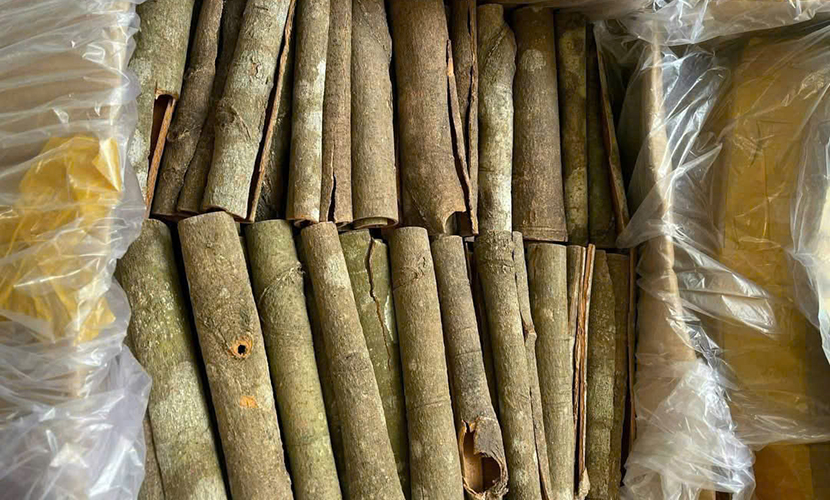
Vietnamese cinnamon tube
Mr. Phung Van Thanh is the former Agricultural Counsellor of Vietnam in the Philippines. According to him, restructuring the production process should closely aligned with real consumption patterns. He emphasized that promoting deep processing, reducing raw exports, and meeting green standards are key conditions for maintaining and expanding market share. In practice, a properly processed product can generate significantly higher profits compared to exporting raw goods.
Alongside product innovation, applying technology to ensure transparency across the entire supply chain is a vital requirement. Building a traceability system has become an important foundation. It allows goods to confidently enter the world’s most demanding distribution channels. However, Vietnamese agricultural businesses must clearly understand the nature of this technological tool.
Mr. Nguyen Van Long is the Director General of the Department of Science and Technology. He stated that the system is not a preferential mechanism. He affirmed that traceability is a tool to demonstrate that products are produced according to proper procedures, strictly quality-controlled, and ensure safety and transparent origin. All standard quarantine procedures must follow with.

Vietnamese coconut jelly
Recognizing its strategic importance, the Government is actively directing the completion of digital infrastructure. To date, tens of thousands of products from hundreds of planting areas have been integrated into the database system. The adoption of advanced technologies such as blockchain is also being promoted to enhance security and reliability of the entire data storage system. This is a major step forward in improving market transparency and strengthening consumer trust.
Deputy Minister of Agriculture and Environment Hoang Trung has also instructed relevant agencies to accelerate the completion of sectoral data systems. He emphasized that implementing traceability platforms is not merely a technical task but a long-term strategic mission for sector governance and market development. With such synchronization, Vietnamese agricultural products are fully capable of winning over even the most demanding consumers.
Vietnamese source: https://thuonghieusanpham.vn/nong-san-viet-doi-huong-de-chinh-phuc-thi-truong-kho-tinh
If you are interested in Vietnamese agro-products, please do not hesitate to contact us:
Company: Agrideco Vietnam Co., Ltd.
Address: No 02, Alley 325 Kim Nguu, Vinh Tuy Ward, Hanoi, Vietnam
Tel/Kakao Talk/Whatsapp: +84 989 649 804
Website: https://agridecovietnam.com
Email: agridecovietnam@gmail.com