
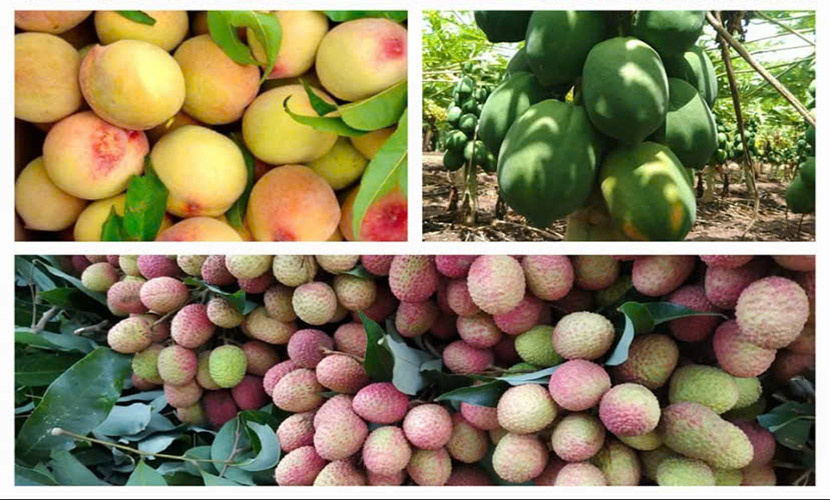
Vietnamese fruit and vegetable exports continued their impressive growth trajectory during the first five months of 2026. They generated nearly USD 2.7 billion in export revenue, a 16% increase compared to the same period last year.
Vietnam’s fruit and vegetable sector continued to show positive signs in export activities. According to preliminary estimates by the Vietnam Fruit and Vegetable Association based on data from the Customs Department, Vietnamese fruit and vegetable exports reached USD 614.8 million in May 2026. This figure was up 15% from the previous month and on par with the same period in 2025.
Vietnam’s fruit and vegetable exports reached USD 2.67 billion in the first five months of 2026, up 16% year-on-year. Meanwhile, imports totaled nearly USD 1.3 billion, an increase of 31%. This allowed the sector to maintain a trade surplus of more than USD 1.37 billion.
Vietnamese fruit and vegetable exports
China remained the largest destination for Vietnamese fruit and vegetable exports, accounting for 50% of total export value. The United States and South Korea were the next two largest markets, with shares of 8.7% and 5.4%, respectively.
Durian continued to be a standout performer, recording strong export growth. The reasons were the off-season harvest advantage and the expansion of growing-area codes approved for official exports to China. Meanwhile, traditional export products such as dragon fruit, bananas, mangoes, and coconuts maintained stable shipments. Notably, coconuts have been identified as a strategic export product for the coming years.
A particularly encouraging development is the ongoing shift in the export structure toward higher value-added products. Processed fruit and vegetable products accounted for 35.82% of total export value. This was significantly higher than the 29.33% recorded during the same period last year. This trend is helping to increase export earnings while reducing dependence on the seasonal nature of fresh produce.
Another positive factor is the signing of protocols between Vietnam and China in April 2026. These agreements allow the official export of pomelos and lemons, creating additional room for export growth in the coming years. Beyond China, the successful shipment of Vietnam’s first fresh pomelo consignment to Australia demonstrates the growing ability of Vietnamese fruit exporters to meet international standards.
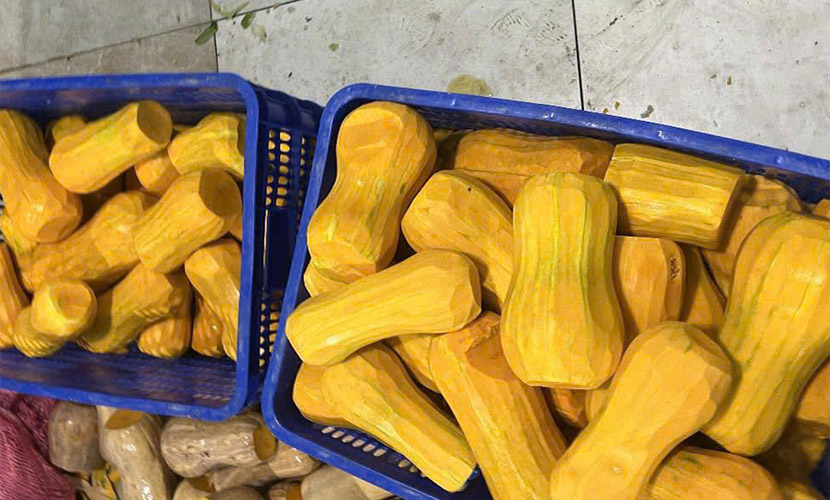
Vietnamese peeled pumpkins
Despite maintaining strong growth momentum, the fruit and vegetable sector continues to face challenges related to raw material supply, plant diseases, and increasingly stringent import requirements. Experience from banana-growing regions shows mounting pressure from crop diseases and soil degradation. Exporters must not only secure stable output but also meet strict requirements on traceability, product consistency, and sustainable production practices.
According to industry experts, success in an increasingly competitive environment depends less on cultivated area. Instead, it depends more on the ability to manage growing regions, control diseases, and apply technology throughout the production chain.
Many Vietnamese export companies have invested in automated irrigation systems, nutrient-monitoring sensors, post-harvest preservation technologies, and biological farming solutions. These investments help improve product quality, reduce costs, and comply with international sustainability standards.
At the same time, deep processing is emerging as a major growth driver for the industry. In 2025, exports of processed fruit and vegetable products exceeded USD 2 billion for the first time. This represented an increase of more than 42% from the previous year. Products such as concentrated fruit juice, frozen fruit, and dried fruit are accounting for an increasingly larger share of export value.
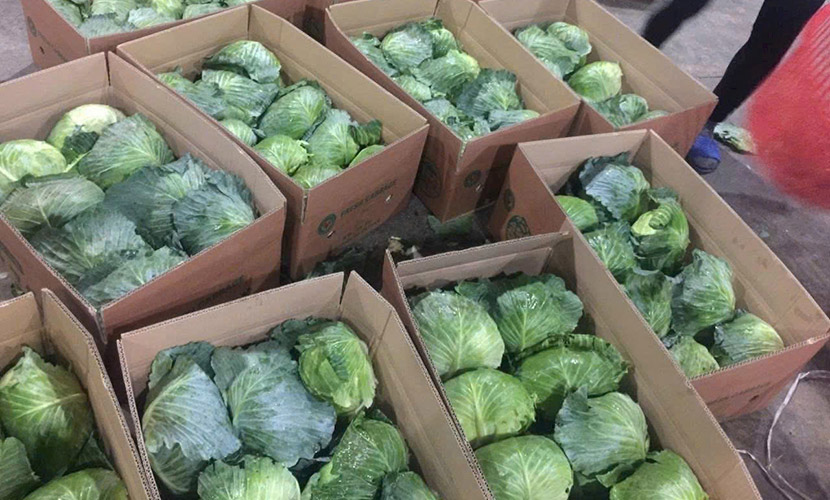
Vietnamese cabbage for export
Mr. Dang Phuc Nguyen is the Secretary General of the Vietnam Fruit and Vegetable Association. He noted that the industry still has enormous growth potential. More than 70% of current fruit and vegetable exports are available to ship in fresh form. He added that expanding deep-processing capacity would help increase product value, diversify export markets, and reduce exposure to trade-related risks.
According to the Import-Export Department under the Ministry of Industry and Trade, the period from May onward marks the peak harvest season for major fruits such as durian, lychee, mango, and coconut. Abundant supplies from growing regions are expected to further boost exports during the second and third quarters of the year.
Experts believe that achieving the USD 10 billion export target will require several key measures. These include continued expansion of certified growing areas and the accelerated issuance of growing-area codes. In addition, they also involve higher levels of deep processing, improved cold-chain logistics, and proactive compliance with international green and sustainability standards.
With its current growth momentum, expanding access to official export markets, and an increasing share of processed products, Vietnam’s fruit and vegetable sector is well positioned to accelerate its development. As a result, it is moving closer to becoming a USD 10 billion agricultural export industry in the years ahead.
Vietnamese source: https://congthuong.vn/xuat-khau-rau-qua-tang-truong-an-tuong-trong-5-thang-dau-nam-2026-459797.html
If you are interested in Vietnamese fruit and vegetable exports, please contact us:
Company: Agrideco Vietnam Co., Ltd.
Address: No 02, Alley 325 Kim Nguu, Vinh Tuy Ward, Hanoi, Vietnam
Tel/Kakao Talk/Whatsapp: +84 989 649 804
Website: https://agridecovietnam.com
Email: agridecovietnam@gmail.com