
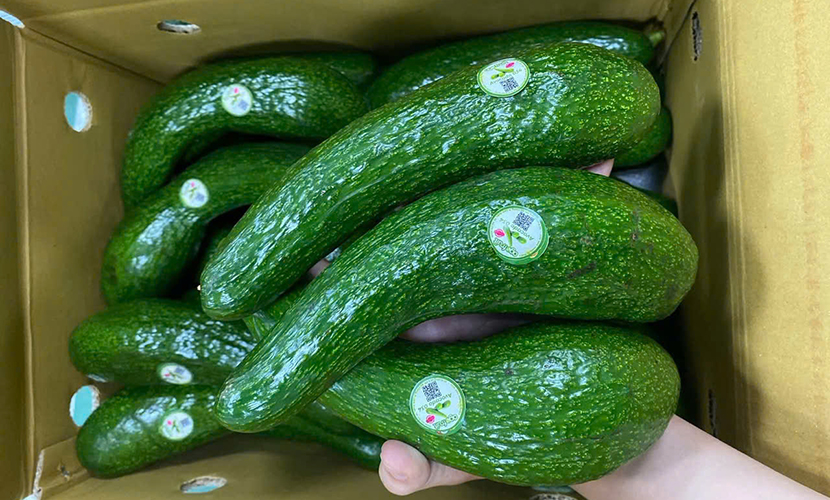
It is likely that by 2030, Vietnam’s avocado exports will become the most widely exported fruit. Total export volumes are likely to reach nearly 31 million tons. Experts believe that Vietnamese avocados hold tremendous potential and significant room for further development. However, the country’s avocado exports to global markets continue to face numerous challenges.
According to the Agricultural Outlook 2021–2030, avocados are likely to become the most widely traded fruit in the global market by 2030. Export volumes are likely to reach 30.9 million tons, surpassing both pineapples and mangoes.
Mexico remains the world’s largest producer and exporter of avocados. The country’s avocado production is likely to grow at an average annual rate of 5% over the next decade. Strong demand in the United States is the main driver for rising avocado exports from Mexico.
Despite intensifying competition from other producing countries, Mexico is likely to increase its share of global avocado exports to 63% by 2030. The United States and the European Union are the primary export destinations for Mexican avocados.
Vietnam’s avocado exports
By 2030, the United States is likely to account for 40% of global avocado import value. Meanwhile, the European Union will represent 31%. In addition, avocado imports are expanding rapidly in several other markets, including China and countries across the Middle East.
Avocado is a high-value fruit crop in Vietnam, cultivated primarily in the Central Highlands region. Farmers continue to expand growing areas. In recent years, avocado acreage has increased steadily. Official statistics indicate that the country has around 3,500 hectares under avocado cultivation. However, the actual figure is likely to be closer to 4,000 hectares.
Dak Nong is one of Vietnam’s leading avocado-producing provinces, with nearly 2,600 hectares of avocado orchards. AAvocados are relatively easy to grow and are resistant to many pests and diseases. In addition, they require only about one-third of the maintenance costs of other perennial crops. Avocado prices have remained stable over recent years. As a result, growers can earn between VND 300 million and VND 500 million per hectare annually.

Vietnamese avocado materials
According to economic experts, Vietnamese avocados are competitive with those from major exporting countries in terms of both quality and production potential. Despite significant room for growth, however, Vietnam’s avocado exports continues to face numerous challenges. The most pressing of these is post-harvest preservation.
Mr. Le Son Ha is the Head of the Plant Quarantine Division under the Plant Protection Department. He noted that most avocados in the United States are available through supermarkets in large volumes. Therefore, they must meet stringent quality requirements. Suppliers should take full responsibility for and maintain control over every stage of the supply chain, from production to distribution. Vietnamese avocado exporters must also obtain the necessary quality certifications. Since avocados are typically consumed fresh, food safety standards are particularly important.
In recent years, High Pressure Processing (HPP) technology has been successfully applied in the United States. This technology helps avocado-based products retain their natural flavor, nutritional value, and freshness while extending shelf life. If adopted in Vietnam, HPP could help address one of the key obstacles to Vietnam’s avocado exports.
According to Mr. Ho Gam, Chairman of the Dak Nong Farmers’ Association, avocados could quickly become one of Vietnam’s high-value export crops. This could happen if production is well managed, investment is strengthened, and market access strategies are properly developed.
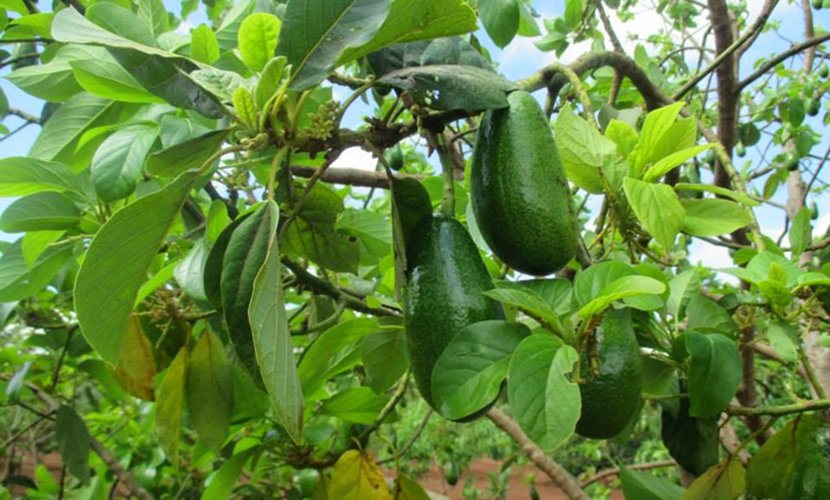
Vietnamese avocado trees
However, advanced technology alone is not enough. Stronger coordination is necessary among growing regions, farmers, and agricultural exporters. In addition, global demand for Vietnam’s avocado exports is substantial. However, domestic production remains insufficient to meet market needs or support large-scale exports. If these challenges can be overcome, avocado cultivation and exports could become a highly promising growth area for Vietnam’s agricultural sector.
For Vietnamese avocados to fully realize their potential, greater investment is necessary in processing facilities, as well as pre-processing and preservation systems for export. Although the necessary technologies are available, there are currently no large-scale investors or specialized enterprises focused on avocado processing.
Other critical factors include establishing efficient collection networks, training professional procurement staff, and building integrated production-to-consumption value chains. Meeting these conditions would help Vietnam’s avocado exports gain a stronger foothold in international markets.
Avocados that do not meet export standards could still be worth at lower prices. They could be available into avocado powder, avocado oil, avocado ice cream, and a variety of other value-added products.
“Over the past few years, most Vietnamese avocado exports have been shipped to China. Meanwhile, the European market remains largely untapped due to the limited export volumes,” Mr. Ho Gam said.
Vietnamese source: https://doanhnghiepvn.vn/kinh-te/xuat-khau-bo-tiem-nang-lon-nhung-phat-trien-chua-tuong-xung/20210822104538940
If you are interested in Vietnamese avocado exports, please contact us:
Company: Agrideco Vietnam Co., Ltd.
Address: No 02, Alley 325 Kim Nguu, Vinh Tuy Ward, Hanoi, Vietnam
Tel/Kakao Talk/Whatsapp: +84 989 649 804
Website: https://agridecovietnam.com
Email: agridecovietnam@gmail.com