

From almost abandoned acidic soil land, Nguyen Van Hien and his partners have developed Vietnam’s largest lime farm. This has created greater value for Vietnamese green limes.
“For a long time, I had heard colleagues talk about Vietnam’s largest lime farm operated by Chanh Viet Company. Nevertheless, seeing it for the first time still left me amazed.” I did not expect that in an area once heavily affected by acid sulfate soil, there would now be a vast lime farm that combined with eco-tourism. The landscape stretches endlessly in lush green scenery, enough to instantly wash away the fatigue of a long journey for any visitor.
The host welcoming us was Nguyen Van Hien, Chairman of Chanh Viet Company. Hien has a tall, broad physique and a kind, approachable face. He led the delegation to visit the company’s processing plant. A wide range of lime-based products is being produced there. For example, the farm manufactures pure lime powder, instant lime powder, seasoning lime powder, lime tea powder, lime juice, lime sauce, and lime essential oil.
After touring the factory, Hien took the group to a lime plantation in Thanh Loi Commune, Tay Ninh Province. Notably, this area was formerly part of Ben Luc District, Long An Province.
Vietnamese green limes
The farm is so vast that Hien arranged electric carts to transport visitors around. He personally drove one of the carts while introducing each section of Vietnamese green limes along the way. Every short distance, he would stop to show a lime plot or a particular variety growing in the orchard. This included foreign lime varieties he had carefully collected from abroad, such as American yellow lime, Australian yellow lime, Chinese yellow lime, and Taiwanese lime.
Watching Hien enthusiastically and meticulously explain each lime variety, I felt he was more like a farmer than a businessman. In conversation, he and his partners consistently refer to themselves as farmers working together to reclaim and develop this land. The establishment of Chanh Viet Company, he explained, was simply to facilitate domestic and international trade.
Listening to Hien recount his journey of building the farm, I found it hard to believe he was not originally from an agricultural background. He described searching for suitable crops, collecting different lime varieties, and crossbreeding to develop a yellow lime variety adapted to the soil, water, and climate of Ben Luc.
Not long ago, Nguyen Van Hien was still working in the construction industry. He had been in that field for nearly 20 years since graduating from university in 2001. Even after starting his lime farming project in Ben Luc, he continued working in construction to fund his agricultural ambitions. It was only about 10 years ago that he finally left construction to fully devote himself to Vietnamese limes and Chanh Viet.
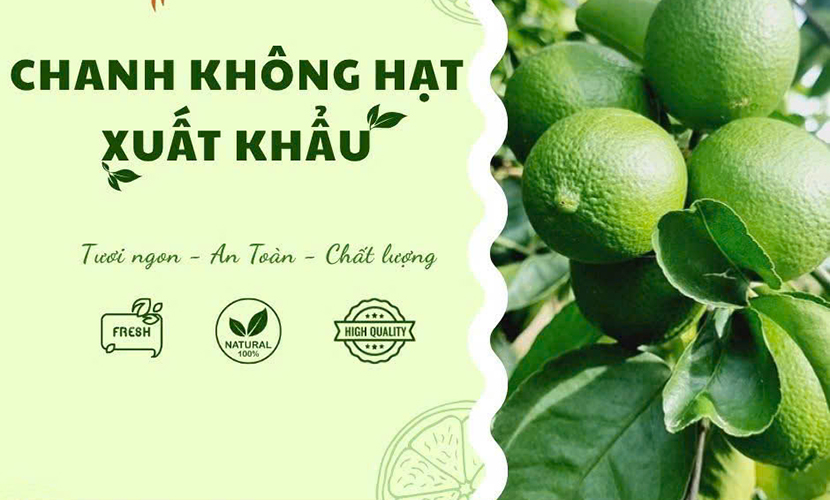
Vietnamese seedless limes
Born and raised in a mountainous district of former Quang Nam Province, he later studied and built a career in construction in Ho Chi Minh City. This raises the question of what led him to the lime farming project on acid sulfate soils in Ben Luc.
I brought that question to a reunion with Hien at a small café in Ho Chi Minh City. He shared that during his years working in construction, he always held a deep interest in agriculture. This passion was shaped in childhood, growing up alongside his parents’ sugarcane farming and silkworm cultivation.
While working in construction, Hien frequently collaborated with foreign partners. During conversations, he often heard comments comparing Vietnamese agricultural products unfavorably with Thailand’s. Those remarks left him feeling both frustrated and indignant.
Hien also had friends who pursued doctoral studies abroad and later returned to start businesses in Vietnam. Through their exposure to international environments, they encountered similar perceptions about Vietnamese agriculture. Sharing a sense of pride and concern, they hoped to contribute meaningfully to the sector.
Around 2010, agricultural land in many parts of former Ben Luc District was inexpensive due to severe acid sulfate soil conditions. Farmers could hardly grow anything other than melaleuca trees. Much of the land was left fallow because high-value crops could not survive.
Nguyen Van Hien and his friends decided to purchase land in Ben Luc to establish a farm. This marked the beginning of their journey into Vietnamese green limes.
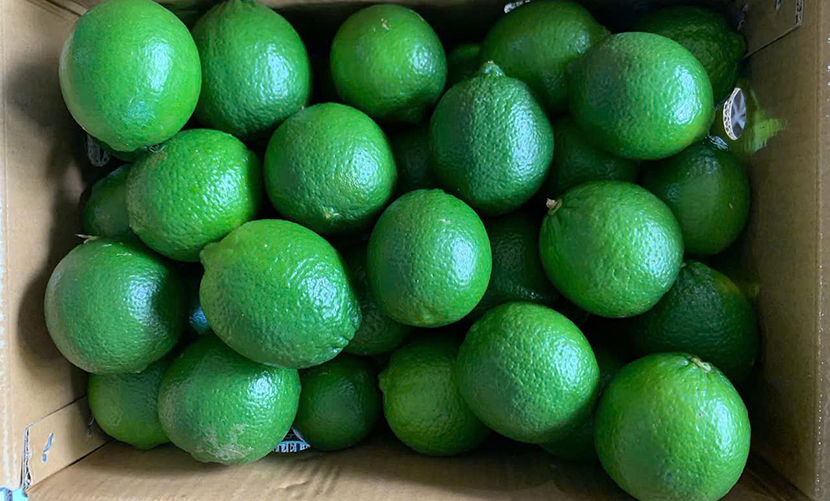
Vietnamese lime exports
Sixteen years ago, in the area where Chanh Viet is now located, there was still no electricity. Clean water was scarce, and transportation was difficult, resulting in a sparsely populated settlement.
To bring electricity for production and daily life on the farm, Hien’s group invested in building a 4-kilometer medium-voltage power line. Once electricity was available, they drilled wells to secure fresh water for living and farming.
To build internal roads within the plantation, they patiently transported concrete to pave pathways section by section. At the same time, they rented heavy machinery to reclaim abandoned land overgrown with wild vegetation.
When the farm gradually took shape with electricity, water supply, and road access in place, Hien and his partners began researching suitable crops for Ben Luc’s conditions. They traveled across Vietnam and consulted research institutes and agricultural universities for expert advice.
Eventually, experts widely recommended Vietnamese green limes as the most suitable crop. After deciding on limes, they chose to cultivate Vietnam’s seedless limes. Some local farmers in Ben Luc had already successfully grown this variety before.
Learning from scientists and experienced farmers, they invested in planting around 150 hectares of seedless limes. This formed what is now the largest lime farm in Vietnam.
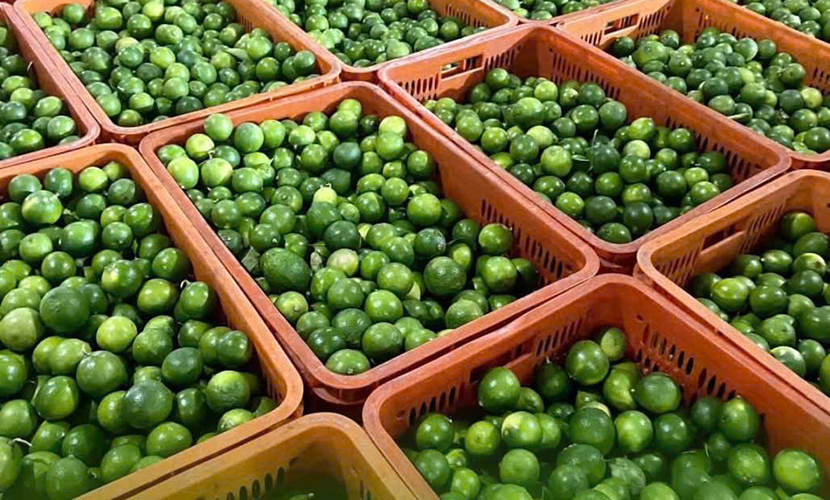
Fresh lime materials from Vietnam
From the beginning, Chanh Viet adopted Globalgap standards and prioritized organic farming across the plantation. Globalgap certification was suitable for enabling exports to the European market.
Organic practices were implemented to improve soil quality and maintain the long-term health of each lime tree. When asked why choosing the EU market, Hien explained that EU prices were higher and market access would open more international opportunities.
This strategy proved effective as Chanh Viet’s seedless limes were quickly acceptable by EU consumers.
Currently, Chanh Viet is gradually reducing seedless lime cultivation and shifting toward yellow limes. According to Hien, competition in seedless limes has increased significantly in Ben Luc.
As a result, the company is focusing on yellow limes, which offer higher economic value. To date, Chanh Viet has developed more than ten hectares of yellow lime plantations.
In addition to applying Globalgap standards, one of Chanh Viet’s major breakthroughs was early investment in deep processing of lime products. Initially, only about 30% of production met European export standards.
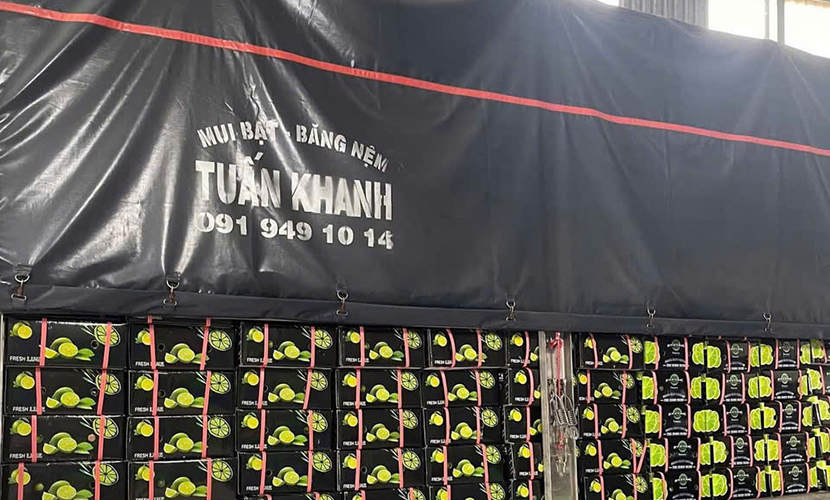
Vietnamese lime boxes
The remaining 70%, although still good quality, did not qualify due to imperfections in shape, size, or color. To address this surplus, processing became the most sustainable solution.
Hien and his partners worked with experts from the Ho Chi Minh City University of Agriculture and Forestry to develop lime-based products. These included canned lime juice and lime-infused gac juice.
After developing these products, they entered the Japanese market to pitch their products. These efforts resulted in export orders to Japan, the EU, and South Korea.
Today, Chanh Viet exports processed lime products to many countries and holds a significant share in several domestic product lines. The company no longer exports fresh limes, focusing entirely on processed products to maximize value.
Although Hien is aware that agriculture involves uncertainties and risks, he feels satisfied with his journey. He shared that construction work carried more pressure, while farming allows him to live more openly and honestly.
At the end of the conversation, Hien said he intends to remain committed to the lime industry long term. He still sees many opportunities to develop Vietnamese lime products.
Looking at his calm and confident demeanor, it is clear that Nguyen Van Hien will continue to create value for Vietnamese green limes.
If you are interested in Vietnamese green limes, please contact us:
Company: Agrideco Vietnam Co., Ltd.
Address: No 02, Alley 325 Kim Nguu, Vinh Tuy Ward, Hanoi, Vietnam
Tel/Kakao Talk/Whatsapp: +84 989 649 804
Website: https://agridecovietnam.com
Email: agridecovietnam@gmail.com