
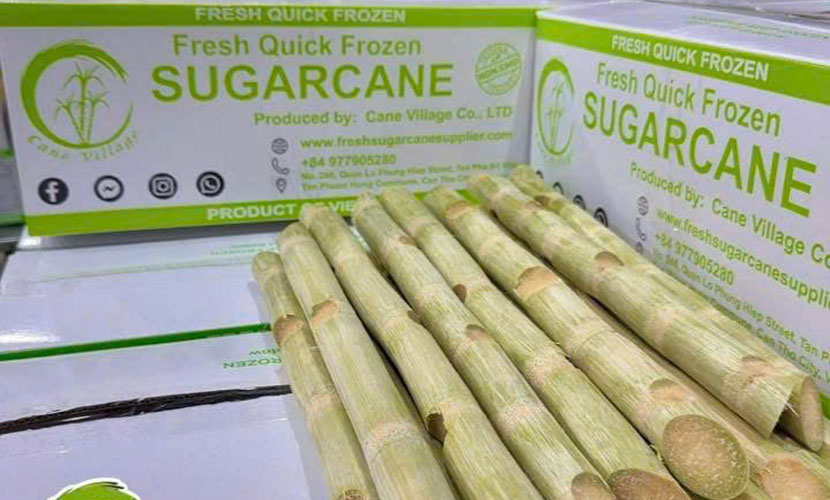
Vietnamese fresh sugarcane is being present at numerous markets around the world. To meet export requirements, Vietnamese sugarcane must satisfy standards regarding appearance, size, and sugar content.
Hòa Bình Province is famous for a wide range of local specialties. Notably, citrus fruits and sugarcane are among its most distinctive agricultural products. In recent years, Vietnamese fresh sugarcane has become one of the province’s key crops. As a result, it contributes approximately 18% of its total agricultural production value.
The province’s favorable soil and climate conditions have created ideal conditions for sugarcane cultivation. Combined with long-established sugarcane varieties, these factors have earned Hòa Bình sugarcane a reputation across Vietnam for its tenderness, sweetness, and distinctive aroma. No longer just a simple rural gift, Hòa Bình sugarcane has in recent years begun reaching international markets. Notably, it has also received positive feedbacks from consumers in several countries.
Vietnamese fresh sugarcane
Sugarcane juice—a true “Made in Vietnam” product—has been favorable by consumers in South Korea. Images of a Vietnamese sugarcane juice cart attracting large numbers of customers in South Korea have drawn considerable attention on social media. There, each cup sells for 5,000 won (about VND 90,000). Around 500 kilograms of Vietnamese fresh sugarcane are used daily for juice production. This figure highlights the strong appreciation that Korean consumers have for this distinctive agricultural product from Hòa Bình.
The product has gained strong acceptance in the South Korean market. In addition, after six months of negotiations and compliance with technical requirements, Hòa Bình has successfully exported two shipments of white sugarcane to the United States since the beginning of the year.
Mr. Đỗ Ngọc Hưng is the Trade Counselor and Head of the Vietnam Trade Office in the United States. He stated: “Vietnamese fresh sugarcane has tremendous export potential. Particularly, it is well suitable to the soil conditions of Hòa Bình Province. It produces a refreshing beverage with significant nutritional value. Notably, Vietnamese sugarcane products that have been peeled and cleaned are not subject to pest risk assessment requirements. With a population of more than 330 million people from diverse ethnic backgrounds, the United States is highly receptive to nutritious beverages.”
Beginning with just 120 kilograms of Vietnam’s purple sugarcane sent as sample products to the Japanese market in 2019, export volumes have increased rapidly over the years. From its first export destination, Japan, Vietnamese sugarcane has expanded into other markets. They include South Korea, Germany, the Netherlands, and the United States. Vietnamese sugarcane enterprises have strengthened cooperation with growing regions to establish large-scale raw material areas.
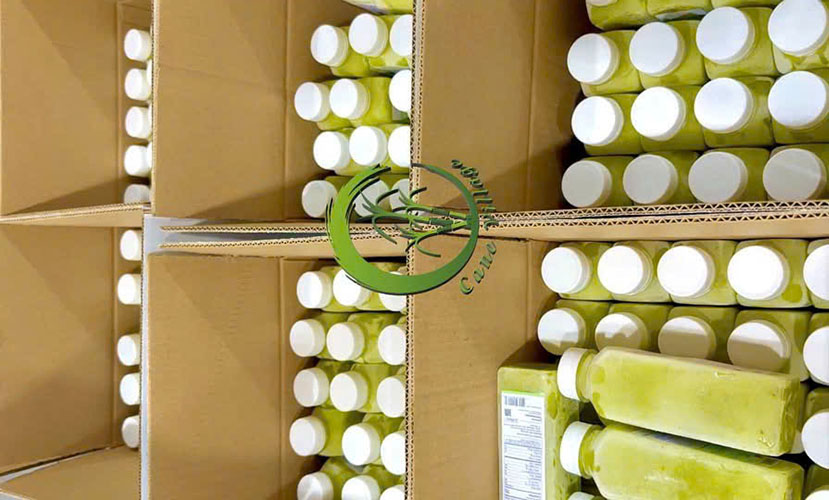
Vietnamese sugarcane juice
Mr. Nguyễn Lê Điệp is the Director of a Vietnamese fruit company in Hòa Bình Province. He said: “In 2022, the company shipped its first sugarcane consignments to introduce the product to European and South Korean markets. This year, customers have returned to place additional orders. In 2023, when implementing contracts, our partners were willing to sign agreements online. They did not need to travel here in person.”
Market opportunities for Vietnamese fresh sugarcane continue to expand, while cultivation practices are becoming increasingly standardized. According to statistics, the total area devoted to fresh sugarcane cultivation in Hòa Bình Province is approximately 7,000 hectares.
In addition to ensuring the quality of planting materials, growing regions have proactively adopted new cultivation methods. They have also applied Vietgap standards to guarantee traceability whenever required.
Mỹ Hòa Agricultural Services Cooperative in Tân Lạc District, Hòa Bình Province, currently cultivates 50 hectares of Vietnam’s sugarcane. Nearly 50 percent of this area follows Vietgap standards. From variety selection and fertilization to pesticide application, all activities must follow the cooperative’s guidelines. Furthermore, every stage of the crop’s growth is carefully recorded in production logs and monitored by technical staff.
“We are implementing a safe production model for Vietnamese fresh sugarcane. This includes using organic fertilizers such as well-composted livestock manure and applying only plant protection products approved by the provincial Plant Protection Sub-Department,” said Mr. Bùi Hoàng Long, Deputy Director of Mỹ Hòa Agricultural Services Cooperative in Tân Lạc District, Hòa Bình Province.
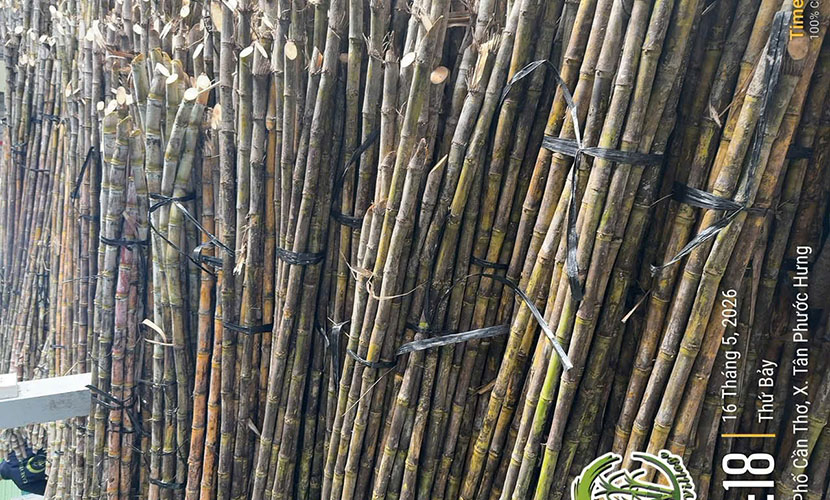
Vietnamese sugarcane trees
Mr. Nguyễn Hồng Yến is the Director of the Crop Production and Plant Protection Sub-Department of Hòa Bình Province. He stated: “Most countries do not yet require growing area codes for sugarcane. However, Hòa Bình has taken a proactive approach. In accordance with the Law on Crop Production, we have promoted and issued growing area codes. We have also digitalized them to facilitate effective management of cultivation areas.”
To qualify for export, Vietnam’s sugarcane products must meet standards regarding appearance, size, and sugar content. Currently, only 70–75% of the sugarcane harvested from each farm meets export requirements. In the coming years, Hòa Bình plans to introduce support policies to ensure that 100% of its sugarcane-growing area uses tissue-cultured planting material. This will help establish large-scale, uniform production zones. It will also preserve desirable genetic characteristics and improve both yield and quality.
“In the past, farmers often reused sugarcane tops or smaller, weaker stalks for propagation. With tissue-cultured seedlings, undesirable traits are eliminated during the propagation process. In addition, farmers can also remove disease-causing factors,” said Mr. Trần Hồng Quang, Deputy Director of the Department of Science and Technology of Hòa Bình Province.
Hòa Bình Province aims to become fully self-sufficient in tissue-cultured sugarcane seedlings by 2025. This will allow the province to replace all old purple sugarcane varieties and ensure a stable supply whenever market demand arises.
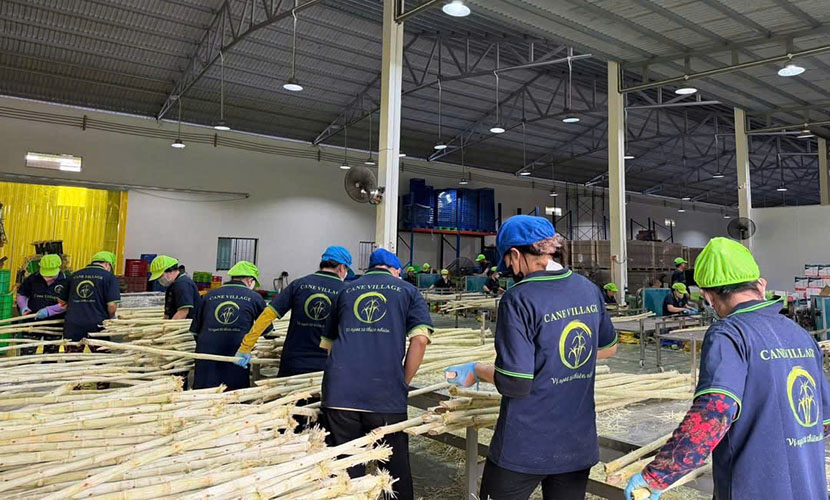
Vietnamese sugarcane factory
Alongside the standardization of production areas to meet export requirements, trade counselors have emphasized that Vietnam’s sugarcane enterprises should focus on increasing value-added processing and intensifying efforts to explore new markets. These measures are considered effective solutions for enhancing the export value of Hòa Bình sugarcane products.
Mr. Đỗ Ngọc Hưng stated: “Businesses should invest in preservation and processing technologies. In particular, they should develop ready-to-drink bottled sugarcane juice products. This would increase added value and help them gain access to a broader range of markets.”
Mr. Trần Văn Công is the Vietnam’s Agricultural Counselor in Europe. He noted: “We encourage Vietnamese export businesses to focus on markets such as Germany, France, the Czech Republic, the Netherlands, and Belgium, where there are large Vietnamese and Asian communities. These markets offer favorable conditions for expanding consumption of Vietnamese fresh sugarcane. They also provide opportunities to increase the consumption of Hòa Bình sugarcane products in the future.”
In practice, the successful export of fresh sugarcane to major international markets will create momentum for other promising agricultural products from Hòa Bình to expand their export opportunities. At the same time, it will enhance the province’s attractiveness to both domestic and foreign investors. These investors are interested in the production, processing, and commercialization of sugarcane and other key agricultural products.
Vietnamese source: https://vtv.vn/kinh-te/mia-tuoi-viet-nam-duoc-nhieu-thi-truong-don-nhan-20230801105837049.htm
If you are interested in Vietnamese sugarcane exports, please contact us:
Company: Agrideco Vietnam Co., Ltd.
Address: No 02, Alley 325 Kim Nguu, Vinh Tuy Ward, Hanoi, Vietnam
Tel/Kakao Talk/Whatsapp: +84 989 649 804
Website: https://agridecovietnam.com
Email: agridecovietnam@gmail.com