Vietnamese cinnamon sticks is one of the ten key crops of Yên Bái province. Specifically, they account for up to one-third of the province’s planted forest area. With a raw material area of over 81,000 hectares, Vietnam’s cinnamon in recent years has become an important crop. Therefore, it helps reduce poverty and increase the wealth of farmers in many localities.
Đào Thịnh is a commune of Trấn Yên district, Yên Bái Province. Local people used to mainly rely on growing rice, corn, and mulberry trees. In recent years, more than 800 hectares of Vietnamese cinnamon have contributed to poverty reduction. As a result, they have also increased the prosperity of the local residents.
Nguyễn Trí Tuệ’s family, from Hamlet 5, is among the pioneering households to cultivate cinnamon in Đào Thịnh commune. After leaving the military, he had the simple idea of creating jobs. In 1993, he boldly leased forest land to plant over 2,000 cinnamon trees.
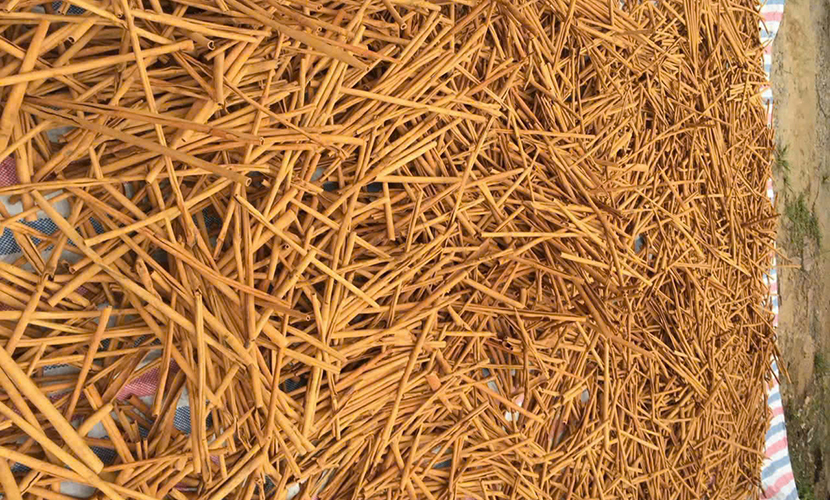
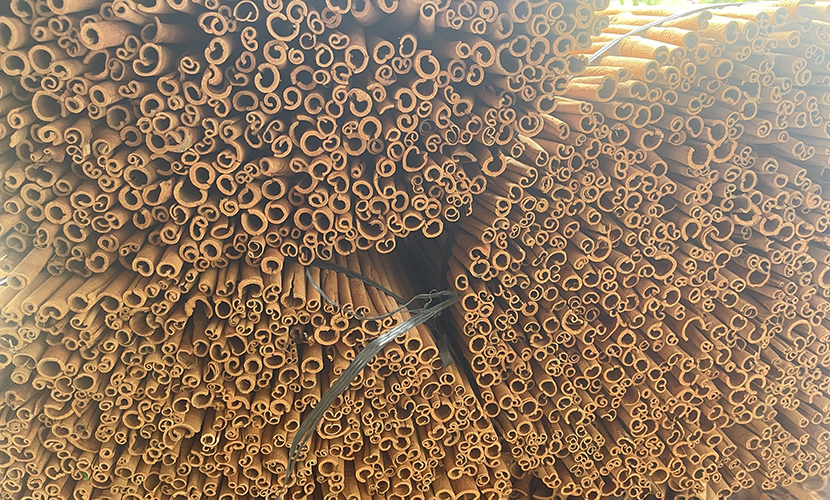
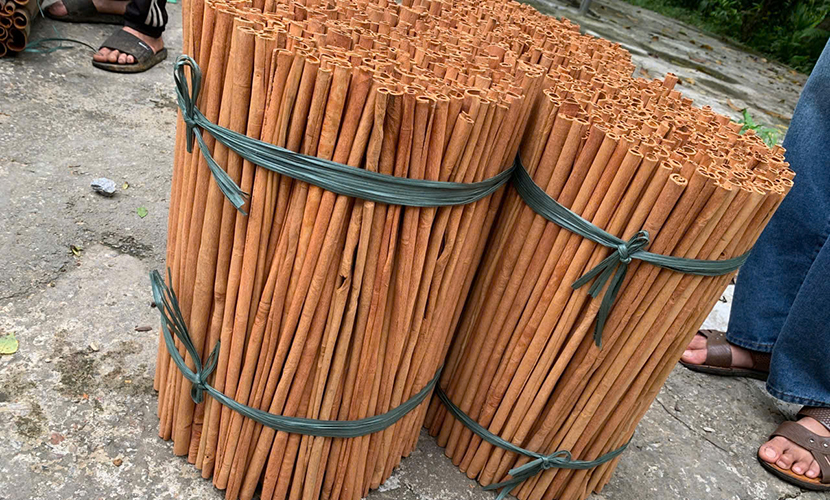
Vietnamese cinnamon sticks
During the first nearly ten years of implementing the Vietnamese cinnamon cultivation model, Tuệ faced many difficulties. These ranged from technical challenges to market issues. There were many times when prices of Vietnamese cinnamon sticks fell low, but he persevered to become prosperous from cinnamon.
While working and gradually expanding his area, Tuệ has grown his cinnamon business. Today, his family owns about 20 hectares of cinnamon, generating an annual income of over 300 million VND.
“Currently, our family has boldly applied organic planting and care methods, which has helped expand the market. Especially with the support of the cooperative, the economic efficiency has become more stable and higher,” Tuệ said enthusiastically.
In recent years, local people in the commune have aimed to increase production value. Therefore, they have implemented clean and organic cinnamon production processes.
Đào Thịnh Cassia Cooperative will purchase Vietnamese cinnamon sticks from Đào Thịnh commune and surrounding areas. The cooperative pays prices 2,000–5,000 VND/kg higher than the market rate. The cooperative now has 20 joint-member partners. Also, it collaborates with hundreds of local households to develop a raw material area of over 700 hectares.

Vietnamese cinnamon forest
On average, the cooperative purchases around 100 tons of fresh cinnamon each month. It processes cinnamon into 12 types of Vietnamese cinnamon products. They include cinnamon powder, cinnamon sticks, split cinnamon, and cinnamon essential oil.
Additionally, the cooperative has established an organic cinnamon processing factory with a capacity of over 100 tons per month. All Vietnamese cinnamon sticks meet quality standards from the demanding markets such as the US, EU, and Japan.
Another success story in cinnamon cultivation is the Vietnam Cassia Cooperative, established in 2017. Currently, the cooperative is implementing a production and export project with a total investment of over 80 billion VND. The project focuses on developing organic cinnamon areas certified to international standards.
Thanks to stable operations and a wide consumer market, the cooperative provides regular employment for 50–100 workers. Its annual revenue averages over 30 billion VND, purchasing Vietnamese cinnamon sticks from Đào Thịnh and neighboring communes.
A representative of the cooperative stated that when it was first established, it had only 1.5 hectares of organic cinnamon. Today, after linking with households that cultivate cinnamon according to proper procedures, the area has expanded to 500 hectares.

Vietnamese cinnamon harvesting