

These days, in key Vietnamese exported lychee-growing areas in northern Vietnam, the harvest season is in full swing. Trucks, traders, and weighing stations are operating continuously. Ripe red lychee clusters are cut from orchards and quickly transported to the domestic market and for export.
Bac Ninh Province is home to the famous lychee-growing area formerly belonging to Bac Giang. In this province, Vietnamese lychee this crop is particularly notable. According to local agricultural authorities, the province has about 29,800 hectares of lychee. It has an estimated output of more than 95,000 tons. Adverse weather conditions during the flowering stage reduced production to only about 60% of the planned target. However, the positive point is that the fruit quality is likley to be higher than in previous years.
In lychee-growing areas such as Phuc Hoa commune and Chu ward, early-season ripe lychees have already turned orchards bright red. Many high-quality varieties, such as “u trung” lychee, produce large fruits with bright red skin, thick flesh, and a rich sweetness. These are highly favorable by the market.
In some orchards, the entire harvest has been pre-purchased by Vietnamese lychee enterprises from the beginning of the season at prices of up to around 150,000 VND per kilogram. This shows that consumer trends are no longer focused solely on quantity. They are increasingly shifting toward quality and specialty value.
Vietnamese exported lychee
Beyond traditional production, many Vietnamese exported lychee-growing areas in Bac Ninh are also promoting cultivation under VietGAP and GlobalGAP standards. They are also moving toward organic farming. Farmers are increasingly maintaining production logs and strictly controlling the use of fertilizers and pesticides. They are also following rigorous cultivation procedures to meet the requirements of demanding export markets.
A notable highlight of this year’s lychee season is that localities continue to expand their planting area code system, packing facilities, and electronic traceability system. The province currently manages 241 planting area codes covering more than 17,450 hectares. These serve export markets such as China, the United States, Australia, Japan, and Thailand. In addition, there are 42 certified packing facilities eligible for export. These form an important foundation for lychees to meet international standards on traceability, food safety, and plant quarantine.
Alongside Bac Ninh, the Thanh Ha lychee region (Hai Phong) has also entered the harvest season with positive signals. Thanh Ha currently has more than 938 hectares of lychee, of which nearly 500 hectares are main-season orchards. This year, output is likely to reach about 5,500 tons. This is a sharp decline in comparison to last year, but the fruit quality is fragrant, attractive, and visually appealing.
For a long time, Thanh Ha lychee has been proud for its distinctive flavor that is difficult to confuse with others. This Vietnamese exported lychee has a thin skin and pinkish-red color. It also has thick flesh, little water content, a refreshing sweetness, and a characteristic aroma. The fertile riverside soil conditions combined with long-established cultivation techniques have created the reputation of this growing region.
In particular, the entire Thanh Ha lychee area follows VietGAP and GlobalGAP standards. The locality maintains 18 planting area codes for export to various markets such as China, the United States, Australia, Japan, and Thailand.
To prepare for this year’s consumption season, local authorities have intensified trade promotion activities. They have also strengthened connections with supermarkets, shopping centers, and Vietnam’s export enterprises. Many major companies continue to commit to accompanying farmers in product consumption.
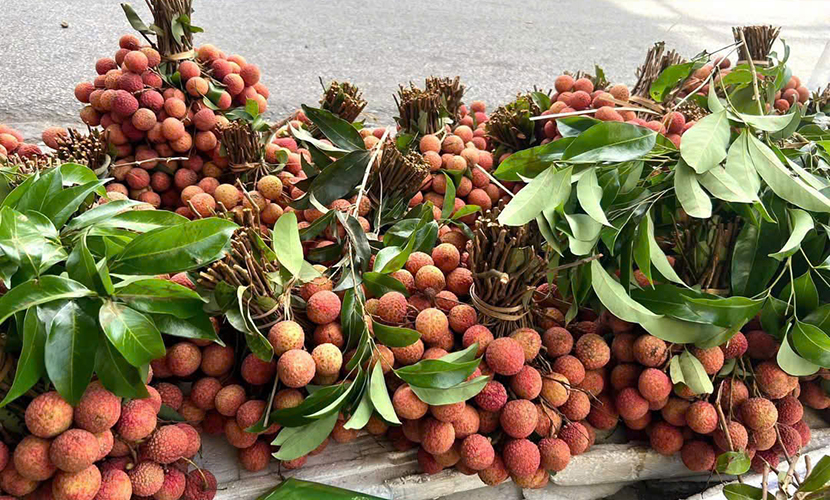
Vietnamese fresh lychees
In addition to traditional lychee-growing regions, Hung Yen Province has also recorded many positive signals during this year’s lychee season. In particular, the early-ripening Phu Cu lychee hybrid and egg lychee varieties have delivered encouraging results. The province currently has more than 1,300 hectares of Phu Cu early-ripening hybrid lychee and egg lychee. Many areas follow VietGAP standards, aiming to serve export markets such as Japan, South Korea, and Europe.
The push toward safe cultivation practices and transparent traceability not only helps increase the value of agricultural products. It also opens up opportunities for Hung Yen’s specialty fruits to integrate more deeply into both domestic and international markets.
What is clearly noticeable in this year’s lychee season is the significant shift in farmers’ production mindset. In the past, the “bumper crop, low price” situation often caused difficulties for lychee growers. Today, however, the focus is no longer on maximizing output at any cost. Instead, the priority has shifted toward quality, branding, and added value. Many localities are also beginning to link the lychee season with experiential tourism, e-commerce, and regional cultural promotion.
It is no coincidence that lychee has become one of Vietnam’s most famous specialty fruits. For domestic consumers, lychee season is not merely the season of a fruit. It also evokes a distinct feeling of Northern Vietnam’s summer—seasonal clusters of bright red fruit with a refreshing sweetness and a uniquely fragrant aroma that is hard to replace.
Vietnamese exported lychee is best proud for its distinctive sensory quality. The fruit has a thin skin which, when peeled, reveals thick, translucent white flesh. It is juicy and succulent. Its sweetness is high but not overpowering. This is combined with a naturally refreshing taste that makes it easy to eat without feeling cloying. Famous growing regions such as Thanh Ha and Luc Ngan also create unique flavors thanks to their specific climate and soil conditions.
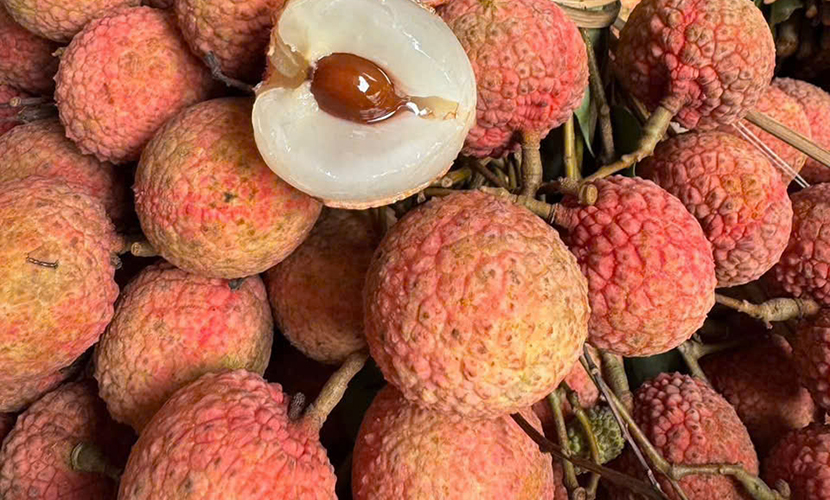
Vietnamese thieu lychees
In addition to traditional lychee-growing areas, in recent years Hung Yen egg lychee has become a variety that attracts particular market attention at the beginning of summer. Compared with many common lychee varieties, egg lychee is larger in size. It has thicker flesh, smaller seeds, a mild sweetness, and a delicate fragrance. According to growers, there are on average only about 16–22 fruits per kilogram, and in some cases just 13–16 fruits per kilogram. This creates a clear distinction in the premium fruit market.
Currently, retail prices for egg lychee in northern Vietnam range from around 150,000 to 180,000 VND per kilogram. In southern Vietnam they can reach 250,000–270,000 VND per kilogram due to limited supply and higher transportation costs. Beyond contributing to higher incomes for local farmers, this fruit has also become a highlight for agricultural tourism experiences in the region. Many growers report a noticeable increase in weekend visitors, especially families from Hanoi coming to pick lychees and experience orchard tourism.
It is precisely its outstanding quality that has helped Vietnamese exported lychee gradually conquer international markets over many years. From being mainly consumed domestically and exported through informal cross-border channels, lychee is now present in many demanding markets such as Japan, the United States, Australia, the EU, Canada, and the Middle East.
A significant milestone was the granting of geographical indication (GI) protection to Thanh Ha lychee in 2007. This is not only a recognition of its origin. It is also a foundation for building an international brand for the product. Currently, this lychee variety is also included in the list of products protected under geographical indication in the European Union (EU).
Meanwhile, Bac Ninh Province has developed a relatively well-organized production and export system. The province currently manages hundreds of planting area codes along with dozens of certified packing facilities that meet export standards.
For many years, China has remained the largest export market for Vietnamese exported lychee, thanks to geographical proximity and strong consumer demand. However, the lychee industry is gradually expanding into North America, Europe, Japan, and other developed markets.
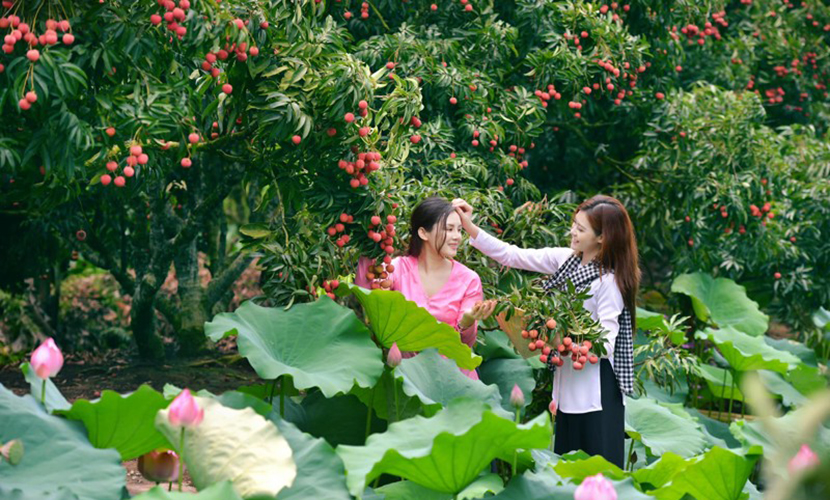
Vietnamese lychee farm
This is not an easy journey, as premium markets have very strict requirements regarding traceability, plant quarantine, and packaging processes. To access these markets, Vietnamese exported lychee must undergo procedures such as irradiation, fumigation, and cold-chain storage under strict standards.
The year 2026 also marks another milestone, as the irradiation facility of the Hanoi Irradiation Center has been approved by the United States to process fresh fruits for export to the US market. This helps significantly reduce logistics costs. It also creates more favorable conditions for Vietnamese lychees to enter the North American market.
Alongside market expansion, the lychee industry is also promoting deep processing to enhance added value and reduce pressure on short-term consumption during the peak harvest season. Products such as frozen lychee, dried lychee, juice, syrup, and OCOP-certified lychee-based products are becoming increasingly diverse.
At the same time, cold-chain logistics and e-commerce platforms are also developing strongly. Transport companies have invested in hundreds of additional refrigerated containers to support exports. Many e-commerce platforms have also joined in distributing lychee. This helps the fruit reach consumers more quickly and widely.
In the flow of Vietnam’s agricultural integration, Vietnamese exported lychee is no longer just a seasonal fruit. It also represents a transformation in agricultural thinking, from focusing on yield to improving quality, from simple selling to brand building, and from domestic consumption to conquering global markets. Each lychee season brings the vibrant red color of heavily laden orchards. It also carries hopes for a more professional, modern, and sustainable agricultural sector.
If you are interested in Vietnamese exported lychee, please do not hesitate to contact us:
Company: Agrideco Vietnam Co., Ltd.
Address: No 02, Alley 325 Kim Nguu, Vinh Tuy Ward, Hanoi, Vietnam
Tel/Kakao Talk/Whatsapp: +84 989 649 804
Website: https://agridecovietnam.com
Email: agridecovietnam@gmail.com