

Vietnam’s macadamia nuts have high commercial value and growing consumption demand. Therefore, they are opening up a path out of poverty for many ethnic minority households in the country.
According to statistics, by the end of 2024, Vietnam had more than 46,000 hectares of macadamia cultivation. Vietnamese macadamia was available mainly in the Central Highlands and Northwest regions. Lâm Đồng alone accounted for nearly 16,000 hectares, of which 80% intercropped within industrial crop plantations.
Macadamia plantations produce average yields ranging from 1.0 to 1.5 tons of dried macadamia nuts per hectare. In some well-managed intensive farming areas, yields can exceed 3 tons per hectare, making macadamia an important source of income for local residents. In particular, it is benefiting ethnic minority communities.
One of the most significant advances in macadamia cultivation has been the application of Vietgap standards in production. In Lâm Đồng, more than 140 households are participating in the project covering 70 hectares. The project aims to establish standardized raw material zones with traceability systems and enterprise-backed purchasing agreements. As a result, it seeks to create sustainable and environmentally friendly value chains.
Vietnam’s macadamia nuts
Results have shown that Vietgap-standard production helps increase macadamia selling prices by 10–20% compared to conventional farming methods. Beyond added value, the model has also helped farmers change cultivation practices. They now apply synchronized techniques such as double-row planting, water-saving irrigation, balanced fertilization, and integrated pest management. These improvements not only enhance productivity and quality of Vietnam’s macadamia nuts but also contribute to environmental protection and public health.
The domestic macadamia market still offers considerable room for growth, yet local products have not become fully competitive in terms of output, quality, and pricing. In 2024, Vietnam exported around 600 tons of macadamia kernels. At the same time, the country imported between 3,500 and 4,000 tons of raw nuts for processing and domestic consumption. This reflects the fact that domestic production has not yet met demand, both in quantity and quality standards.
In addition, production remains small-scale and fragmented, as most existing macadamia cultivation areas are independently managed by individual households and scattered across different locations. This situation creates difficulties in uniformly applying technical procedures, monitoring quality, and organizing production linkages. Many households also lack investment capital as well as knowledge about markets and deep-processing techniques.
Large-scale cooperatives capable of organizing macadamia production and consumption in a systematic manner remain limited. Processing and consumption activities also remain unstable. In addition, key producing provinces still lack deep-processing facilities, leading to unstable selling prices and heavy dependence on traders.
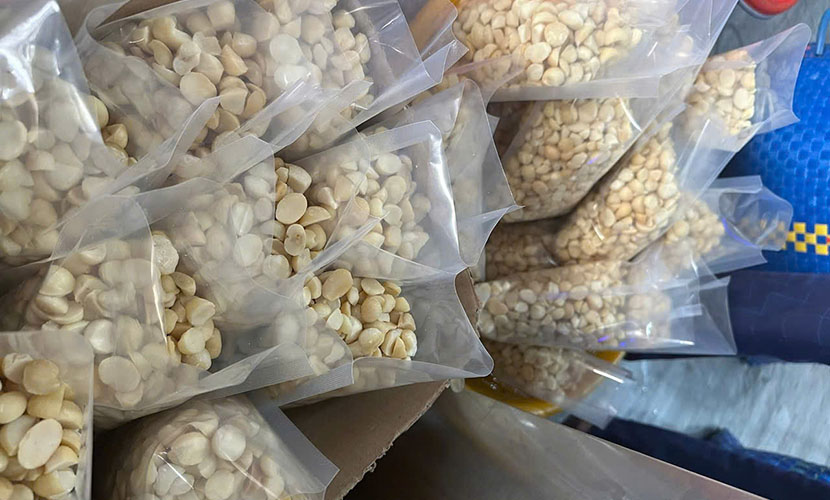
Vietnamese macadamia without skin
In addition, value chain linkages remain unsustainable. Without organizing production through value chains, macadamia products will find it difficult to avoid price pressure. The lack of coordination among stages ranging from cultivation and harvesting to preliminary processing and consumption has limited the competitiveness of Vietnamese macadamia products.
According to experts, in order for macadamia to truly become a wealth-generating crop and contribute to sustainable poverty reduction for ethnic minority communities, Vietnam needs to implement multiple solutions simultaneously.
First, it is necessary to plan and develop concentrated raw material zones on a sufficiently large scale. This would facilitate the application of advanced technologies and make collection and processing activities more efficient. This requires active involvement from local authorities in land allocation, as well as support for transport and irrigation infrastructure.
Second, it is necessary to expand production models that comply with Vietgap and organic standards, combined with product traceability systems. Once Vietnam’s macadamia nuts meet recognized standards, they can more easily enter domestic supermarket chains and specialty stores. They can also gain better access to export markets, especially demanding ones.
Third, cooperatives need to be established and strengthened to serve as bridges between farmers and enterprises. This linkage model helps farmers feel more secure in making investments. At the same time, businesses can gain stable supplies of raw materials with consistent quality.
Fourth, greater investment should direct toward deep processing. Processed macadamia such as roasted macadamia kernels, flavored macadamias, and macadamia powder generate significantly higher value than raw nuts. In addition, they help extend shelf life and expand consumption markets. Encouraging Vietnamese macadamia enterprises to invest in processing plants located near raw material zones would reduce transportation costs. It would also create more jobs for local workers.
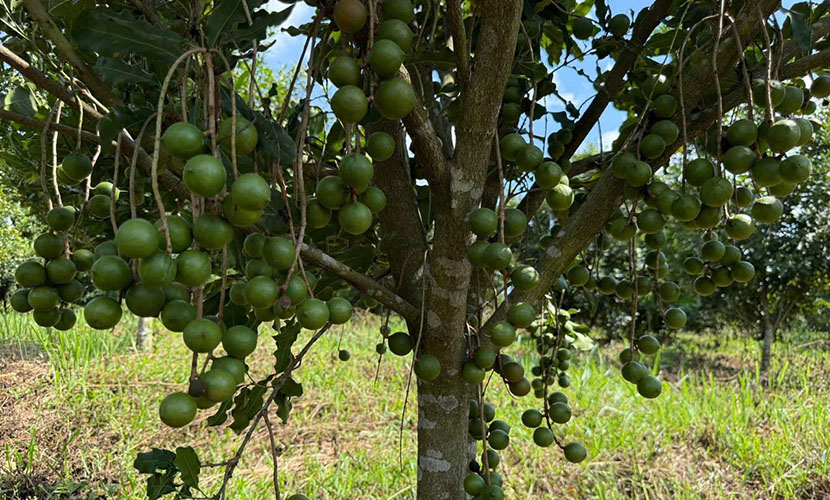
Vietnam’s macadamia trees
Fifth, trade promotion activities and the development of a Vietnamese macadamia brand should be strengthened. Through trade fairs, exhibitions, e-commerce platforms, and digital media channels, macadamia products can reach a wider range of domestic and international consumers. At the same time, greater efforts are necessary to promote the nutritional value and health benefits of macadamia nuts. This would help stimulate consumption demand.
Finally, supporting farmers’ access to preferential credit and technical training is also a key factor. Farmers will be more confident in investing in high-quality varieties, water-saving irrigation systems, and modern preliminary processing equipment if they have sufficient capital. As a result, production efficiency and product quality will be higher.
With favorable land and climate conditions, together with growing domestic and international demand, Vietnam’s macadamia has the potential to become a strategic crop in many mountainous localities. The key issue is organizing production in a concentrated manner associated with deep processing and sustainable value chain linkages.
If these solutions are implemented comprehensively, macadamia cultivation will provide tens of thousands of ethnic minority households with stable additional income. Also, it will contribute to sustainable poverty reduction. In addition, it will enhance the position of Vietnamese agricultural products in international markets.
Vietnamese source: https://congthuong.vn/nang-gia-tri-qua-mac-ca-tang-thu-nhap-cho-ba-con-dan-toc-thieu-so-414980.html
If you are interested in Vietnamese macadamia nuts, please contact us:
Company: Agrideco Vietnam Co., Ltd.
Address: No 02, Alley 325 Kim Nguu, Vinh Tuy Ward, Hanoi, Vietnam
Tel/Kakao Talk/Whatsapp: +84 989 649 804
Website: https://agridecovietnam.com
Email: agridecovietnam@gmail.com