
Minh Khai Commune is famous as one of the traditional villages in Hanoi with the greatest diversity of handicrafts and trades. It is the cradle production village of Vietnamese vermicelli and noodle. The village is renowned for products whose flavor and quality are difficult to match elsewhere.
Using Vietnamese agricultural products such as rice, arrowroot, and canna roots, local residents have developed a wide range of noodle-based products. These include cassava vermicelli, mung bean vermicelli, dried vermicelli, and rice noodles. These products have not only won over the domestic market but have also been available abroad. Notably, many products from Minh Khai craft village have recognized as four-star OCOP products by Hanoi City.
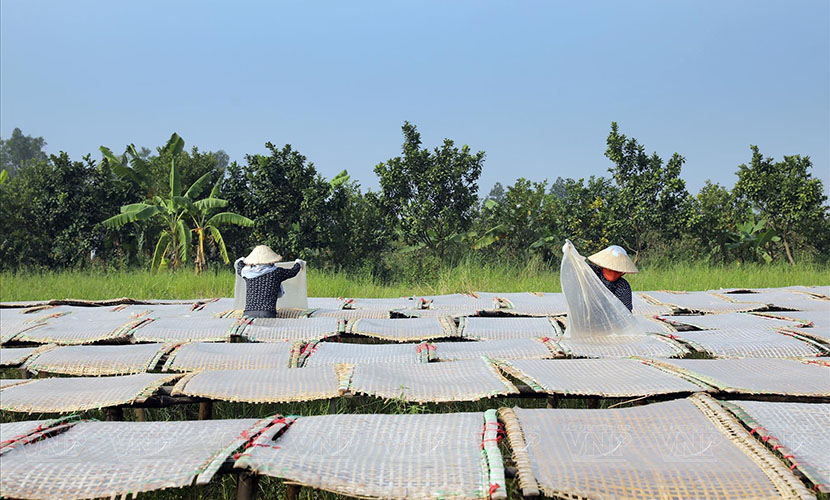
Visiting Minh Khai in the closing days of 2022, what impressed us most was not the clean concrete roads stretching to every hamlet, but the vibrant rhythm of life in the village. Throughout the craft village, we encountered residents working diligently. In the fields at dawn, when the first rays of sunlight began to appear, women carefully laid rice crackers on bamboo racks to dry.
The sight of the rice crackers swaying gently in the breeze created a familiar and picturesque rural landscape. It was rich with the charm of traditional village life. As we ventured further into the village, we also saw carts loaded with vermicelli rolling out. They were ready to supply markets and supermarkets across the outskirts of Hanoi.
Vietnamese vermicelli and noodle
The image of the hardworking people of Minh Khai Commune has always been a familiar sight to me in this craft village. It is also part of the lives of many of my peers who grew up here. One notable example is Ms. Nguyễn Thị Thuận and her husband, Mr. Phí Công Kiệt. Their family has been producing Vietnamese vermicelli and noodle for many years.
Ms. Thuận shared that she was born and raised in the village and has devoted several decades to Vietnamese vermicelli and noodle. The industrious spirit of the village seems to have become a part of her from an early age. While studying, she also worked alongside her family. Gradually, she expanded her production facility with the goal of creating a wider range of Vietnam’s noodle and vermicelli products for the market.
All vermicelli products under her family’s Trung Kiên brand have received four-star OCOP products. Her production facility is one of the pioneering models in Minh Khai Craft Village. It has adopted modern technologies for noodle and vermicelli processing. Equipped with advanced machinery, the facility ensures food safety and hygiene while maintaining environmentally friendly production practices.
Trung Kiên canna-root vermicelli retains its natural chewy texture and delicious flavor whether stir-fried or used in soups. The brand also places great emphasis on packaging quality with PE bags. These comply with food safety and hygiene regulations issued by the Ministry of Health.
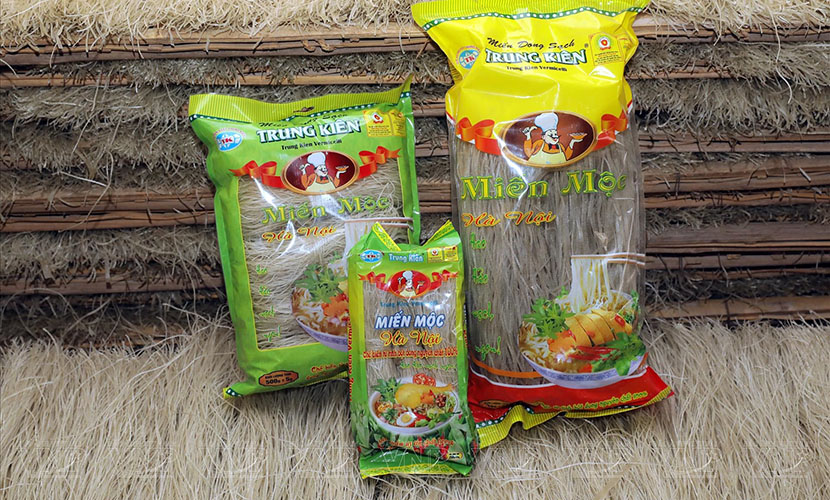
Trung Kien vermicelli and noodle
According to Ms. Thuận, every Lunar New Year season, her family’s vermicelli is among the gifts most favorable by local consumers. Those who have tasted it once often remember the distinctive flavor of Trung Kiên vermicelli for a long time.
Vietnamese vermicelli and noodle remains the flagship product and a source of pride for Minh Khai craft village. Among the village’s producers, the family business of Mr. Đỗ Danh Xuân stands out as a model of innovation and entrepreneurship.
Mr. Xuân boldly invested time and effort in researching and developing new products, including arrowroot vermicelli and mung bean vermicelli. These products not only make use of locally sourced agricultural ingredients but also offer consumers new flavors. Moreover, they are convenient and easy to prepare. As a result, they have been warmly received by the market.
Each day, Xuân Hường vermicelli and noodle production facility processes approximately three to five tons of rice. Mr. Xuân noted that demand is so strong that the business is often unable to fully meet market orders during peak production periods.
However, he emphasized that quality always comes first. Rather than pursuing higher output, Xuân Hường focuses on ensuring that every batch of vermicelli is fresh, flavorful, and hygienic. It also follows the proprietary techniques that distinguish it from other products on the market.
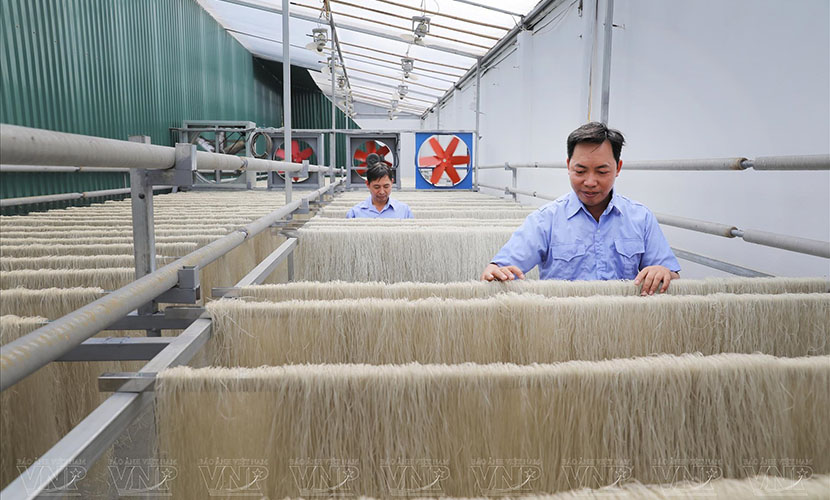
Vietnamese vermicelli and noodle production
Like many of Minh Khai’s leading producers, the vermicelli and noodle products manufactured by Xuân Hường have all been recognized as four-star OCOP products of Hanoi. This reflects their high quality and strong reputation among consumers.
It would be difficult to list all the households engaged in vermicelli production in Minh Khai Village. Each family has its own unique techniques and recipes. These give its products a distinctive identity and brand recognition. Nevertheless, they all share the same commitment to clean production, food safety and hygiene, and, above all, preserving the traditions and reputation of the craft village.
Mr. Đỗ Xuân Đáng is the Chairman of the Minh Khai Commune People’s Committee. He shared that the most valuable asset of Minh Khai is its hardworking people. They have faithfully preserved their traditional craft village and take great pride in the village’s long-established vermicelli and noodle-making heritage.
He also noted that his generation, along with many of his childhood friends, grew up surrounded by the aroma and flavors of rice and vermicelli. Many of them later pursued higher education and successful careers. However, they never forgot their roots and continued to support local producers. For them, every package of Vietnamese vermicelli and noodle carries cherished childhood memories. This is true for him as well.
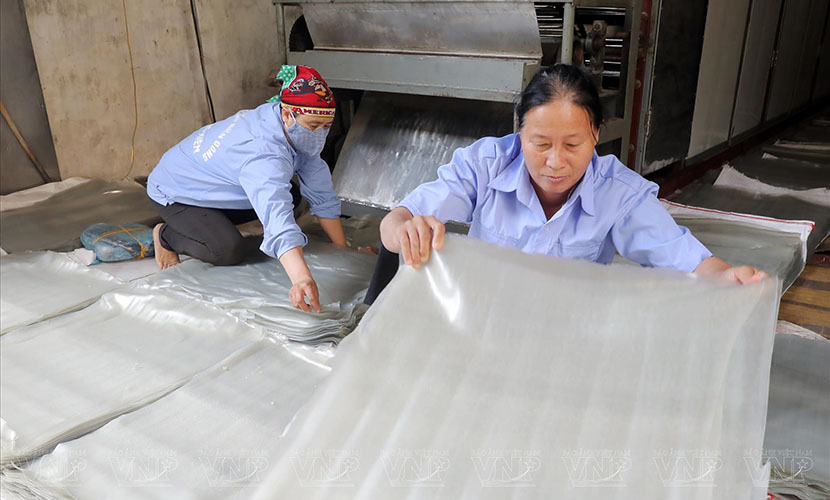
Vietnamese vermicelli and noodle facility
Today, Minh Khai Commune is one of the leading localities in Hoài Đức District, Hanoi. It is actively developing the collective trademark “Minh Khai dried noodles, vermicelli, and pho.” The initiative aims to enhance the value and reputation of its craft-village products while promoting the village’s brand to international markets.
A number of enterprises in Minh Khai have successfully exported dried noodles and canna-root vermicelli to international markets such as Russia, South Korea, and the Netherlands. In addition to traditional canna-root vermicelli, producers now offer a diverse range of products. These include sweet potato vermicelli, potato vermicelli, dried brown-rice pho noodles, and arrowroot vermicelli. This diversification not only broadens consumer choice but also enriches the culinary heritage of Vietnam.
The people of Minh Khai Village who produce vermicelli, noodles, rice products, and dried pho noodles possess a resilience and diligence that reflect the very qualities of the products they make. Every day, they rise as early as 3 a.m. to soak rice, steam and process it, and prepare for production. As soon as the morning sun appears, sheets of rice cakes are laid out across the fields to dry naturally. The sunlight not only dries the products but also gives them a distinctive aroma. It captures the essence of the countryside.
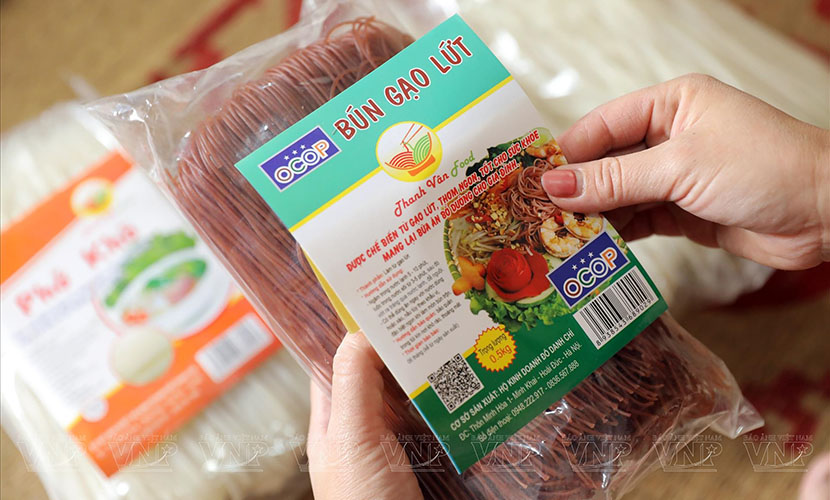
Dried brown-rice pho noodles
Afterward, villagers hurry back to their workshops, where the rhythmic sounds of vermicelli and noodle-cutting machines fill the air. Women work side by side packaging the finished products. These are then distributed to markets far and wide.
The dedication and hard work of the villagers have undoubtedly been rewarded with remarkable success. Today, Vietnamese vermicelli and noodle bearing the Minh Khai brand can be found throughout Vietnam and in many countries around the world. At the same time, the village itself has become increasingly prosperous and modern. With each passing year, the smiles of the villagers grow brighter.
In its upcoming development strategy, Minh Khai Commune and local vermicelli and noodle producers are working together in solidarity to strengthen the village’s vermicelli and noodle production association. Households are increasingly investing in advanced technologies and modern machinery to improve production capacity and product quality. Their shared goal is to transform Minh Khai into a leading economic model of Hanoi’s new rural development program.
At the same time, they aim to integrate the craft-village economy with eco-tourism and experiential tourism. These initiatives showcase Vietnam’s traditional crafts and cultural heritage.
Vietnamese source: https://vietnam.vnanet.vn/vietnamese/printlr/suc-song-moi-o-lang-nghe-bun-mien-minh-khai-318810.html
If you are interested in Vietnamese vermicelli and noodle, please contact us:
Company: Agrideco Vietnam Co., Ltd.
Address: No 02, Alley 325 Kim Nguu, Vinh Tuy Ward, Hanoi, Vietnam
Tel/Kakao Talk/Whatsapp: +84 989 649 804
Website: https://agridecovietnam.com
Email: agridecovietnam@gmail.com