
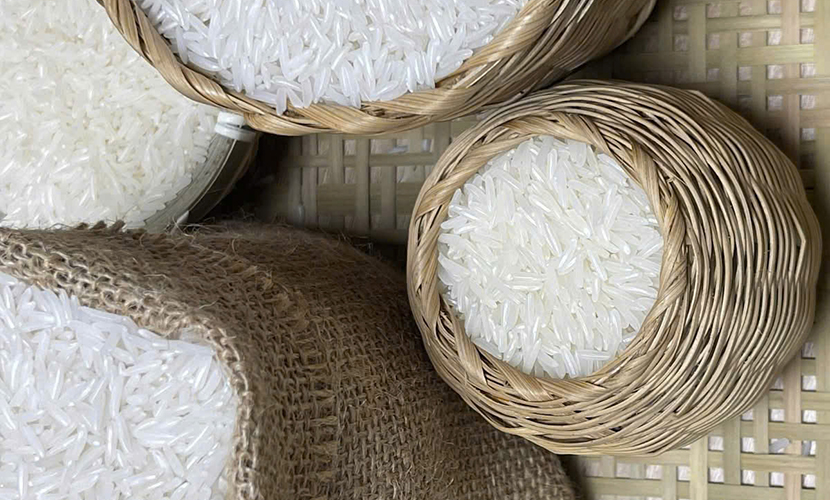
Demand for rice imports is increasing across many markets, while concerns over a potential global supply shortage are creating favorable prospects for Vietnam-origin rice exports. However, these opportunities can only be sustainable if the industry continues to improve product quality and increase value addition.
According to the Ministry of Agriculture and Environment, Vietnam’s rice exports posted positive results in the first six months of 2026. Exports reached approximately 5 million tons with a total export value of USD 2.36 billion. Compared with the same period in 2025, export volume increased by 5.7%, while export value declined by 3.3%. This decline was largely because the average export price fell to around USD 473.6 per ton, down 8.6%.
This development reflects the mixed picture of Vietnam’s rice industry. While the country has maintained its supply capacity, price competition in the international market has become increasingly intense.
In reality, the combination of rising export volumes and declining export value is attributable not only to stronger competition among major rice-exporting countries but also to fluctuations in global supply and logistics costs. Domestically, rice prices have remained relatively stable overall. However, variations persist across different rice varieties and production regions.
Vietnam-origin rice exports
A notable factor is that the outlook for the global market is becoming increasingly favorable for Vietnam-origin rice exports. Import demand continues to rise in several major markets, particularly in the Philippines. The country is facing growing pressure to ensure food security amid adverse weather conditions.
From an international perspective, the Food and Agriculture Organization of the United Nations (FAO) reported that Asian rice prices maintained an upward trend during May and the second quarter of 2026. This trend was driven by higher input costs and tighter supplies in many producing countries.
Meanwhile, the United States Department of Agriculture forecasts that global rice consumption in the 2026–2027 marketing year will exceed production by approximately 3.36 million tons. When supply fails to keep pace with demand, global markets must rely on existing stockpiles to bridge the gap. As a result, room is created for rice prices to recover over the medium and long term.
For Vietnam, this presents a favorable opportunity to transform its production advantages into higher export value. To achieve this, the rice sector must continue monitoring supply-and-demand developments closely. It must also proactively adjust production plans, improve product quality, diversify export markets, and strengthen forecasting capabilities. Vietnamese rice businesses also need to remain flexible in contract negotiations and take advantage of favorable pricing periods to maximize export efficiency.
If Vietnam can effectively capitalize on rising global demand and the risk of supply shortages, its rice industry will not only maintain its position among the world’s leading exporters. It will also gain greater opportunities to enhance value creation and achieve sustainable growth in the years ahead.
Vietnamese source: https://thuehaiquan.tapchikinhtetaichinh.vn/gao-viet-rong-cua-xuat-khau-nho-cau-the-gioi-tang-cao-160025.html
If you are interested in Vietnamese rice exports, please contact us:
Company: Agrideco Vietnam Co., Ltd.
Address: No 02, Alley 325 Kim Nguu, Vinh Tuy Ward, Hanoi, Vietnam
Tel/Kakao Talk/Whatsapp: +84 989 649 804
Website: https://agridecovietnam.com
Email: agridecovietnam@gmail.com