
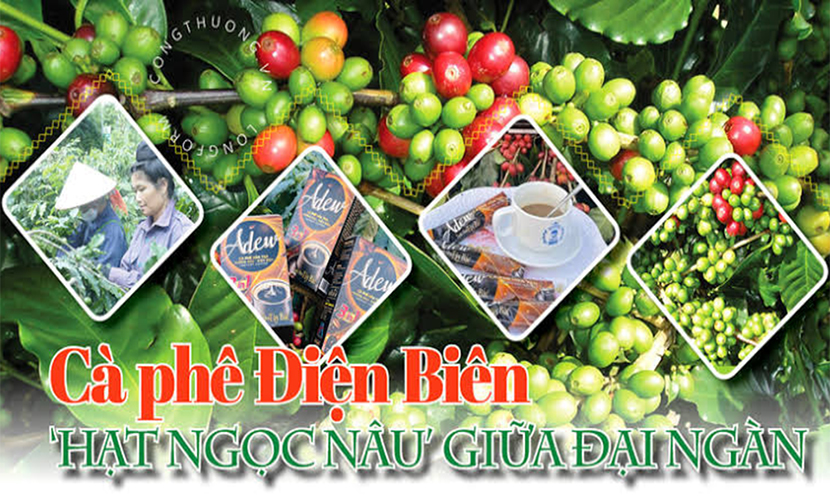
After more than 10 years of dedication and persistent care, coffee growers in Quài Tở Commune, Điện Biên Province, are enjoying a rewarding harvest this year. Thanks to a bumper crop and favorable prices for Vietnamese traditional coffee, farmers living at the foot of Pha Đin Pass have seen their incomes improve. As a result, the hardships and struggles they have faced for many years are gradually easing.
Taking us to visit the coffee gardens winding across the mountain slopes at the foot of the legendary Pha Đin Pass, Mr. Vừ A Minh, Secretary of the Chế Á Village Party Cell, said this was the first coffee garden planted in the village. It dated back to around 2009, when local residents brought seedlings from Mường Ảng to cultivate.
At first, only a few households grew Vietnamese traditional coffee. However, over time, almost every family planted the crop, with areas ranging from several thousand square meters to dozens of hectares. Today, the entire Chế Á Village has 76 households cultivating more than 200 hectares of Vietnam’s coffee. When the crop was first introduced, local residents lacked experience in cultivation, care, and harvesting, resulting in low productivity.
In addition, coffee prices remained low for several years, causing many farmers to neglect their gardens. Some even removed Vietnamese traditional coffee trees to plant other crops. However, local authorities visited households, provided advice, explained the long-term potential, and encouraged residents not to destroy their coffee plantations. As a result, farmers decided to maintain their coffee trees.
Vietnamese traditional coffee
Notably, in recent years, as Vietnamese traditional coffee prices have stabilized, Chế Á residents have actively expanded new planting areas. They have also paid greater attention to caring for mature plantations. As a result, this year’s crop has brought both high yields and good prices.
Sharing the joy of a successful harvest, Mr. Mùa A Dơ from Chế Á Village said that his family separated from his parents’ household in 2020. They then began growing coffee on a 7-hectare plot inherited from his parents.
After the 2024 coffee season, his family escaped poverty. Following this year’s harvest, they were able to build a spacious new house. While harvesting coffee with other villagers, Mr. Dơ skillfully picked clusters of ripe red coffee cherries. He happily shared: “Last year, when fresh coffee cherries sold for VND 20,000 per kilogram. However, this year the price has increased to VND 30,000 per kilogram.
“With 4 hectares currently producing, my family expects to harvest around 20 tons of cherries this season, earning more than VND 500 million. After deducting expenses, the profit will be over VND 300 million,” he added.
Witnessing the joy and bright smiles of farmers who have spent years patiently nurturing each coffee tree, Mr. Sùng A Dia, Director of the Pha Đin Coffee Cooperative, shared his delight at this year’s successful harvest. He added that, besides selling fresh coffee cherries, residents in Hua Sa A, Hua Sa B, and Chế Á villages also have more than 11 hectares containing a total of 40,200 coffee trees recognized as elite mother plants. This provides them with additional sources of income.
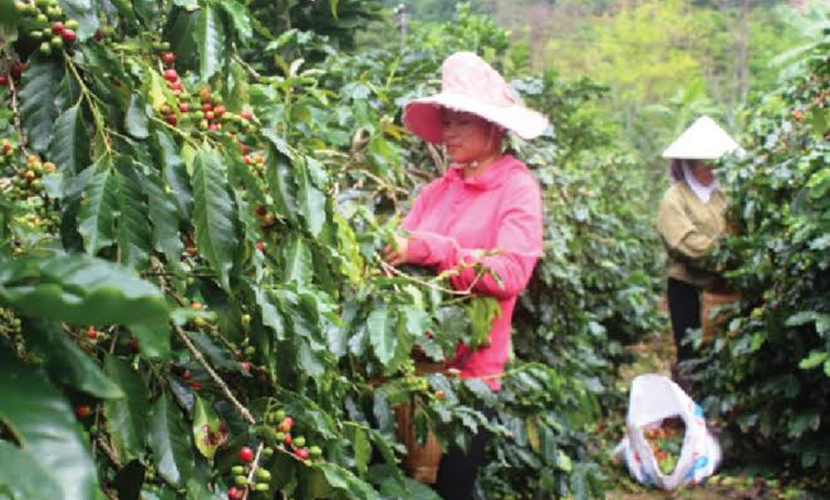
Vietnamese coffee farm
With certified elite coffee gardens, farmers can propagate seedlings for sale or provide seeds for planting, which command higher prices. Thanks to suitable elevations, cool year-round weather, and fertile soil, Quài Tở coffee has a distinctive flavor profile characterized by rich aroma and full-bodied taste. This makes it popular among consumers. Currently, many businesses inside and outside the province are seeking to purchase and process local coffee, expand distribution networks, and gradually build the brand and market value of Quài Tở coffee.
Having witnessed both the value of coffee cultivation and the struggles of Quài Tở farmers through years of “good harvest, low price” cycles, Mr. Sùng A Dia, Director of the Pha Đin Coffee Cooperative, understands their hardships well. He also shares the joy brought by this “sweet harvest” at the foot of Pha Đin Pass.
With the goal of increasing value and helping coffee growers earn higher incomes, Mr. Dia has developed plans to invest in a modern preliminary processing line. The facility will be equipped with pulping and drying machines to improve coffee processing efficiency. These Vietnamese coffee facilities will help ensure that coffee beans meet quality standards.
He added: “Along with investing in processing equipment, we will guide farmers to adopt organic production processes. We will also help them control quality throughout cultivation, crop care, and harvesting. With this approach, Quài Tở coffee will reach further and establish a stronger position in the market.”
Mr. Nhữ Duy Đông is the Chairman of the Quài Tở Commune People’s Committee. He said that the commune currently has 1,635.18 hectares of coffee, including 640.21 hectares of newly planted areas. The cultivation areas are mainly concentrated in villages such as Chế Á, Hua Sa A, Hua Sa B, Háng Tàu, and Sông Ia.
Vietnamese traditional coffee trees have taken root and become closely associated with Quài Tở for more than a decade. Today, Vietnamese coffee is a key crop that has helped local residents escape poverty and build sustainable prosperity.
Vietnamese source: https://nhandan.vn/mua-ca-phe-chin-do-duoi-chan-deo-pha-din-post926664.html
For more information about Vietnamese traditional coffee, please contact us:
Company: Agrideco Vietnam Co., Ltd.
Address: No 02, Alley 325 Kim Nguu, Vinh Tuy Ward, Hanoi, Vietnam
Tel/Kakao Talk/Whatsapp: +84 989 649 804
Website: https://agridecovietnam.com
Email: agridecovietnam@gmail.com