
In 2024, Vietnam’s wood pellet companies exported more than 24 million tons of wood chips and pellets. These companies generated total revenue of nearly $3.5 billion. Most of the wood chips and pellets were important materials as fuel for thermal power plants.
According to a statistics, wood pellet exports in 2024 reached 6.03 million tons, bringing in $805.27 million. This amount showed an increase of 29.1% in volume and 18.5% in value compared to 2023.
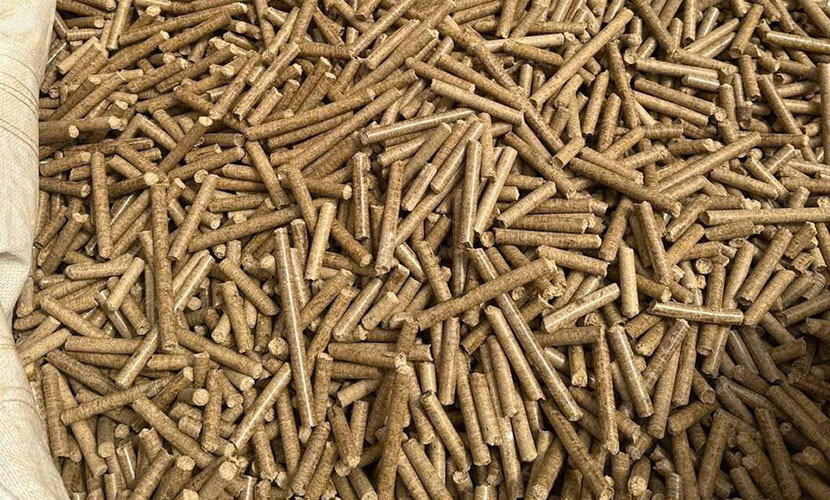
Rice husk wood pellets from Vietnam
South Korea and Japan, accounted for 94% of the export volume and 92.6% of the export value. The EU was the third-largest export market of Vietnam’s wood pellet companies in 2024. Specially, it reached 95.6 thousand tons and valued at $15.76 million.
However, the average export price of Vietnamese wood pellets decreased in 2024. Specifically, wood pellet price exporting to Japan was $145/MT, a drop of $14/MT. The export average price to Korea went down to $109/MT, decreased by $17/MT.
Currently, Vietnam has more than 350 companies and factories producing wood pellets. Among them, there are around 80 companies that export wood pellets. In addition, dozens of these are foreign direct investment (FDI) enterprises from South Korea and Japan that have invested in building pellet manufacturing plants in Vietnam.
“Global demand for wood pellets for thermal power generation will reach around 30 million tons in 2025. After 2030, it could rise to hundreds of millions of tons per year,” an expert said. “Although Vietnam currently ranks second in wood pellet exports, we are only meeting 10–15% of total global demand.”
At COP 26, many governments demonstrated a strong commitment to reducing greenhouse gas emissions. They included the replacement of fossil fuel sources with biological materials such as pellets in the future. Therefore, pellets will become an important commodity contributing to Vietnam’s COP 26 goals.
When using pellets as a substitute fuel for coal the growth process of trees in particular, and plants in general, absorbs CO2. Therefore, considering the entire closed carbon cycle, biomass thermal power is considered to have net-zero emissions.
Also, the raw materials for pellet production currently utilize by-products from forestry and wood processing, contributing to environmental protection. However, the shortage of raw materials for production will become more common as more businesses invest in pellet manufacturing.
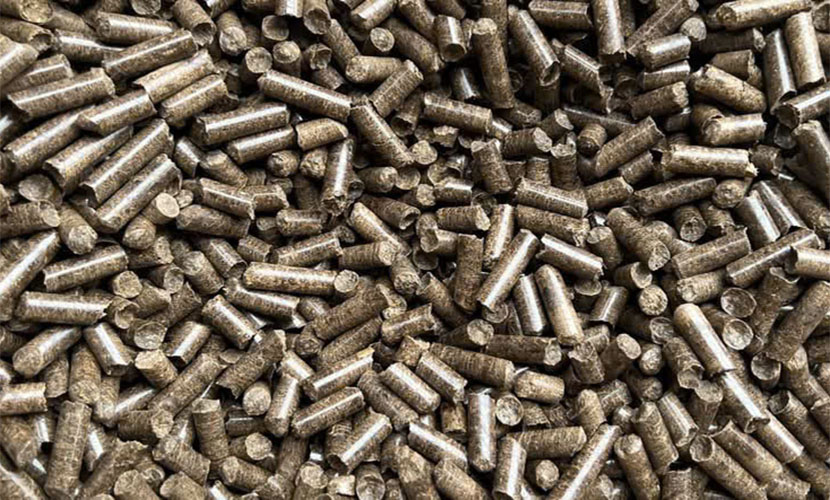
Acacia wood pellets from Vietnam
In the future, coal power plants will need to change to clean alternative fuels, with a significant demand for pellets. Looking back at the past year, export prices of pellets and wood chips have declined and may continue to decrease in the future. Therefore, instead of exporting, the volume of pellets and wood chips could be retained to serve as fuel for domestic thermal power plants.
Besides wood industry by-products, many other types of biomass such as straw, rice husks, also have potential to become raw materials for pellet production in the future. Specifically, rice cultivation in Vietnam produces over 80 million tons of straw and 17 million tons of rice husks annually. If these materials are utilized, Vietnam’s wood pellet companies could reach hundreds of thousands of tons per year.
To promote the pellet industry and meet biomass energy demand, it is necessary to focus on developing technologies for producing pellets from rice husks, straw, and crop biomass to serve as fuel for thermal power plants.
Vietnamese source: https://vneconomy.vn/nganh-san-xuat-vien-nen-con-nhieu-du-dia-phat-trien.html
If you are interested in Vietnamese pellet exports, please contact us:
Company: Agrideco Vietnam Co., Ltd.
Address: No 02, Alley 325 Kim Nguu, Vinh Tuy Ward, Hanoi, Vietnam
Tel/Kakao Talk/Whatsapp: +84 989 649 804
Website: https://agridecovietnam.com
Email: agridecovietnam@gmail.com