
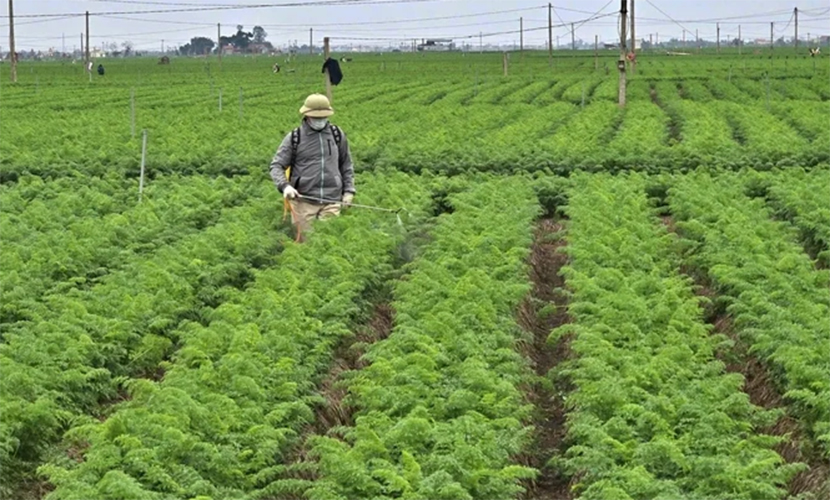
Mr. Trần Văn Thường is a farmer in Cẩm Giàng District, Hải Dương Province. In 2012, he moved to Thuận Thành in Bắc Ninh Province to start his career. Since then, he has devoted himself to Vietnamese carrot production.
He recognized that the alluvial land along the Đuống River was suitable for growing carrots. Then, he boldly leased 10 hectares of farmland from local households for long-term production. Learning through hands-on experience, he gained valuable knowledge after each growing season.
This enabled him to consistently achieve high yields and premium-quality carrots. He cultivates the TAKII SEED carrot variety from Japan, which is proud for its high yield potential and attractive appearance.
Drawing on years of experience, Thường explained that Vietnamese carrot production cycle lasts around seven months. Planting begins in mid-August each year and continues until approximately April of the following year. Harvesting starts about 3.5 to 4 months after sowing.
On his 10-hectare farm, he staggers planting schedules to ensure a continuous harvest over a three-month period. Peak production occurs toward the end of the year.
To cultivate the 10 hectares, Thường invested in two soil preparation machines costing VND 250 million each and installed an automatic irrigation system. The use of modern machinery and technology has significantly reduced labor costs. In addition to two permanent employees, he hires an extra 15 to 20 seasonal workers during planting and harvesting periods.
Vietnamese carrot production
When asked about Vietnamese carrot production techniques, Thường emphasized that land preparation is the most critical step. He should thoroughly clean fields before cultivation. Well-decomposed manure, organic fertilizer, compound fertilizer, and lime should then be evenly applied before deep plowing to a depth of 25–30 cm.
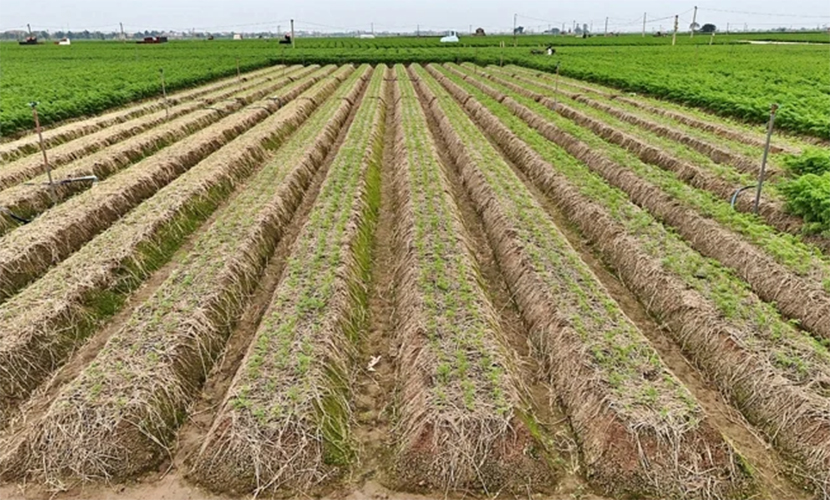
Raised beds should follow the standards of 1.4 meters wide, including furrows, with a height of 10–15 cm. The bed surface should be leveled, and the soil should be adequately irrigated. Dual herbicide should also be applied at a rate of 25 ml per 8-liter sprayer four to five days before sowing. After sowing, the beds are covered with rice straw to retain soil moisture.
For fertilization, Thường applies 250–300 kg of well-decomposed manure and 30–35 kg of NPK compound fertilizer per sào (approximately 360 square meters). He incorporates all of the fertilizer as a basal application before planting.
Regarding pest and disease management, Thường stressed that prevention is more important than treatment. Common threats to carrot crops include cutworms, armyworms, aphids, Alternaria leaf blight, soft rot, and leaf scorch. To maintain healthy crops, he regularly inspects his fields to detect pests and diseases at an early stage. He then applies appropriate control measures.
Plant protection products are used only when absolutely necessary. This helps minimize the use of chemical pesticides. When spraying is required, he uses unmanned aerial vehicles (drones) in accordance with technical guidance from agricultural authorities. He also ensures that the required pre-harvest intervals are fully observed.
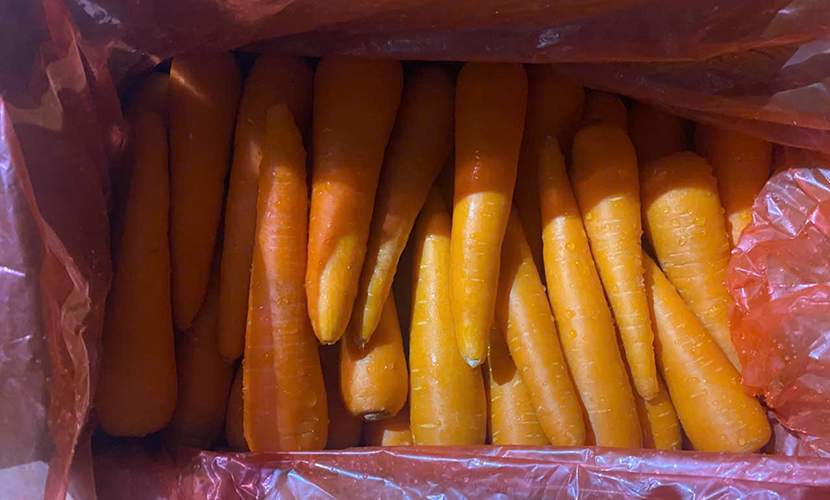
Thanks to his many years of farming experience, all of Thường’s carrot fields have grown vigorously and delivered consistently high yields. They average more than 1.5 tonnes per sào (approximately 360 square meters). During this year’s harvest, traders purchased his entire crop directly from the fields.
Vietnamese carrot exports
According to Thường, the total production cost—including seeds, fertilizers, crop protection products, labor, and machinery—is around VND 4 million per sào. With selling prices ranging from VND 5,000 to VND 6,000 per kilogram, depending on market conditions, he earns a net profit of approximately VND 3 million per sào after deducting all expenses.
In 2023, his 10 hectares of Vietnamese carrots produced more than 400 tonnes. This generated a profit of over VND 800 million. In addition to carrots, he grows oriental melon and various vegetables during the off-season. As a result, his total annual profit reaches nearly VND 1 billion.
Reflecting on his experience, Thường noted that agriculture is heavily influential by factors such as climate change, weather conditions, and pest outbreaks. He added that prices also frequently decline during bumper harvests. “Over the years, I have also experienced seasons when revenues failed to cover production costs,” he said.
“However, I have remained committed to farming, continuously learning new techniques and applying science and technology to improve productivity and product quality. Most importantly, securing stable market outlets is essential.” He added that staggering carrot planting schedules allows him to supply the market continuously. It also helps him avoid the challenge of marketing a large volume of produce all at once.
Mr. Nguyễn Dũng Anh is the Vice Chairman of the People’s Committee of Đại Đồng Thành Commune. According to him, local farmers cultivated 30.5 hectares of winter crops in 2023. These included 10 hectares of maize, 10 hectares of carrots, and 10.5 hectares of various vegetables.
To establish his large-scale carrot farm, Thường leased farmland from households in Đồng Đông Hamlet at a rental rate of VND 700,000 per sào per year. He should pay every five years upon signing the lease agreement. He has now leased the land for 11 years with strong support from local residents.
Vietnamese carrot cultivation
To support agricultural production, the commune authorities coordinated with the agricultural sector of Thuận Thành Town to prepare documents for Thường. This helped him access assistance under Resolution No. 07/2022/NQ-HĐND, issued by the Bắc Ninh Provincial People’s Council on July 7, 2022, which provides support for concentrated carrot cultivation areas.
Local authorities noted that farmland consolidation and crop restructuring have generated significant economic benefits and higher incomes for farmers. In the coming years, Đại Đồng Thành Commune will continue promoting the development of concentrated production zones. It will also encourage appropriate crop planning and support the adoption of high-yield, high-quality crop varieties.
Farmland consolidation and crop restructuring are likely to provide a solid foundation for developing specialized, large-scale commercial production areas. This approach not only maximizes the productive potential of agricultural land but also facilitates the application of advanced science and technology.
As a result, it improves crop yields, increases production efficiency, and generates greater economic value per unit of cultivated land. The successful carrot production model developed by Trần Văn Thường in Đồng Đông Hamlet, Đại Đồng Thành Commune, Thuận Thành Town, offers a practical example. It can help local authorities and farmers make more effective decisions on future crop planning.
For more information about Vietnamese carrots for export, please contact us:
Company: Agrideco Vietnam Co., Ltd.
Address: No 02, Alley 325 Kim Nguu, Vinh Tuy Ward, Hanoi, Vietnam
Tel/Kakao Talk/Whatsapp: +84 989 649 804
Website: https://agridecovietnam.com
Email: agridecovietnam@gmail.com