
Export-oriented development of Vietnamese organic cocoa

Vietnamese organic cocoa

Ngãi Giao, Châu Đức, Xuân Sơn, Bình Giã, Nghĩa Thành, and Kim Long belong to the east of Ho Chi Minh City. These communes have long been renowned cocoa-growing areas. In recent years, these localities have focused on developing Vietnamese organic cocoa cultivation to expand export markets.

According to statistics, these communes currently have nearly 570 hectares of cocoa plantations. Accordingly, they are also the largest cocoa-growing areas of Ho Chi Minh City. Vietnamese organic cocoa in these localities has received high rates from foreign experts for its quality.

Taking advantage of favorable soil conditions, local authorities have identified cocoa as one of the strategic crops for development. In particular, developing Vietnamese organic cocoa to meet the export markets is a sound and appropriate direction.

Vietnamese organic cocoa

Vietnamese organic cocoa

Trần Như Phong is a local farmer from Nghĩa Thành Commune, Ho Chi Minh City. He owns two hectares of Vietnamese organic cocoa. He shared that by participating in the Vung Tau Agricultural Cooperative, he has changed his farming practices.

These changes range from soil preparation, irrigation, and proper crop care to the use of biological products for fertilization and pest control. Additionally, they include keeping detailed farming records.

“Each year, my cocoa garden yields about 17 tons of fresh cocoa pods per hectare. The cooperative will purchase all of the cocoa through its linkage model. Therefore, farmers can feel secure in their production,” Mr. Phong added.

According to the leadership of the cooperative, when cultivating organic cocoa, farmers do not use any chemical fertilizers or pesticides. Instead, they apply organic fertilizers such as well-composted livestock manure and decomposed plant residues. To achieve high yields, the cooperative will provide with technical guidance on pruning, canopy shaping, irrigation, and pest management.

“The cooperative encourages and motivates farmers to expand cocoa-growing areas in accordance with Vietgap standards and organic regulations for export. Currently, enterprises purchase 100% of organic cocoa products from cooperative members and farmers. In particular, cocoa husks are also utilized by the cooperative for composting. This helps improve soil quality, reduce fertilizer costs, and contribute to minimizing environmental pollution,” said the representative.

Vietnamese fresh cocoa

Vietnamese fresh cocoa

Similarly, Mr. Trương Ngọc Lân is another farmer in Châu Đức Commune. After nearly five years of transitioning to organic cultivation methods, his farm has been growing vigorously. In the most recent harvest season, his family’s cocoa garden produced more than one ton. The average price raimained a stable level of 70,000–80,000 VND per kilogram of fresh cocoa pods. At certain times, such as March 2025, prices rose to around 140,000–150,000 VND per kilogram.

“In October 2025, the purchasing prices of cocoa declined. However, thanks to the high quality of the product, enterprises purchased it immediately after harvest. Therefore, I feel secure in production without worrying much about market outlets,” Mr. Lân said.

In the same locality, Mr. Hoàng has participated in the cultivation model of Vietnamese organic cocoa since 2017. His family owns 1,000 trees producing a stable output of 30 tons of fresh cocoa pods per year. After deducting costs, Mr. Hoàng earns a profit of approximately 150–200 million VND annually.

“Previously, I was always worried about bumper harvests leading to falling prices. However, after joining the organic cocoa production model, I feel very secure and can focus on cultivation,” Mr. Hoàng shared enthusiastically.

Mr. Trương Văn Tấn is a farmer with 10 years of experience in cocoa cultivation in Châu Đức Commune. His family is currently growing and supplying fresh cocoa pods to Binon Cacao Joint Stock Company.

He shared: “The current cocoa cultivation model is no longer difficult or labor-intensive. The company provides detailed guidance on standard care procedures and automatic irrigation systems. With stable purchase prices, cocoa cultivation remains more economically viable than some other crops.”

Mr. Trịnh Văn Thành is the Director of Binon Cacao Joint Stock Company (Châu Đức Commune, Ho Chi Minh City). He said that initially the company focused solely on producing chocolate from cocoa pods. However, he recognized the great potential of this fruit originating from Central America.

Along with the advantages of its production lines, the company now purchases on average more than six tons of fresh cocoa per month. This cocoa is used to manufacture around 20 products made from the aromatic beans grown in Châu Đức, Nghĩa Thành, Ngãi Giao, Xuân Sơn, and Bình Giã.

Vietnamese cocoa powder

Vietnamese cocoa powder

Some of Binon Cacao’s key products include chocolate, pure cocoa powder, tea, liquor, cereals, and cocoa smoothies. Binon Cacao’s products have achieved ISO 22000 certification assessed by SGS. Therefore, the company’s products have been exported to Japan and are also available in major supermarkets in Vietnam.

To further promote the development of cocoa, the agricultural sector of these communes encourages the establishment of linkage chains between farmers and cooperatives cultivating cocoa under organic standards. These cooperatives apply scientific and technical processes from cultivation and harvesting to post-harvest preservation, ensuring compliance with the standards required by cocoa producers worldwide.

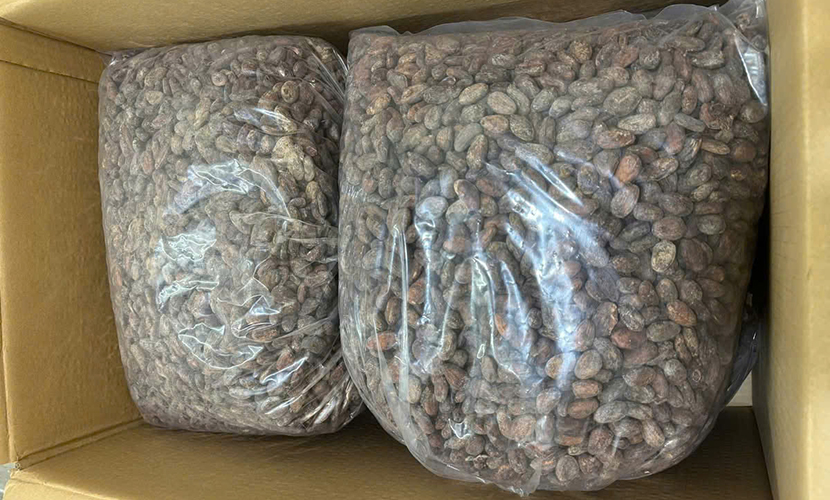
Ms. Nguyễn Thị Thu is the Director of OCA Viet Nhat Company Limited. According to her, in addition to exporting raw cocoa beans, the company has invested in production lines to process chocolate, pure cocoa powder, cereals, cocoa smoothies, cocoa tea, and cocoa liquor. This investment aims to diversify products and meet export market demand.

Recently, the company exported four tons of cocoa beans to the Netherlands and 1,000 liters of fermented cocoa liquor to Singapore. The company is planning to export cocoa to the Japanese and U.S. markets.

Not only focusing on exports, some businesses have also developed community-based tourism linked to the enjoyable experience of planting, caring for, and processing cocoa.

In response to the increasing demand for cocoa, while the supply of raw materials remains limited, the communes of Ho Chi Minh City aim to complete the organic cocoa cultivation process by 2025.

They also plan to expand and increase cocoa planting areas in regions suitable for the growth and development of the crop. In addition, they aim to establish more production areas following organic standards to meet export market demand.

Vietnamese source: https://nhandan.vn/phat-trien-ca-cao-theo-huong-ben-vung-huong-toi-thi-truong-xuat-khau-post914386.html