
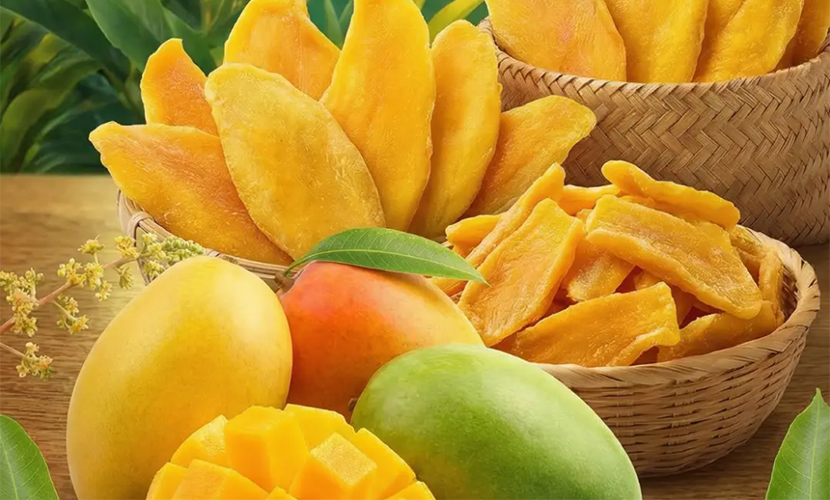
Sơn La Province owns more than 16,450 hectares of Vietnamese mangoes for export. As a result, the province is likely to produce over 97,000 tons of mangoes. Of this, there are 71 export planting area codes covering approximately 820 hectares.
At present, in key mango-growing areas of the province, farmers are busy caring for their orchards. They are bagging fruits, checking for pests and diseases, and maintaining orchard hygiene. These efforts aim to ensure the yield and quality of Vietnamese mangoes for both domestic consumption and export markets.
Ms. Hà Thị Khương is a farmer in Cốc Lắc village, Chiềng Hặc Commune. Her family has more than 2 hectares of Thai mangoes currently in the fruit development stage. From early morning, the whole family goes to the orchard to tend the mango area.
Ms. Khương shared that this year’s weather has been favorable, so the mango trees have set fruit evenly, with a higher fruit set rate than last year. At this time, due to frequent rain and high humidity, the family regularly prunes diseased branches to limit the spread of fungal infections.
When the fruits reach about 100 grams, farmers will bag them to reduce insect damage. This also helps maintain good skin color and reduces the use of pesticides during the pre-harvest stage. This year’s mango harvest is likely to reach about 20 tons.
Vietnamese mangoes for export
Like Ms. Khương’s family, many households in Chiềng Hặc Commune are also focusing on safe mango cultivation practices. They aim to meet increasingly strict market requirements, especially Vietnamese mangoes for export.
Mr. Mè Văn Dũng is the Deputy Director of the Commune’s Integrated Service Center. He said the commune currently has more than 1,350 hectares of mangoes, with an estimated output of about 10,000 tons this year. The locality has established safe production zones with 86 hectares certified under VietGAP standards.
It also has 13 export planting area codes covering more than 110 hectares. The commune aims to export around 500 tons of mangoes IN 2026. In Yên Châu Commune, farmers are also actively caring for mango orchards. In Phiêng Nghè village, Mr. Lò Văn Hặc’s family is tending more than 3,500 m² of mango trees.
According to Mr. Hặc, market requirements have become increasingly strict in recent years. Therefore, farmers have changed their cultivation practices. They now prioritize biological products and limit chemical pesticides to meet quality standards.
Thanks to proper technical care, this year’s mango orchards have developed evenly. The proportion of Grade 1 fruit is likely to be higher than in previous years. The cooperative is actively directing its members to focus on safe mango cultivation practices, especially for round mangoes. This is to maintain the “Yên Châu round mango” brand and enhance product value.

Fresh mangoes from Vietnam for export
Xuân Tiến Agricultural Cooperative in Yên Châu Commune currently has 20 members and cooperates with 18 households cultivating around 60 hectares of round mangoes. These days, cooperative members are closely monitoring fruit development, controlling pests and diseases, and managing orchards in accordance with proper technical procedures.
Mr. Quàng Văn Xuân is the Director of the cooperative. According to him, the cooperative is collaborating with enterprises to complete documentation and prepare products for export. To support this process, samples are being collected for quality testing before product offers are submitted to the Japanese market.
The cooperative will begin purchasing and exporting the first shipment when the main harvest season arrives. However, this will only take place after the fruit meets the required sugar content and quality standards.
To support farmers in properly implementing technical cultivation procedures, local authorities have assigned technical officers to regularly stay close to production areas. They guide farmers through each stage of crop development. At the same time, inspections on pesticide use in production zones have been strengthened.
Mr. Nguyễn Văn Hưởng is the Vice Chairman of Yên Châu Commune People’s Committee. He said that for mango areas serving export markets, the locality focuses on guiding farmers to follow safe production processes. It also maintains and effectively manages planting area codes.
The commune is coordinating with cooperatives and enterprises to review output and prepare purchasing conditions from the beginning of the season. This helps avoid supply bottlenecks during peak harvest time. It is also preparing conditions to organize the Yên Châu Mango Festival to promote and connect product consumption markets.

Vietnamese mango farm
Mangoes from Sơn La Province are currently available through domestic supermarket systems and wholesale markets. They are also exported to China and several other markets. At this time, mangoes are in the fruit development stage, which directly determines yield and product quality. To improve quality, the agricultural sector and local authorities are intensifying guidance on safe and sustainable cultivation practices.
Mr. Vương Quốc Hòa is the Deputy Director of the Provincial Center for Agricultural Extension and Digital Transformation. He said that since the beginning of the year, the province has organized technical training courses for farmers. These focus on mango care according to each growth stage.
The province have instructed farmers on the use of biological products for pest control, proper fruit bagging techniques, and compliance with pesticide pre-harvest waiting periods. Inspection and monitoring of production processes in export-oriented areas have also been strengthened.
With the proactive efforts of farmers, cooperatives, and technical support agencies, this year’s mango season is likely to achieve high yields and good quality. This will continue to affirm the Sơn La mango brand in both domestic and export markets, contributing to higher incomes and agricultural development.
Vietnamese source: https://baosonla.vn/nong-nghiep/dam-bao-chat-luong-xoai-phuc-vu-xuat-khau-HRXSaoAvg.html