
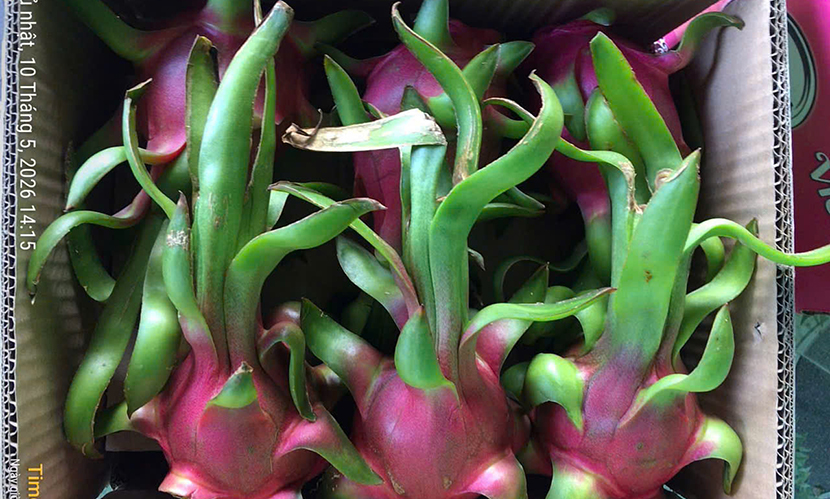
Vietnam’s dragon fruit exports are showing positive signs of recovery as demand from markets such as Thailand and the Middle East increases sharply. In the first two months of the year, Vietnamese dragon fruit exports reached approximately USD 108.5 million. This was up 14%, indicating improvement after a period of consecutive decline.
According to data from the Customs Department, Vietnam’s dragon fruit exports in February reached over USD 60 million, up 63% year-on-year. Cumulatively, exports in the first two months amounted to approximately USD 108.5 million. This represents an increase of 14%, signaling a clear recovery after several years of decline.
Notably, exports of Vietnamese dragon fruits to Thailand reached over USD 9.2 million. This figure is more than 2.7 times higher than the same period last year. It has become one of the fastest-growing destination markets.
Beyond ASEAN, demand in the Middle East has also increased significantly. In particular, exports to the United Arab Emirates (UAE) rose by more than 57%. This has helped expand market opportunities for Vietnamese dragon fruit.
Vietnam’s dragon fruit exports
According to Vietnamese exporting enterprises, the main driver behind this growth is seasonal factors. The early months of the year coincide with the Lunar New Year period. During this time, demand for Vietnam’s dragon fruit exports typically rises in many markets.
At the same time, this is the off-season in several dragon fruit-producing countries. This has led to a temporary decline in global supply. This shortage has created a competitive advantage for Vietnamese dragon fruit in international markets.
To meet market demand, many growers have applied nighttime lighting techniques to stimulate off-season flowering. This helps maintain supply during the early months of the year. Typically, Vietnam’s main dragon fruit harvest season runs from May to September. During this period, plants naturally flower due to longer daylight hours.
Despite expansion into new markets, China remains the largest consumer of Vietnamese dragon fruits. In the first two months of 2026, exports to this market reached around USD 66.5 million, up nearly 5% year-on-year. This indicates signs of stabilization after a previous period of decline.
China has long been Vietnam’s largest importer of dragon fruit. At certain times, this market accounted for more than 60% of Vietnam’s total dragon fruit export value. In contrast, exports to the United States have continued to decline due to stricter technical standards and higher costs.
These developments show that the dragon fruit industry is effectively leveraging seasonal advantages to recover exports. However, to sustain long-term growth, diversifying export markets and improving product quality remain essential requirements moving forward.
Vietnamese source: https://doanhnghieptiepthi.vn/kim-ngach-xuat-khau-thanh-long-vuot-100-trieu-usd-161260413074602054.htm
If you are interested in Vietnamese dragon fruit, please contact us:
Company: Agrideco Vietnam Co., Ltd.
Address: No 02, Alley 325 Kim Nguu, Vinh Tuy Ward, Hanoi, Vietnam
Tel/Kakao Talk/Whatsapp: +84 989 649 804
Website: https://agridecovietnam.com
Email: agridecovietnam@gmail.com