
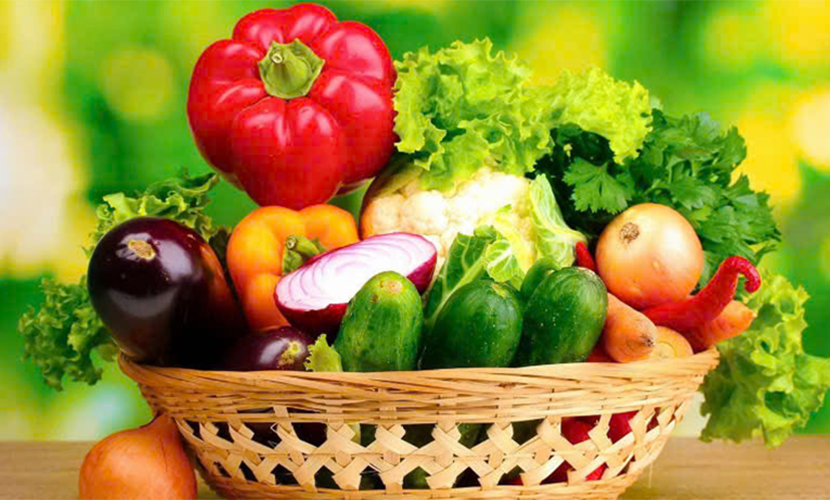
Vietnamese fruits and vegetables are maintaining strong growth momentum, creating prospects of surpassing US$8 billion in 2025. Vietnam’s fruit and vegetable exports benefit from advantages in product quality and geographical location. Moreover, supported by the proactive efforts of businesses, the industry is seizing a golden opportunity to strengthen its position in international markets.
By the end of the first ten months of 2025, Vietnam’s fruit and vegetable export turnover reached approximately US$7.05 billion. This figure went up 14.4% compared with the same period in 2024. This impressive growth trajectory has raised expectations that the industry could exceed the US$8 billion mark this year. China, the United States, South Korea, and Japan remained the leading import markets, providing sustainable growth opportunities for Vietnamese agricultural products.
Mr. Nguyen Thanh Binh is the Chairman of the Vietnam Fruit and Vegetable Association (VinaFruit). He stated that member enterprises have actively adopted advanced technologies in production. They have also strictly complied with requirements on traceability, growing area codes, packing facility codes, and food safety standards. As a result, Vietnamese fruits and vegetables have expanded their presence in major markets and earned increasing recognition for their quality and reliability.
Vietnamese fruits and vegetables
Durian continued to be the sector’s standout export product. Export value in the third quarter of 2025 reached US$1.94 billion, up 30.3% year-on-year. Although export revenue in the first nine months declined slightly by 1.7%, durian still generated a total export value of US$2.76 billion. It accounted for the largest share among Vietnamese fruits and vegetables. Other products, including dragon fruit, bananas, mangoes, jackfruit, and coconuts, also recorded solid growth.
Notably, lychee exports surged by 312.1% in the third quarter of 2025, reaching US$73 million. This performance reflects the growing competitiveness of Vietnamese fruit in global markets. Another bright spot was processed fruit and vegetable products, which accounted for 16.6% of total export turnover. Export revenue from this segment reached US$507 million in the third quarter, up 47.4% compared with the same period last year.
These products were mainly shipped to China, the United States, South Korea, the Netherlands, and Japan. This demonstrates the industry’s efforts to diversify its product portfolio, increase value-added production, and reduce dependence on fresh produce exports.
In the remaining months of the year, key export products such as durian, dragon fruit, and pomelo are likely to gain further momentum. This is driven by rising demand during the holiday and Lunar New Year seasons in many countries. Vietnamese export enterprises are proactively preparing high-quality supplies, strengthening logistics capabilities, and improving transportation coordination to optimize delivery times.
For durian exports in particular, Vietnam currently has 24 testing laboratories recognized by the General Administration of Customs of China. These facilities have a combined capacity of 3,200 samples per day, sufficient to support large-scale export activities. Customs clearance at major border gates has also remained smooth. As a result, the industry’s growth momentum has been sustained.
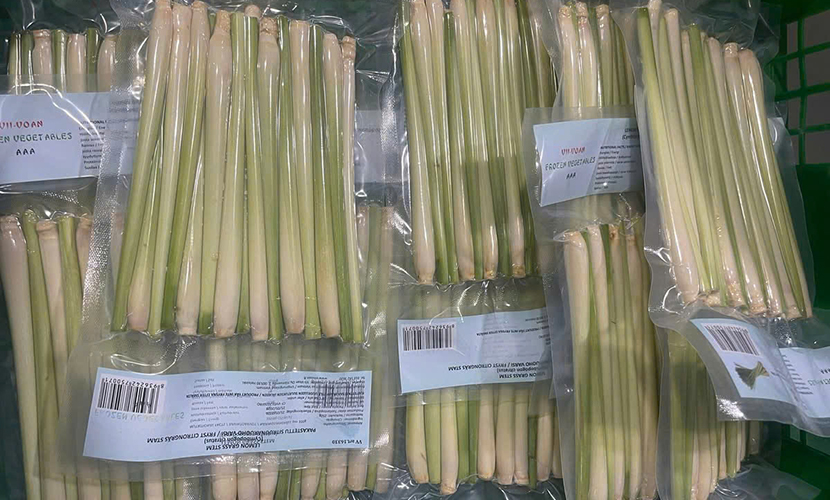
Fresh lemongrass from Vietnam
A recent milestone for the sector is the approval of Vietnamese pomelo exports to Australia. Pomelo has become the sixth Vietnamese fruit permitted to enter the Australian market, following dragon fruit, lychee, longan, mango, and passion fruit.
Mr. Nguyen Phong Phu is the Technical Director of Vina T&T Group. He said that Australian partners highly appreciate the quality of Vietnamese pomelos and are increasing their orders. The market offers considerable potential due to relatively low competition. At the same time, Vietnamese pomelos meet stringent requirements regarding cultivation practices, quarantine measures, and traceability. Pomelo is currently among Vietnam’s ten highest-value fruit export products.
Vietnamese fruits and vegetables benefit from competitive advantages in product quality, favorable geographic conditions, and the proactive efforts of exporters. As a result, they are well positioned to capitalize on growing international demand and further strengthen their standing in global markets.
According to forecasts, Vietnamese enterprises need to further tap into major markets to achieve the export target of US$8 billion as soon as possible. Among these markets, China remains the most promising destination. Its fruit and vegetable imports reached US$20.3 billion in the first nine months of 2025, up 5.8% compared with the same period in 2024. Vietnamese fruit and vegetable products currently account for 20% of China’s total imports, up from 17.9% last year. This reflects a positive improvement in their competitiveness.
Mr. Dang Phuc Nguyen is the Secretary General of the Vietnam Fruit and Vegetable Association (VinaFruit). He noted: “With the advantage of geographical proximity and shorter delivery times, Vietnamese fruits and vegetables enjoy strong competitiveness in terms of freshness and quality in the Chinese market.” However, he also emphasized that businesses must strictly comply with regulations on quarantine, traceability, and packaging. They should also promptly update themselves on changes to China’s agricultural import policies in order to avoid trade disruptions.
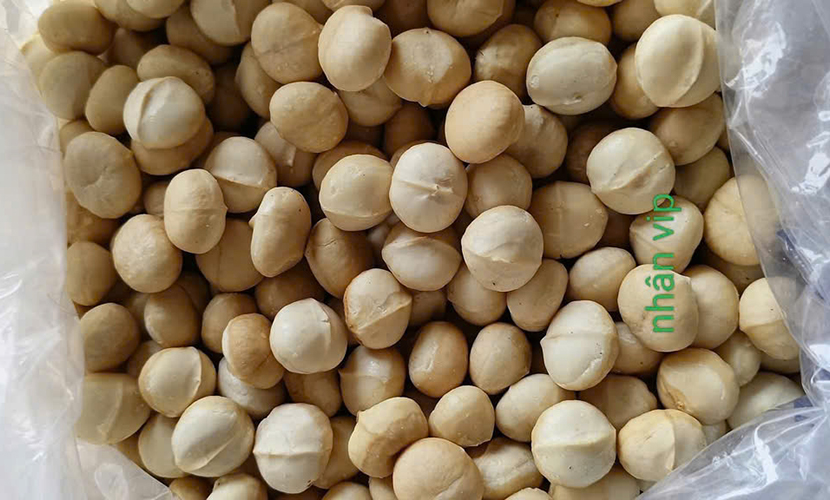
Vietnamese off-shell macadamia
Mr. Ngo Xuan Nam is the Deputy Director of the Vietnam SPS Notification Authority and Enquiry Point (SPS Vietnam). He stated that China has issued Decree 280, replacing Decree 248 on the registration management of overseas food manufacturing enterprises exporting to China. The new regulation took effect on June 1, 2026. Vietnamese fruit and vegetable exporters should review their documentation, prepare relevant data, and adjust export procedures. This will help ensure a stable supply of goods.
The growth potential of the United States remains substantial, but high logistics costs continue to pose a challenge. This makes it difficult for Vietnamese fresh fruits to compete with products from Mexico, Canada, Chile, and Peru. A strategic direction for the coming period is to accelerate exports of deeply processed products. These products align with consumer demand for convenience while extending shelf life and reducing transportation-related risks. Experts believe that, alongside market expansion, Vietnamese fruits and vegetables should focus on brand building, value chain standardization, and comprehensive quality management.
The development of certified growing areas and the promotion of digital transformation in production management will help enterprises improve production efficiency and meet international market requirements. In addition, greater transparency in traceability systems will strengthen their reputation, enhance competitiveness, and support sustainable export growth.
Vietnam’s fruit and vegetable sector is benefiting from strong growth momentum, an increasingly professional production system, and the support of regulatory authorities and industry associations. As a result, the industry is facing a golden opportunity to reinforce its position on the global agricultural map. This opportunity extends beyond production volume to value creation, brand recognition, and sustainable governance capabilities.
Vietnamese source: https://thuonghieusanpham.vn/co-hoi-lon-cho-rau-qua-viet-nam-chinh-phuc-thi-truong-quoc-te
If you are interested in Vietnamese fruit and vegetable exports, please contact us:
Company: Agrideco Vietnam Co., Ltd.
Address: No 02, Alley 325 Kim Nguu, Vinh Tuy Ward, Hanoi, Vietnam
Tel/Kakao Talk/Whatsapp: +84 989 649 804
Website: https://agridecovietnam.com
Email: agridecovietnam@gmail.com