
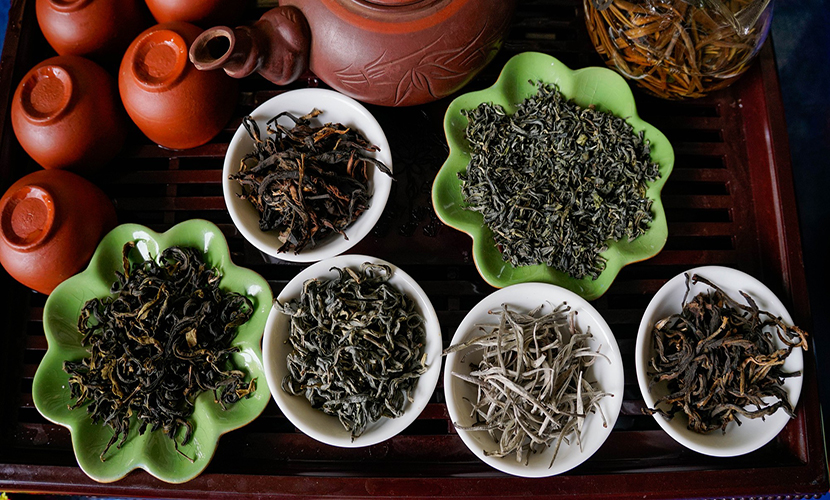
Phú Thọ is a province with a large tea-growing area and the second-largest tea output in Vietnam. Despite having many high-quality tea products, its export value has yet to match its full potential. Building a premium Vietnamese tea brand is a breakthrough step to enhance the position of this natural agricultural product.
According to Phú Thọ Newspaper, tea cultivation has existed in the midland region since ancient times. It has since become one of the key crops of the Đất Tổ region. On July 20, 1958, President Hồ Chí Minh visited the Phú Thọ Tea Factory in Đào Giã Commune, former Thanh Ba District. This visit provided a major impetus for the development of the tea industry.
Today, Phú Thọ is one of Vietnam’s major tea production centers. In addition to having a specialized tea research institute, the province currently has 76 large-scale tea processing enterprises. It also has 18 traditional craft villages and 12 cooperatives operating in the sector.
The province now has 58 tea-growing communes with a total cultivation area of 14,500 hectares. Annual fresh tea bud output exceeds 193,000 tons, ranking second nationwide. Nearly half of the cultivation area is concentrated in dedicated production zones. In addition, more than 3,800 hectares have received official growing area codes.
Premium Vietnamese tea
The lush premium Vietnamese tea hills of Long Cốc, Mỹ Thuận, Minh Đài, and Yên Kỳ provide sustainable livelihoods for local residents. They also offer great potential for developing agricultural tourism linked with ecological and experiential travel.
In recent years, Phú Thọ’s tea industry has undergone positive changes. It has placed a stronger focus on improving the quality of natural tea products to better serve consumers. The province currently has nearly 40 tea products certified under the OCOP program with ratings of 3 to 4 stars.
Notably, Hoài Trung Premium Đinh Tea and Thanh Ba UT Purple Bud Tea have achieved the national 5-star OCOP certification. These achievements demonstrate the industry’s strong transition from quantity-driven production to quality improvement. They also reflect a greater focus on higher added value and brand development.
Ms. Hà Thị Thanh Nguyện is the Secretary of the Party Cell of Dụ Residential Area in Xuân Đài Commune. She highlighted this transformation, saying: “Since receiving support for tea processing machinery and equipment, local producers have significantly increased the value of their early-morning dew tea buds. They also received guidance on developing complete packaging and labeling to enhance product quality and market appeal. Residents are very encouraged because the products now have stable markets and higher selling prices, helping improve their livelihoods.”
However, the province’s significant potential has not yet been fully reflected in its market position. Currently, the average export price of Phú Thọ tea is only around 60% of the global average. Notably, nearly 70% of production is still exported as black tea in raw material form or under individual company brands.
This situation means that the image and identity of Phú Thọ tea have yet to establish a strong presence in international markets. Therefore, the industry needs to undertake a more strategic and decisive transformation.
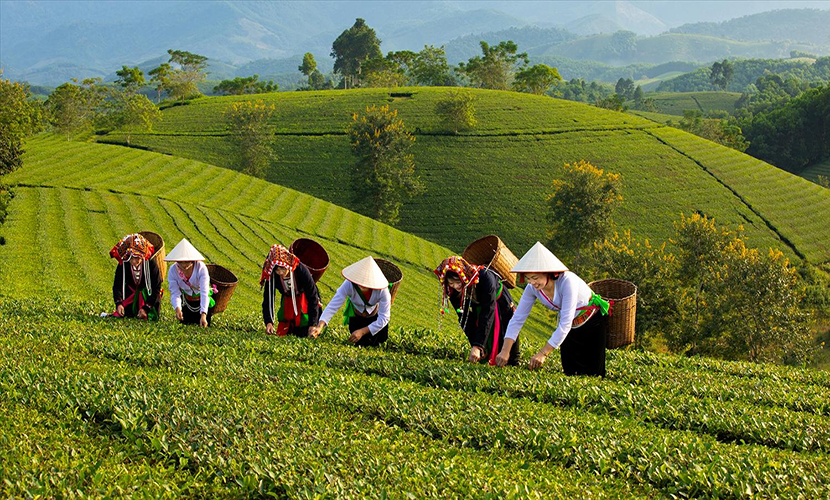
Vietnamese tea harvesting
Building on this foundation, the province has drafted the project “Developing the Đất Tổ Tea Brand” for the 2026-2030 period. The project aims to create a major transformation for the tea industry. It follows a consistent approach in which the government creates a supportive environment. Meanwhile, businesses drive value chains, while cooperatives and farmers provide a solid foundation.
Ms. Lê Thị Hồng Phương is the Director of UT Tea Investment and Development Co., Ltd., Highlighting the role of Vietnamese tea businesses as key players, she said: “The company has boldly invested in equipment, improved technology, and enhanced premium Vietnamese tea quality. As a result, production has gradually stabilized, creating regular employment for many local workers and expanding consumer markets.”
By 2030, Phú Thọ aims to maintain a stable tea-growing area of 14,000 hectares. It also plans to replace 2,500 hectares of aging plantations with new varieties offering higher productivity and quality. The province plans for 80% of tea-growing areas to strictly follow safe production standards such as VietGAP, GlobalGAP, Rainforest Alliance, and organic farming practices.
A key breakthrough of the project is the development of an exclusive “Đất Tổ Tea” logo associated with the cultural symbols of the Hùng Kings. The province will standardize technical production processes and develop at least 15 core businesses and cooperatives authorized to use the shared brand. The goal is to ensure that 100% of premium tea lines and OCOP products rated 4 stars or higher carry unified labeling.
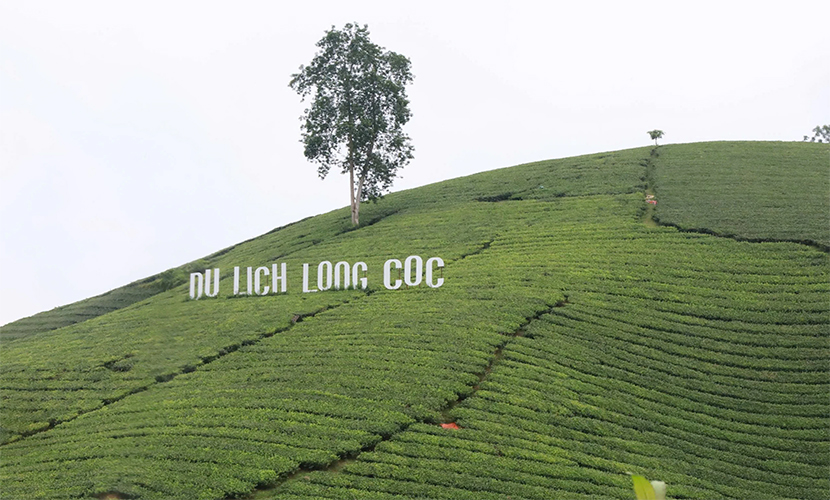
Vietnamese tea hill
The product structure will also be significantly adjusted. The proportion of high-quality green tea, oolong tea, and matcha will increase to more than 40%. The project also emphasizes preserving traditional cultural values by preparing dossiers to recognize ancient Shan Tuyết tea populations in Xuân Sơn National Park and Pà Cò as Vietnam Heritage Trees. This will create sustainable livelihoods for local communities.
At the same time, the province plans to research the establishment of the Đất Tổ Tea Ceremony for diplomatic activities and promote the Đất Tổ Tea Festival as an annual cultural event associated with the Hùng Kings’ Commemoration Day. Alongside these efforts, digital transformation will be applicable in production through GIS technology.
Electronic farming records and IoT sensor systems for environmental monitoring will also be widely adoptable. The Industry and Trade sector will actively expand domestic markets through supermarkets and e-commerce platforms. It will also promote exports to the EU, Japan, Taiwan, Russia, and Muslim-majority markets through Halal certification.
Vietnamese source: https://thuonghieusanpham.vn/hanh-trinh-xay-dung-thuong-hieu-tra-dat-to
For more information about Vietnamese tea exports, please contact us:
Company: Agrideco Vietnam Co., Ltd.
Address: No 02, Alley 325 Kim Nguu, Vinh Tuy Ward, Hanoi, Vietnam
Tel/Kakao Talk/Whatsapp: +84 989 649 804
Website: https://agridecovietnam.com
Email: agridecovietnam@gmail.com