
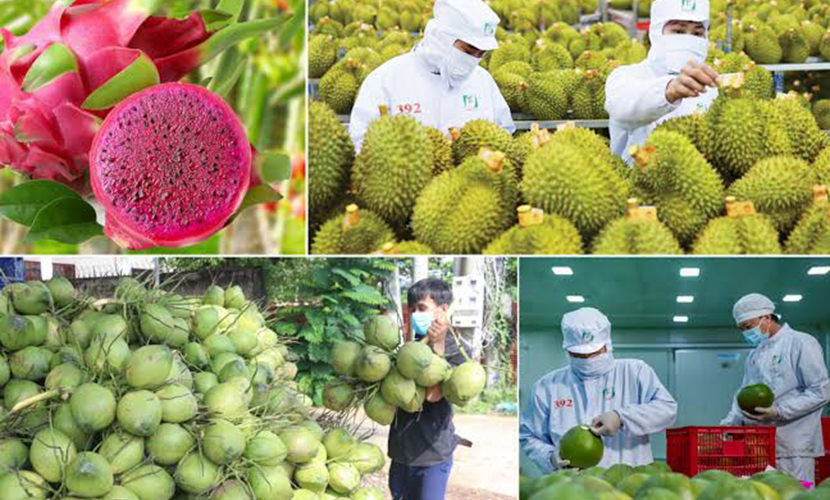
Vietnamese agricultural produce exports are gaining strong momentum. Specifically, they surpassed US$1 billion in a single month for the first time in July. They also approached US$5 billion after just the first seven months of 2026. The surge has been driven primarily by the recovery in durian exports. It has also been the result of robust growth in a wide range of fresh fruits and processed fruit and vegetable products. This has created a positive outlook for the industry in the remaining months of the year.
According to the Vietnam Fruit and Vegetables Association (Vinafruit), Vietnamese fruit and vegetable exports reached approximately US$1.06 billion in July 2026. This represented an increase of 38% compared with the same month in 2025. This marks the first time that Vietnam’s monthly fruit and vegetable export value has exceeded the US$1 billion threshold. During the first seven months of 2026, cumulative export turnover reached approximately US$4.76 billion, up 23% year on year.
These results reflect the strong recovery of Vietnam’s fruit and vegetable industry following a period of market volatility. They also demonstrate the effectiveness of efforts to improve product quality. In addition, they reflect progress in diversifying export markets and better meeting the increasingly stringent standards of importing countries.
Vietnamese agricultural produce exports
Durian remained the leading item in Vietnamese agricultural produce exports. It contributed more than 50% of the industry’s total export value and served as the sector’s primary growth driver.
According to Vinafruit, an abundant supply of export-qualified durians has helped Vietnamese fresh exporters regain access to major markets. Low levels of heavy metal residues in key growing regions across the Central Highlands and Southeastern Vietnam have also contributed to this recovery. Strict quality control from harvesting through packaging has also supported the reopening of markets such as China and Thailand.
In addition to durian, several other products also recorded strong export growth. They include coconuts, mangoes, bananas, passion fruit, and processed fruit and vegetable products. According to industry experts, the gradual recovery of durian exports, together with the rising performance of bananas and passion fruit, reflects Vietnam’s efforts to reposition its fruit and vegetable industry.
These developments are strengthening the country’s position on the global agricultural map. The sector is increasingly focusing not only on expanding production but also on improving quality. It is also developing export markets in a more sustainable manner.
China remained the largest export market for Vietnamese fruit and vegetables. In June 2026, exports to China reached US$621.2 million, up 56.1% from the previous month and 18.1% higher than in the same period of 2025. During the first six months of 2026, exports to China totaled approximately US$2 billion, an increase of 24.7% year on year. They accounted for around 55% of the industry’s total export value.
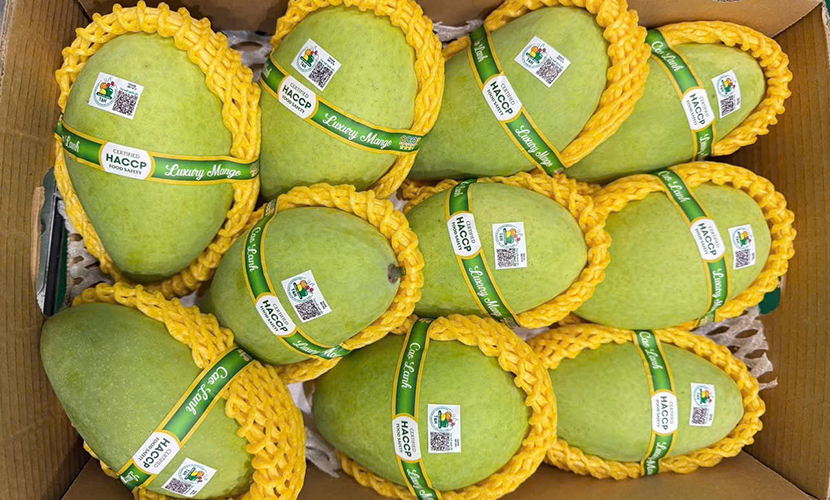
Vietnamese fresh mango exports
Strong growth in the Chinese market has been supported by steady demand for tropical fruits such as durian, dragon fruit, bananas, fresh coconuts, and mangoes. At the same time, improved customs clearance at border checkpoints has shortened clearance times. Exporters’ compliance with requirements on growing area codes, packing facility registration, and product traceability has also contributed to this improvement It has also improved export efficiency.
Alongside its largest export market, Vietnam also recorded solid growth in higher-value destinations. The United States remained the second-largest market, with exports reaching US$59.4 million in June. This was up 9.4% from the previous month and 10.2% in comparison to June 2025. Cumulative exports to the United States during the first six months of 2026 reached US$292.1 million, an increase of 11.7% year on year. This represented 7.9% of the industry’s total export turnover.
South Korea remained the third-largest market, with exports totaling US$28.7 million in June. Although shipments declined 7.5% from the previous month due to seasonal factors, they were still 6.4% higher than a year earlier. In the first half of 2026, exports to South Korea reached US$170.4 million, up 8.1% year on year. They accounted for 4.6% of the industry’s total export value.
According to industry experts, although China still accounts for more than half of Vietnam’s total fruit and vegetable export value, the country’s export market structure is gradually becoming more balanced. This is reflected in the steady growth of Vietnamese fresh exports to the United States, South Korea, and the European Union (EU).
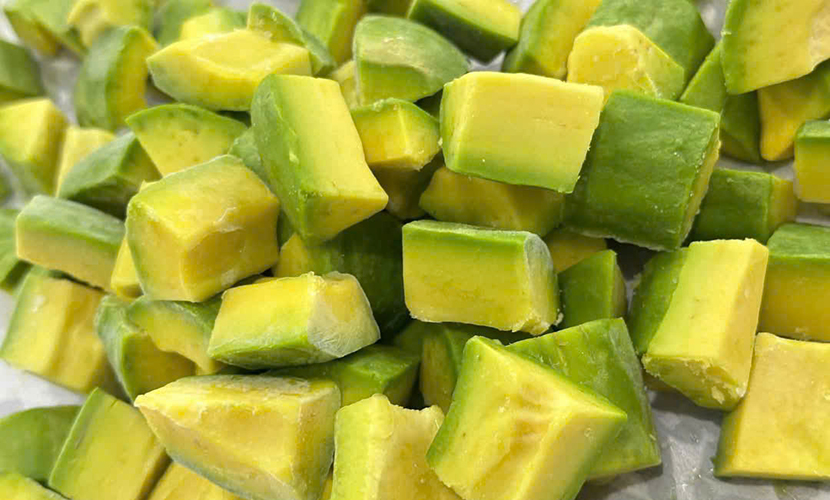
Vietnamese frozen avocado
Expanding exports to high-standard markets not only increases export value but also reduces the risks associated with overreliance on a single market. At the same time, it encourages businesses to improve product quality, refine production processes, and strengthen their international competitiveness.
As global demand for high-quality agricultural products continues to rise, Vietnamese agricultural produce exports still have significant room for growth. Further expansion will depend on enlarging certified growing areas and increasing investment in deep processing. It will also require building transparent supply chains and making more effective use of free trade agreements.
With its current growth momentum and continued expansion across key export markets, Vietnam’s fruit and vegetable industry is likely to sustain strong growth. It is also likely to achieve new export milestones throughout 2026.
Vietnamese source: https://vneconomy.vn/lan-dau-tien-xuat-khau-rau-qua-viet-nam-vuot-moc-1-ty-usdthang.htm
If you are interested in Vietnamese agricultural produce exports, please contact us:
Company: Agrideco Vietnam Co., Ltd.
Address: No 02, Alley 325 Kim Nguu, Vinh Tuy Ward, Hanoi, Vietnam
Tel/Kakao Talk/Whatsapp: +84 989 649 804
Website: https://agridecovietnam.com
Email: agridecovietnam@gmail.com