
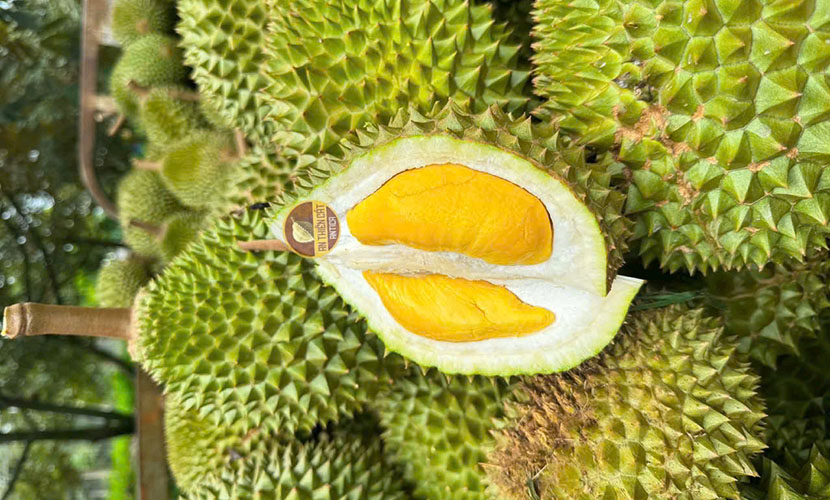
In the first quarter of 2026, Vietnam’s durian exports surged by 230% compared with the same period last year. This further demonstrates the fruit’s growing appeal in international markets. In addition to China, demanding markets all recorded impressive growth in imports of Vietnamese durian. These markets include the United States, South Korea, Australia, and Japan.
Notably, Vietnamese durian products are likely to officially enter the Indian market in July 2026. This will open access to another billion-consumer market. In addition, it will support the country’s goal of achieving USD 4.5 billion in durian export revenue this year.
After a turbulent year in 2025, Vietnam’s durian industry is entering a new growth cycle. The sector is placing a stronger focus on sustainable development, improved quality, and higher export value.
Vietnamese durian
During the first months of 2026, the durian harvest season has brought renewed activity to major growing regions in Vietnam. Key production areas of Vietnamese durian have entered peak harvest simultaneously. Long lines of container trucks are heading to border gates and seaports. At the same time, packing facilities and cold-storage centers are operating around the clock to meet export demand.
According to customs data, Vietnam’s durian exports in the first quarter of 2026 soared by 230% compared with the same period in 2025. While exports to China recorded an impressive 398% increase in value year-on-year, several demanding markets also posted strong growth. Exports to the United States rose by more than 107%, and shipments to South Korea increased by nearly 262%. In addition, exports to Australia grew by over 40%, while exports to Japan expanded by almost 12%.
These figures indicate that Vietnamese durian is steadily improving its ability to meet stringent technical standards. They also demonstrate the sector’s capacity to adapt to the requirements of diverse international markets.
Notably, the growth in export value has outpaced the increase in export volume. This indicates that the industry is gradually shifting from a quantity-driven growth model to one focused on higher value addition.
One of the brightest highlights in early 2026 has been the remarkable expansion of the frozen durian segment. While frozen durian exports totaled just over 4,600 tons in 2024, the figure surged to more than 91,000 tons in 2025—an almost twentyfold increase. This momentum has continued into 2026. In the first quarter of the year, the average export price of frozen durian reached approximately USD 4,302 per ton. This was up more than 20% from the same period last year and around 18–22% higher than that of fresh durian.
According to the Department of Crop Production and Plant Protection, if expanding cultivation area and output was once the industry’s top priority, “quality” has now become the central focus of Vietnam’s durian sector. In many growing regions, farmers are changing their cultivation practices. They are maintaining detailed production records, applying fertilizers more efficiently, controlling chemical residues, and strictly adhering to technical standards required for export markets.
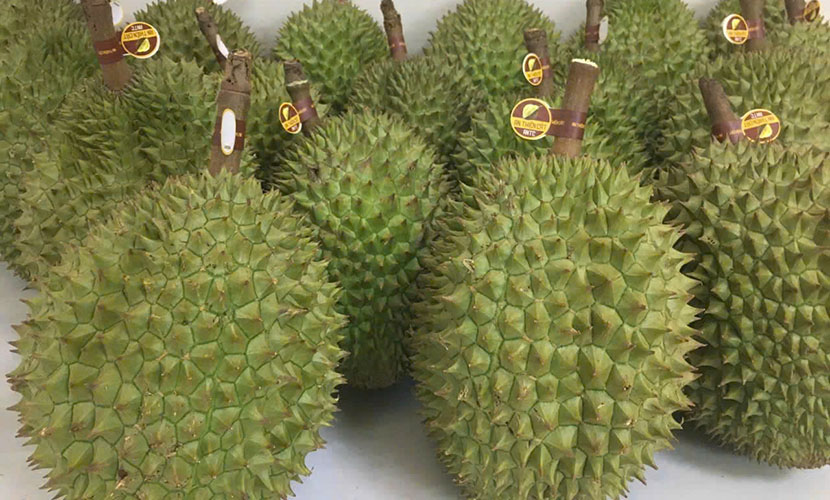
Vietnamese fresh durian
At the same time, the system of growing-area codes and packing-house codes is being further strengthened. It serves as a “passport” that helps Vietnamese agricultural products demonstrate transparency and traceability in international markets. Vietnam’s durian businesses are also accelerating investments in cold storage facilities, freezing lines, quality management systems, and digital transformation across the supply chain.
The durian industry is increasingly embracing sustainable farming practices through soil improvement measures and reduced use of chemical fertilizers and pesticides. These efforts help lower production costs while maintaining productivity and quality. These efforts are viewed as a foundation for participating in carbon credit markets. They also create additional value from low-emission agricultural production.
An important pillar supporting this transformation is the ongoing improvement of the regulatory framework governing agricultural exports. Ms. Nguyen Thi Thu Huong is Deputy Director General of the Department of Crop Production and Plant Protection. According to her, the Decree No. 38/2025/ND-CP clearly defines the responsibilities of central authorities, local governments, and importing countries in managing growing-area and packing-house codes.
The decree also specifies procedures and timelines for application processing, as well as the suspension or revocation of codes. As a result, the management system has become more transparent and effective.
Authorities are also finalizing regulations on administrative penalties related to the management of growing-area codes. This effort aims to strengthen compliance throughout the durian export supply chain.
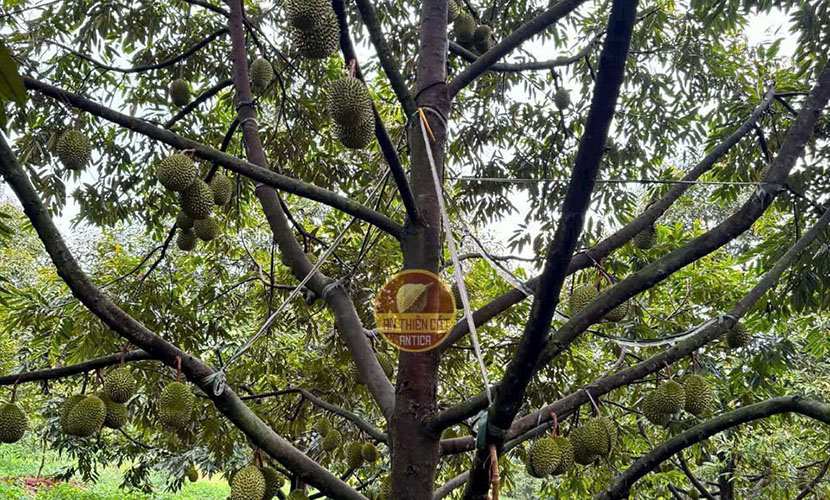
Vietnamese durian tree
Ms. Huong also announced encouraging news for the industry: Vietnamese durian has officially secured access to the Indian market. India will complete the necessary import procedures in July, paving the way for the importation of Vietnamese durian. This is a highly positive development for the sector.
India is the world’s second-largest consumer market by population, behind only China. Vietnamese durian producers and exporters have successfully met the technical requirements of this market. This achievement demonstrates their steadily improving ability to comply with international standards.
Leaders of the Department of Crop Production and Plant Protection believe that although Indian consumers may need time to become familiar with the taste of Vietnamese durian, the market holds tremendous potential. Expanding into additional export destinations will help diversify market outlets and reduce dependence on a limited number of traditional markets. As a result, new opportunities for sustainable growth will emerge for the durian industry.
From a promising fruit crop, durian is gradually becoming a symbol of Vietnam’s agricultural transformation toward a more professional, systematic, and sustainable model. The achievements recorded in the first months of 2026 are reflected not only in rapid export growth. They are also evident in the sector’s transition from a production-oriented approach to one centered on quality, value addition, and environmental responsibility.
According to industry experts, this is a pivotal period for Vietnam’s durian industry to move from “rapid growth” to “quality-driven growth.” By focusing on higher standards, sustainability, and greater value creation, the sector can strengthen its position in international markets. It can also integrate more deeply into global value chains.
Vietnamese source: https://vneconomy.vn/sau-rieng-viet-nam-tang-toc-xuat-khau-chinh-phuc-them-thi-truong-ty-dan.htm
If you are interested in Vietnamese durian exports, please contact us:
Company: Agrideco Vietnam Co., Ltd.
Address: No 02, Alley 325 Kim Nguu, Vinh Tuy Ward, Hanoi, Vietnam
Tel/Kakao Talk/Whatsapp: +84 989 649 804
Website: https://agridecovietnam.com
Email: agridecovietnam@gmail.com