
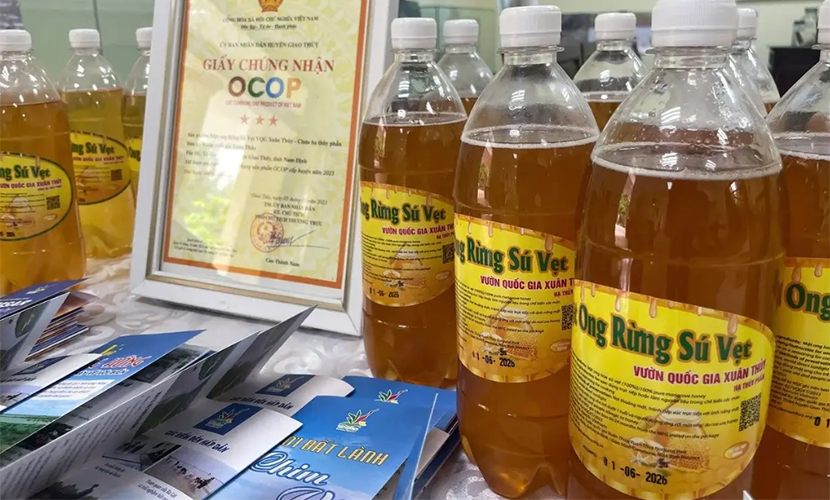
The beekeeping model under the mangrove canopy at Xuân Thủy National Park not only provides a sustainable livelihood for communities in the park’s buffer zone but also enhances the value of Vietnamese wild honey. Brand building, value chain linkages, and product traceability are becoming key foundations for market expansion. These efforts are helping this distinctive product reach more consumers.
Vietnam possesses highly favorable natural conditions for beekeeping. The country has an estimated 1.3–1.4 million bee colonies, and more than 35,000 households have engaged in honey production. Vietnam benefits from diverse ecosystems, ranging from mountainous regions to coastal mangrove forests. As a result, the country produces between 50,000 and 60,000 metric tons of Vietnamese natural honey each year. This strong output reflects the country’s favorable natural conditions for beekeeping.
In 2024 alone, Vietnam produced more than 57,000 metric tons of Vietnamese wild honey. Production is likely to reach nearly 59,300 metric tons the following year. Despite making a significant contribution to both exports and domestic consumption, the beekeeping industry continues to face major challenges. Production remains fragmented and by small-scale household operations account for a large percentage.
A notable example is Xuân Thủy National Park, located at the Ba Lạt River estuary. There, abundant blossoms from native mangrove species such as sọ and vẹt create ideal conditions for ecological beekeeping. They also support the development of a distinctive honey industry. The area currently supports approximately 5,000–7,000 bee colonies, producing 70–80 metric tons of honey annually.
However, beekeeping activities among communities in the park’s buffer zone remain small-scale. Also, they are highly vulnerable to extreme weather and climate change, which affect the availability of flowering plants. In addition, the lack of sustainable value chain linkages has prevented Vietnamese wild honey from fully realizing the ecological value of this unique wetland ecosystem.
One of the industry’s greatest challenges is the limited investment in brand development and promotion. Ms. Nguyễn Thị Hải is the Head of the Livestock and Veterinary Extension Division at the National Agricultural Extension Center. He stated that Vietnam’s beekeeping sector continues to face numerous obstacles because production is still largely carried out by individual households. In addition, relatively few beekeepers participate in cooperatives, producer groups, or integrated value chains.
Vietnamese wild honey
She noted that insufficient attention has been given to building strong brands that enhance product value. Meanwhile, cooperation among beekeepers, cooperatives, and businesses remains weak. At the same time, bee products have yet to be sufficiently diversified, and value-added processing remains underdeveloped.
Another major challenge lies in ensuring quality control and disease prevention for bee colonies that are moved across provinces to follow seasonal flowering cycles. Weak traceability systems and limited branding and promotional efforts have made it difficult for Vietnamese wild honey to enter premium market segments.
These challenges underscore the need for coordinated action by the agricultural sector and local authorities. They must reorganize production and strengthen value chain linkages. They also need to gradually improve the competitiveness of Vietnamese honey brands in domestic and international markets.
To address these bottlenecks, improving production techniques while protecting forest ecosystems has been identified as a core development strategy. At Xuân Thủy National Park, a beekeeping extension model using Italian honeybees under the mangrove canopy was launched in 2025 with the participation of 12 households.
The model has delivered outstanding results, achieving an average yield of 38 kilograms of honey per colony per year. This represents an increase of 26.67% compared with conventional beekeeping. By following standardized production practices, the park’s Sú Vẹt Mangrove Honey has obtained OCOP certification and a certification mark. This provides a solid foundation for building a trusted brand.
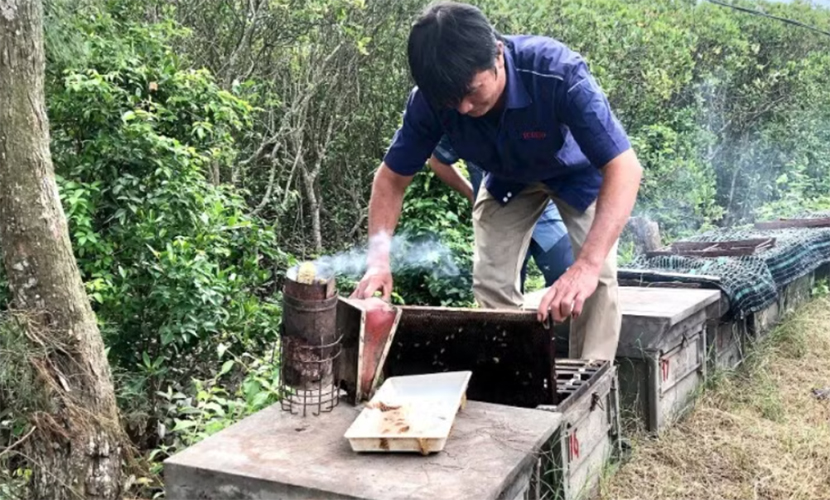
Vietnamese wild honey production
Mr. Vũ Quốc Đạt is the Deputy Director of Xuân Thủy National Park. Commenting on the success of the model, he said: “In 2025, the park implemented and refined a beekeeping model aimed at developing the Sú Vẹt Mangrove Honey brand. Twelve households participated, achieving an average yield of 38 kilograms per colony per year, up 26.67% compared with conventional beekeeping.”
“The project has created jobs, increased incomes, and improved livelihoods for coastal communities. It has also enabled local beekeepers to adopt modern production techniques. In addition, it has helped them gradually shift from small-scale, fragmented practices to standardized production with value chain linkages and product traceability,” added he.
The model, implemented with technical support from agricultural specialists, has generated clear economic benefits. It has also given beekeepers greater confidence and control over their production. Sharing his experience, beekeeper Phạm Thanh Sơn said: “I have been raising honeybees for many years. However, without proper techniques, the income was only enough to cover daily living expenses.”
“Since joining the beekeeping model supported by the National Agricultural Extension Center, I have received technical training and improved bee colonies. I have also gained the opportunity to market branded honey, which has significantly increased production efficiency. My family now manages 380 bee colonies and harvests about 4 to 5 metric tons of Vietnamese wild honey each year. This is 20–30% more than before,” he added.
From the perspective of livestock management, modernizing production management and accelerating the adoption of new technologies are essential for sustainable development. These measures are a key to the future of Vietnam’s beekeeping industry.
Tạ Thị Hương Giang is a representative of the Department of Livestock Production and Animal Health under the Ministry of Agriculture and Environment. She emphasized that expanding and modernizing production value chains is crucial to maintaining a sustainable national bee population. She also called for continued research and the refinement of technical production processes.
In addition, she urged a gradual transition from traditional single-hive systems to more advanced hive management methods to improve honey yield and quality. In addition, she stressed the importance of investing in deep processing and diversifying bee-derived products. This would increase the overall added value for Vietnamese wild honey.
Vietnamese source: https://thuonghieusanpham.vn/xay-dung-thuong-hieu-nang-tam-mat-ong-rung-ngap-man
If you are interested in Vietnamese wild honey, please contact us:
Company: Agrideco Vietnam Co., Ltd.
Address: No 02, Alley 325 Kim Nguu, Vinh Tuy Ward, Hanoi, Vietnam
Tel/Kakao Talk/Whatsapp: +84 989 649 804
Website: https://agridecovietnam.com
Email: agridecovietnam@gmail.com