
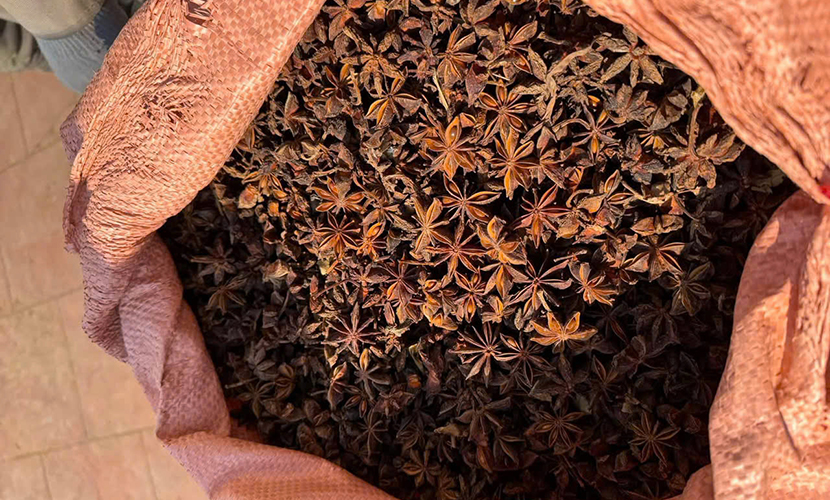
Vietnam-origin star anise generates high economic value due to its widespread use in the food-processing, pharmaceutical, cosmetic, and animal-feed industries. To enhance the value of this crop, many localities have established high-quality organic star anise production areas. These areas provide raw materials for the processing industry and target export markets.
Star anise is a valuable and relatively rare crop, which is widely available in northern provinces of Vietnam. They include Lang Son, Bac Kan, Quang Ninh, Yen Bai, Cao Bang, and Thai Nguyen.
Thanks to its diverse applications, dried star anise has become an indispensable herb in daily life. Its distinctive star-shaped fruits have wide application as a seasoning in a variety of dishes. In addition, star anise offers numerous health benefits, which is commonly utilized in traditional medicine and health-care products.
Thanks to favorable conditions, Lang Son star anise is proud for its superior quality and high essential-oil content. Notably, its essential oil is free from toxic substances. Star anise essential oil is a valuable raw material. Specifically, it is important raw materials in the production of massage and digestive medicines, cosmetics, and fragrances. As a result, the French established an essential-oil processing plant in Lang Son as early as the beginning of the 20th century.
Vietnam-origin star anise
The province currently has around 35,000 hectares of Vietnam-origin star anise. This area accounts for more than 70% of Vietnam’s total growing area. Star anise is mainly available in the districts of Van Quan District, Binh Gia District, Van Lang District, Loc Binh District, and Cao Loc District.
In addition to domestic consumption, star anise essential oil from Lang Son is available in export markets. These markets include China, Japan, India, Malaysia, Indonesia, North America, and Europe. It is raw materials in the pharmaceutical and cosmetics industries. In recent years, scientists have also identified compounds in star anise essential oil. These compounds consist of ingredients for the production of Tamiflu, a medicine used to treat influenza strains such as A/H1N1, H5N1, and H3N2.
Recognizing the significant development potential of the crop, Lang Son has identified star anise as a key economic product and a long-term strategic commodity. The province has therefore registered and protected the geographical indication and designation of origin for Lang Son star anise. In 2007, the product was officially granted geographical-indication protection by the intellectual property authorities of Vietnam. Today, Lang Son star anise enjoys legal protection as a valuable national asset.
To enhance the value of Vietnamese star anise products in the province, the province has implemented a project. The project is entitled “Research, application, and transfer of heat-pump drying technology to develop a model for the processing and preservation of star anise products that meet export standards.”
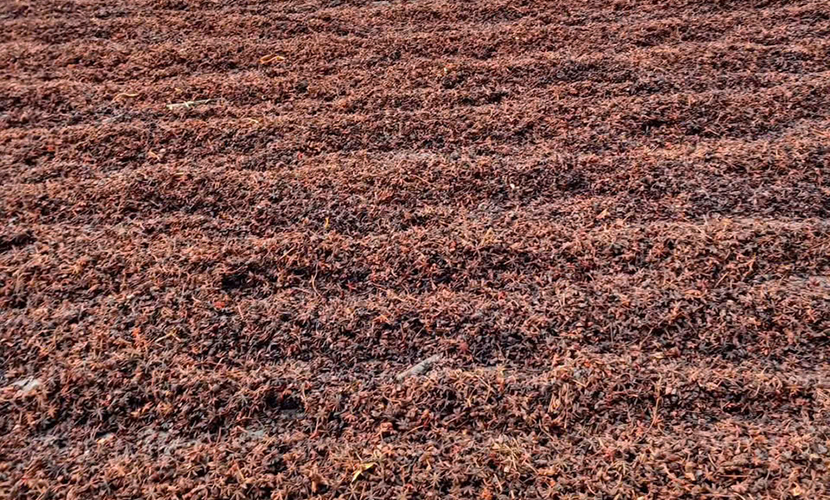
Drying Vietnam-origin star anise
In recent years, the Vietnam Cooperative Alliance has conducted research to refine processing and drying technologies. The purpose is to developing high-quality star anise products. These technologies are suitable for cooperative-scale operations. They comply with food-safety and hygiene requirements and help extend product shelf life for export to high-value markets.
In addition, the Science, Technology and Environment Center has worked with the Lang Son Cooperative Alliance to transfer technology. This cooperation has also helped develop a pilot processing model at Hoang Gia Cooperative in Na Dao Hamlet, Khanh Khe Commune, Van Quan District. Therefore, it can be disseminated and replicated across other cooperatives in the province.
By applying science and technology to production, Vietnam-origin star anise products have met the requirements for export to a wider range of international markets. In addition, the cooperative have equipped its products with traceability labels. This helps to enhance customer confidence and improve market competitiveness.
Quang Ninh develops organic star anise cultivation models
In Quang Ninh, star anise cultivation is mainly available in Binh Lieu District. A star anise tree that is around 15 years old can give harvest twice a year. On one hectare of cultivation land, average yields range from 1 to 1.5 tons of fruit. With market prices of approximately VND 75,000–80,000 per kilogram, growers can earn nearly VND 100 million per hectare annually. In recent years, star anise cultivation has helped many households in Binh Lieu improve their incomes and build more prosperous livelihoods.
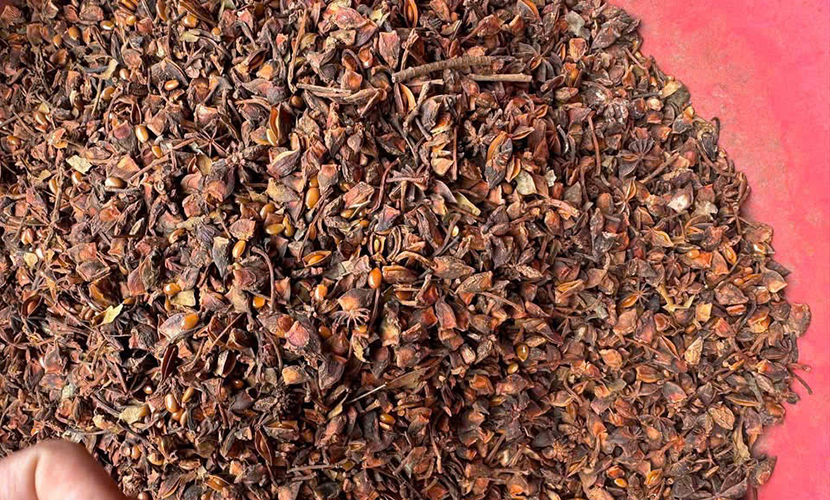
Broken star anise from Vietnam
Given its economic benefits, farmers have increasingly expanded cultivation areas. Meanwhile, they have replaced aging, low-yield trees with new plantings. Star anise has also been identified as one of Quang Ninh’s key agricultural products. Accordingly, the provincial government has introduced policies encouraging investment and strengthening linkages in agricultural production, processing, and product consumption.
Several Vietnamese spice enterprises have invested in processing Vietnam-origin star anise for both domestic consumption and export. In addition, a number of cooperative groups and agricultural cooperatives specializing in star anise cultivation have been established. They have also begun operating effectively.
To date, Quang Ninh has developed organic-oriented star anise cultivation models to support processing activities and export development. The Ministry of Agriculture and Rural Development approved a national agricultural extension project for implementation during the 2022–2024 period. Launched in 2022, the project focuses on developing grafted organic star anise cultivation models. The aim is to produce high-quality products that meet processing requirements, ensure traceability, and comply with export standards.
Bac Kan promotes investment in star anise processing plants
The total star anise cultivation area in Bac Kan covers approximately 4,634 hectares. Of this total, more than 3,000 hectares are located in Na Ri District, over 600 hectares in Cho Moi District, and more than 200 hectares in Bach Thong District. Most of these plantations are over 15 years old. Therefore, they can produce high-quality essential oil of star anise and provide a stable source of income for local farmers.
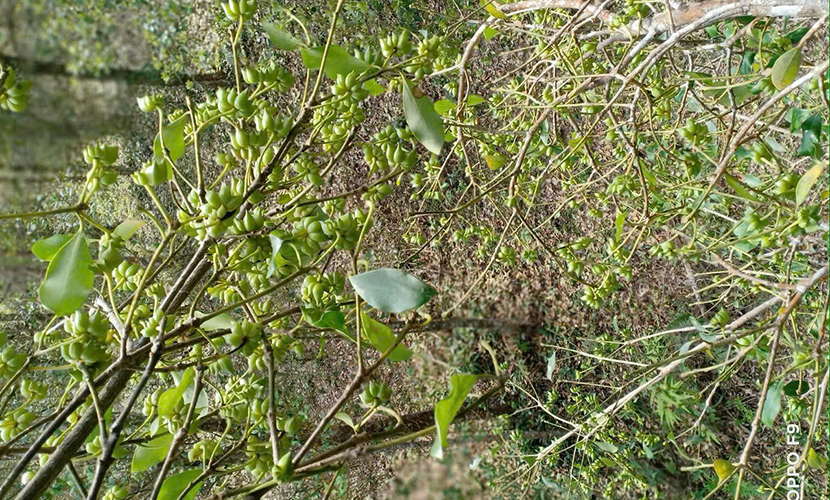
Vietnamese star anise forest
At present, Bac Kan does not have any star anise essential-oil processing plants. As a result, producers can only sell raw materials and therefore receive relatively low returns. With a processing capacity of 500 kilograms of dried star anise fruit per batch, producers can process raw materials worth around VND 25 million.
By combining traditional distillation methods with modern cooling and oil-separation technologies, they can obtain approximately 60 kilograms of essential oil. Given a market price of more than VND 1 million per kilogram, each distillation batch can generate profits exceeding VND 30 million.
Bac Kan currently has thousands of hectares of productive star anise plantations in operation. As a result, the province possesses sufficient raw materials to support the construction of small-scale essential-oil distillation facilities. These facilities could have annual capacities of 10–15 tons.
Therefore, to increase the value of star anise products, the province is actively promoting investment and encouraging businesses to enter the star anise processing sector. The establishment of processing plants would help stabilize product consumption. It would also significantly increase the value of Vietnam-origin star anise.
Vietnamese source: https://thuongmaibiengioimiennui.gov.vn/san-pham-vung-mien/mien-bac/2022/12/nang-cao-gia-tri-san-xuat-cho-cay-hoi
If you are interested in Vietnamese star anise, please contact us:
Company: Agrideco Vietnam Co., Ltd.
Address: No 02, Alley 325 Kim Nguu, Vinh Tuy Ward, Hanoi, Vietnam
Tel/Kakao Talk/Whatsapp: +84 989 649 804
Website: https://agridecovietnam.com
Email: agridecovietnam@gmail.com