
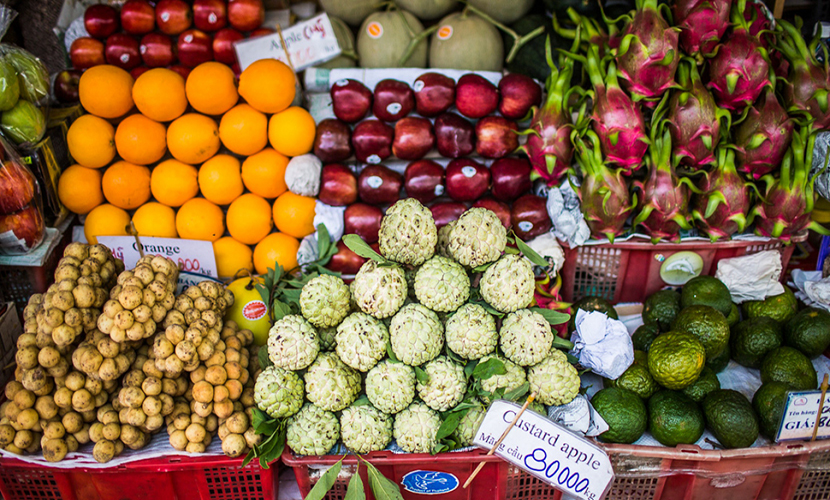
Improving demand has led to increased imports of Vietnam’s fruits and vegetables by the European Union. However, to sustain this growth momentum, Vietnamese export businesses must adapt to stricter standards and further promote deep processing.
According to the Vietnam Fruit and Vegetable Association, Vietnamese fruit and vegetable exports to the European Union (EU) reached approximately USD 121 million in the first quarter of 2026. This went up 33% compared with the same period in 2025, indicating improving demand in this market.
Looking at individual products, Vietnamese passion fruit remained the leading export item, generating nearly USD 30.5 million in export revenue. This was up 73% year-on-year and accounted for more than 25% of total export value. Pistachios ranked second with USD 26.5 million, surging 137% and increasing their share to nearly 22%.
Notably, several products with relatively small export volumes recorded exceptionally strong growth. Vietnam’s strawberry exports reached USD 2.21 million, an increase of 736-fold. Meanwhile, Vietnamese macadamia exports totaled USD 2.25 million, which were more than seven times higher than a year earlier. These figures highlight the significant growth potential of emerging market segments.
Vietnam’s fruits and vegetables
Vietnamese durian, the flagship product of Vietnam’s fruits and vegetables, still accounted for only a small share of exports to the EU, with turnover of approximately USD 404,000. However, this represented a 50% increase year-on-year. Demand remains largely concentrated within Asian communities in Europe.
Mr. Dang Phuc Nguyen is the Secretary General of the Vietnam Fruit and Vegetable Association. He said that the long geographical distance means that around two-thirds of Vietnam’s fruits and vegetables to the EU consist of processed products. Fresh produce is mainly transported by air, resulting in high logistics costs.
Among Vietnamese export products, passion fruit has gained prominence due to its alignment with consumer trends. In addition, it serves as a key ingredient in the food and beverage processing industry. Strawberries have emerged as a “rising star.” However, their growth remains constrained by high logistics costs and limited production scale because exports rely heavily on fresh shipments.
Alongside market expansion, the export structure is changing significantly, with processed products accounting for a growing share of exports. Currently, about two-thirds of fruit and vegetable exports to the EU and Japan are deeply processed products.
In 2025, Vietnam’s exports of processed fruit and vegetable products exceeded USD 2.06 billion. They went up 42.1% year-on-year and accounted for 24% of the industry’s total export value. Several processed products posted remarkable growth. For example, pistachios generated USD 446 million in export revenue, up more than 72%, while almonds reached USD 215 million, up more than 62%.
This trend aligns with changing consumer behavior in the EU, where consumers increasingly favor convenient products that can be purchased online and consumed quickly. Compared with fresh produce, processed products offer advantages in storage, logistics costs, and compliance with technical standards.
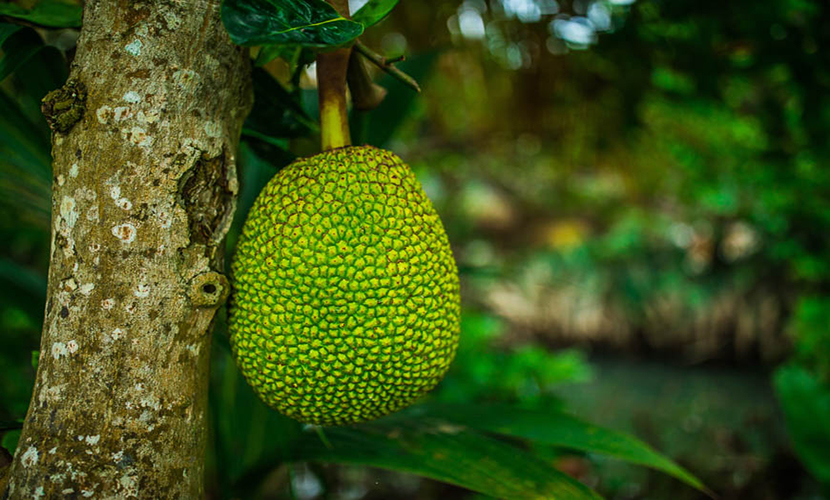
Jackfruits from Vietnam
At the same time, Vietnam’s ability to comply with sanitary and phytosanitary (SPS) regulations has improved. In 2025, the number of EU alerts concerning Vietnamese agricultural and food products fell from 114 to 60, a decline of 48%. This suggests that businesses have shifted from a reactive approach to proactively ensuring compliance from the production stage.
Mr. Nguyen Quy Duong is the Deputy Director General of the Department of Crop Production and Plant Protection. According to him, challenges continue to intensify as the EU steadily tightens its standards, particularly regarding maximum residue limits (MRLs). The EU’s proposed new regulations would shift from a “risk assessment” approach to a “hazard assessment” framework. In addition, they would introduce a default threshold of 0.01 mg/kg, effectively approaching a “zero-residue” standard for many active substances.
These stricter requirements compel Vietnamese food exporters to exercise tighter control over production areas. They must also fully understand cultivation processes and pre-harvest intervals and comply with the specific standards of each target market. As a result, the practice of applying a single production standard across multiple markets is becoming increasingly difficult.
Mr. Dinh Cao Khue is the Vice Chairman of the Vietnam Fruit and Vegetable Association. Speaking at a conference with industry associations on measures to promote agricultural, forestry, and fisheries exports in 2026, he said that fruit and vegetable exports exceeded USD 2.6 billion in the first four months of 2026. This was up about 22% year-on-year. If this momentum is maintained, total exports could reach approximately USD 9.5 billion this year, approaching the USD 10 billion milestone.
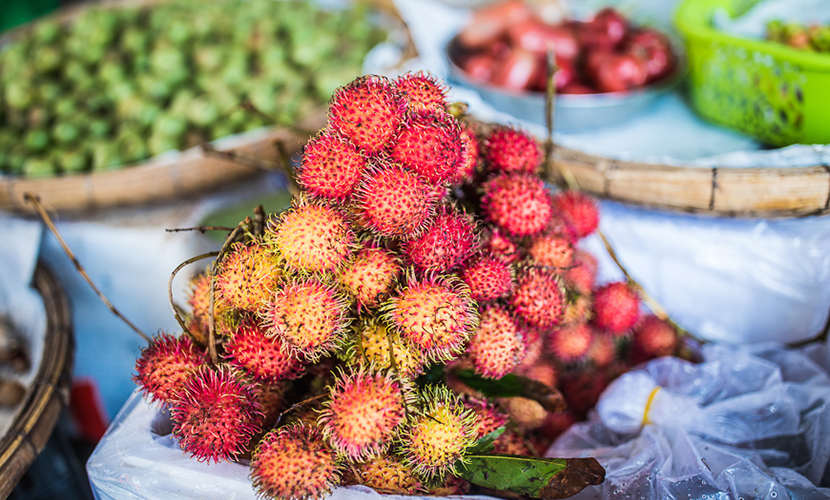
Vietnamese rambutan
Within the sector, fruit exports remain the primary growth driver, with durian recording growth of around 170% across global markets. However, fresh products still account for roughly 80% of exports, indicating substantial room for further development in processing.
The association believes that sustaining long-term growth will require the industry to focus on three key pillars. These include improving product quality, expanding deep processing, and strengthening value-chain linkages from production areas to end markets.
In addition, investment in variety research, climate change adaptation, and productivity enhancement will be essential. Several new cultivation models have already demonstrated strong effectiveness. As a result, they are creating opportunities to replace traditional crops.
Competition in the EU market is intensifying, with major exporters of fruits such as Thailand, Peru, Ecuador, and the Philippines expanding their presence. In response, Dinh Cao Khue emphasized that building strong brands, standardizing production practices, and proactively adapting to evolving regulations will be crucial to maintaining market share. He added that this will be the inevitable direction for the industry in the years ahead.
Vietnamese source: https://giaothuong.congthuong.vn/eu-tang-mua-rau-qua-viet-455397.html
If you are interested in Vietnamese fruits and vegetables, please contact us:
Company: Agrideco Vietnam Co., Ltd.
Address: No 02, Alley 325 Kim Nguu, Vinh Tuy Ward, Hanoi, Vietnam
Tel/Kakao Talk/Whatsapp: +84 989 649 804
Website: https://agridecovietnam.com
Email: agridecovietnam@gmail.com